Targeting Core Pain Points in Power Grid Operation and Maintenance
Currently, power grid stations are widely distributed, with a large number of outdoor towers and remote power distribution cabinets. Under the traditional operation and maintenance mode, there are prominent issues including low inspection efficiency, slow fault response, difficulties in grid integration and consumption of new energy, high optical fiber laying costs for remote stations, large data return latency and poor stability. These problems easily lead to data transmission interruptions, directly slowing down fault troubleshooting and posing hidden risks to the stable operation of the power grid.
Leveraging the high-speed, low-latency and massive connectivity features of 5G, combined with edge computing technology, we build a full-scenario adaptive smart grid solution to specifically solve various practical problems in power grid operation and maintenance.
To address the limitations of traditional manual inspection, such as limited coverage, delayed disaster warning and insufficient visualization in remote areas, inspection robots, UAVs and high-definition monitoring terminals are deployed to realize real-time upload of micro-meteorological data, early warning of line disasters, and full coverage of all-weather remote channels:
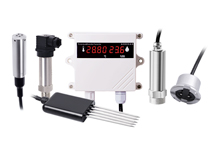
It replaces manual work to complete inspection tasks in dangerous and remote areas such as power distribution rooms. By connecting sensors for temperature and humidity, smoke detection, access control and partial discharge, data is transmitted back to the platform in real time, and abnormal events trigger second-level alarms. Operation and maintenance personnel can accurately locate hidden dangers without arriving on site, shifting the mode from passive repair to active pre-diagnosis.
The high-definition collection terminals mounted on lines can directly transmit inspection footage, line icing data and other information back at high speed via 5G, eliminating the need for on-site manual data copying. This solves the problem of slow data transmission in remote mountainous areas and greatly improves the identification efficiency of line hidden dangers.
To solve the problems of traditional distribution networks such as slow fault location, large power outage scope and delayed power supply recovery, relying on the low-latency, high-reliability features of 5G and network slicing technology, through methods like distribution network differential protection and distribution network PMU, the solution intelligently analyzes the operating status of the distribution network, realizes remote precise control, quickly locates faults and isolates fault points. It compresses the power supply recovery time for non-fault areas to the second level, significantly reduces the impact scope of power outages, and improves the power supply reliability of the distribution network.
Aiming at the pain points of distributed new energy grid integration, including untimely data interaction, inaccurate evaluation of energy storage regulation capacity and low new energy consumption rate, relying on the low-latency, high-reliability features of 5G and edge computing capabilities, the solution dynamically evaluates clean energy resources, calculates the regulation capacity of distributed energy storage in real time, accurately predicts power generation and analyzes the operating status of stations. It opens up real-time data interaction channels across all links, effectively improving the local consumption capacity of new energy.
To address the problems of traditional power grids such as low multi-source data fusion efficiency and insufficient control accuracy of critical loads, leveraging the low-latency, high-reliability and massive connectivity features of 5G, the solution collects full-volume data of power sources, power grids, loads and energy storage, realizes low-latency cross-platform data transmission and multi-parameter fusion processing. It precisely manages and controls critical loads such as electric vehicle charging and swapping stations and industrial factories, improves the real-time scheduling capability of the power grid, prevents the impact of new energy output fluctuations on the main grid, and ensures the stable operation of the power grid.
For scenarios where the public network is interrupted at disaster sites, multi-terminal data cannot be transmitted back synchronously and command decision-making is delayed, the solution quickly builds an emergency ad hoc network relying on the high-speed feature of 5G, realizes the interconnection of various on-site multimedia devices and the return of high-definition video cluster communication. The rear command center can grasp the on-site situation in real time and efficiently complete emergency disposal decisions.