Traditional Fiber Optic Solution vs Industrial Router Solution: How Should Substation Renovations Really Be Done?
An Old Engineer with 15 Years in Power Automation Shares Some Brutally Honest Truths
Don't you have a substation renovation proposal sitting on your desk right now?
On the left is the fiber optic plan from the design institute. On the right is the industrial router plan pushed by the integrator. One says "this is the future." The other says "this is now." You've flipped through it three times and still can't make up your mind.
It's not that you're not capable. It's that this question simply doesn't have a standard answer.
But I can help you break this problem apart—piece by piece—until you can make a decision.
Who dares to say no to fiber at a meeting?
Fiber is immune to electromagnetic interference—that's textbook stuff. Fiber has long transmission distances and low attenuation, 0.2dB/km—that's correct too. Fiber is secure, physically impossible to tap—no argument there. Digital substations based on IEC 61850, process layer replacing copper cables with fiber—that's the industry trend, everyone agrees.
So every plan leans toward fiber. The design institute draws fiber. The integrator pushes fiber. Leaders nod the moment they hear "fiber."
But you know deep down—when the fiber plan actually hits the ground, it's a completely different story from what's on paper.
How much does a fiber fusion splicer cost? Tens of thousands of yuan. How much does a 10G optical module cost? Over a thousand yuan each. Installation requires professional fiber splicing technicians—not just any guy who can pull a network cable. The bend radius must be greater than 10 times the diameter; over-bend it and it snaps right off. Fiber can't carry power, so remote devices still need separate power supplies.
None of this shows up in the proposal. But every single item becomes your schedule, your budget, your headache.
And the killer question—does your substation really need fiber for every single link?
I've seen too many projects like this.
A 220kV substation doing a fiber-optic renovation: replacing the original PSL602G high-frequency protection with PSL603GC fiber differential protection. Remove the high-frequency transceiver, remove the coupling capacitor, remove the high-frequency cable. Install the GXC-2M multiplexing interface unit. Commission the fiber channel. Modify the telecontrol database. Tune the backend system. Reconfigure the fault recorder—the whole thing takes months to schedule, and outage windows are grabbed by the hour.
And that's just one bay. How many bays does your substation have?
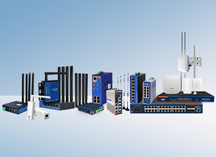
A certain provincial power company used SR510 routers for their substation smart renovation, deploying multiple routers with 32-channel DI/DO, 8-channel AI/AO, collecting transformer temperature, voltage, and other parameters, with 5G backhaul to the dispatch center. Metal housing shields against EMI, transmission latency as low as milliseconds, and it supports BeiDou/GPS timing. From plan to deployment—measured in weeks.
Think about the gap between those two numbers.
I'm not saying fiber is bad. I'm saying—not every node in your substation deserves to be connected by fiber.
GOOSE and SV messages at the process layer need millisecond-level synchronization, ultra-low latency, absolute reliability—for these scenarios, fiber is the only answer. No choice.
But for station-level data acquisition, remote monitoring, video backhaul, and O&M management—do you really need to pull a fiber cable all the way over?
| Dimension | Traditional Fiber Optic Plan | Industrial Router Plan |
|---|---|---|
| Cost per bay | Optical modules + fiber + construction + commissioning, starting at tens of thousands | One industrial router, a few thousand |
| Construction timeline | Professional team on-site, measured in weeks or even months | Plug and play, measured in days |
| O&M cost | Fiber break requires fusion splicing to locate, repair needs precision instruments | Remote reboot, remote upgrade, remote diagnostics |
| Scalability | Add a node = add a fiber cable | Add a device = add a SIM card |
| EMI resilience | Fiber itself is immune, but the optical transceivers aren't | Metal housing + wide-temp design, built for harsh environments |
| Network outage impact | Fiber breaks = it's broken, long repair time | 4G/5G multi-network auto-switchover, recovery within 200ms |
See, this isn't an "advanced vs. outdated" problem. It's an "everything vs. enough" problem.
The smartest approach is never all-fiber, and never all-router. It's—fiber where fiber is needed, router where router is enough.
Process-layer protection signals go over fiber. That's the bottom line—non-negotiable. Station-level monitoring, auxiliary systems, video, O&M—these go over industrial routers. Save money, save time, save headaches.
Fiber breaks—you blame the contractor. Router drops—you blame the carrier's signal. But your leader doesn't care about any of that—your leader only looks at the result: did the data get through?
So what you need isn't the most advanced technology. It's the most reliable technology. Metal housing, hardware and software watchdogs, self-healing on failure, multi-network backup—none of this is sexy, but it saves your life when it matters.
The hidden costs of a fiber plan can eat up 30% of your budget. Fusion splicing, testing, optical modules, professional construction crews—every item costs money. The industrial router plan? One device costs a few thousand. O&M is cloud-based. No need to maintain a professional team.
Your leader wants "this must go live this month." The fiber plan requires coordinating outage windows, waiting for the construction crew's schedule, commissioning and integration. The industrial router plan—device arrives, plug it in, it works. You see data the same day.
You're not ignorant of technology. You've been forced into "pragmatism" by project management.
Step 1: Divide the services in your substation into three categories.
Step 2: Count how many "non-fiber nodes" you actually have.
In most substations, Category A nodes account for only 20%. The remaining 80% are Category B and C. Do you really want to spend fiber-level money to connect that 80%?
Step 3: Pick a reliable industrial router and cover all of Category B and C.
What does "reliable" mean? It's not about having the highest specs. It's about not dropping the ball in your specific environment.
Wide-temperature operation—substations are stifling in summer and bone-dry cold in winter. The equipment has to survive. EMI shielding—EMI in a high-voltage environment is no joke. Multi-network backup—single-carrier signals are unstable; dual-SIM auto-switchover can't afford to drop. Remote O&M—you can't run to the site every time. Remote reboot and remote upgrade are must-haves.
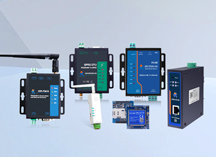
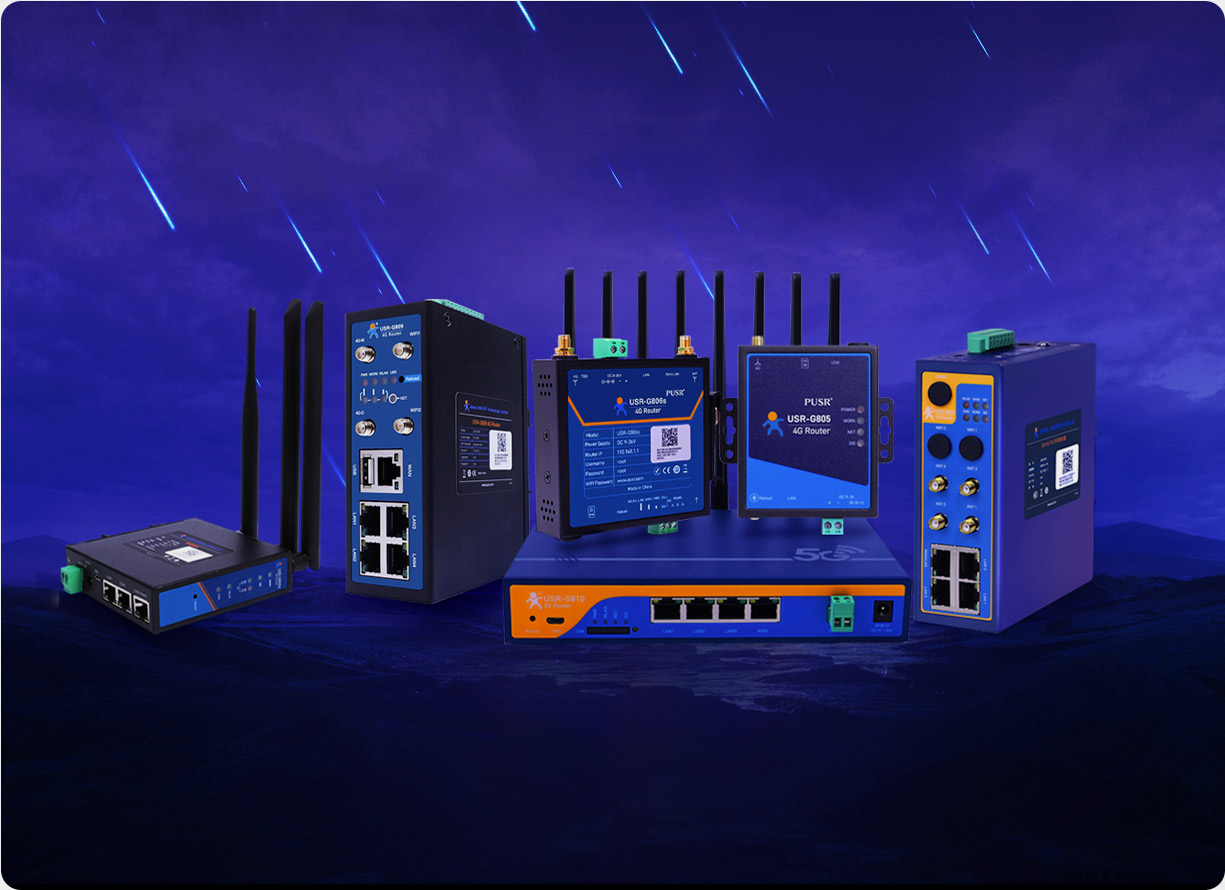
Honestly, not many products on the market meet all of these at once. USR's G806w is one of them—full metal housing with IP30 protection, -20°C to 70°C wide temperature range, built-in eSIM supporting auto-switchover across the three major carriers, five types of VPN encryption, plus site-to-site networking—no public IP needed for remote management. It's already been battle-tested in AGV dispatch at a large logistics warehouse and survived monsoon-season heat in smart agriculture projects. It's not the most expensive, but it has everything that matters.
Of course, this is just my reference point. You can use it as a yardstick to compare against the other options on your table.
When it comes to substation renovation, technology is never the hardest part. The hardest part is—you have to get it done within a limited budget, a limited timeline, and limited outage windows.
Fiber is a great thing. But great things don't necessarily suit every single node you have.
An industrial router is not a "downgrade." Used where it should be used, it's a "precision strike."
You don't need to prove to anyone that you used the most advanced technology. You only need to prove to your leader—the data got through, the system is stable, and the project was delivered on time.
That's all it takes.