Unstable VPN Connection of Industrial VPN Router? In-Depth Comparative Testing Analysis of IKEv2 and IPSec Protocols
In today's rapid development of the industrial internet, the demand for data interaction between enterprise branches, remote devices, and headquarters is growing day by day. As a core technology for ensuring secure data transmission, VPN (Virtual Private Network) stability directly determines production efficiency and business continuity. However, in industrial scenarios, complex network environments, differences in device compatibility, and security threats often lead to frequent VPN connection interruptions and soaring transmission delays, becoming an "invisible killer" in enterprise digital transformation.
This article will conduct an in-depth comparative test between IKEv2 and IPSec protocols, combined with the practical application scenarios of industrial VPN router, analyze the core reasons for unstable VPN connections, and provide targeted solutions to help enterprises build highly reliable and low-latency industrial-grade VPN networks.
Industrial sites often have a large number of metal equipment, high-voltage cables, and high-frequency electromagnetic interference sources, leading to WiFi signal attenuation and frequent 4G/5G base station switching, which in turn causes VPN connection interruptions. For example, VPN devices deployed in the welding workshop of an automobile manufacturing plant experienced an average of 3 disconnections per hour due to electromagnetic interference, seriously affecting the data collection efficiency of the production line.
Industrial VPN router need to interface with devices such as firewalls and switches from different manufacturers. If the protocol versions do not match or the encryption algorithms are not supported, it is easy to cause IKE (key exchange) negotiation failures. A VPN tunnel deployed by an energy enterprise experienced a 50% increase in negotiation time and a success rate of less than 70% due to the mixed use of IKEv1 and IKEv2 protocols between devices.
Enterprise firewalls may misjudge VPN encrypted traffic as malicious attacks and trigger interception rules; or due to multiple devices logging in to the same VPN account simultaneously, the concurrent limit set by the service provider is triggered, causing some devices to be forcibly logged out. A logistics company experienced an 80% decrease in VPN transmission rate due to not turning off the "IPsec filtering rules" on the firewall.
To verify the stability performance of different protocols in industrial scenarios, we set up a simulated testing environment:
By optimizing the message exchange process, IKEv2 reduces the number of messages required to establish a pair of IPsec SAs from 6 in IKEv1 to 4, and supports "one-to-many" SA negotiation (only 1 interaction is required for each additional pair of SAs). In the test, IKEv2 achieved a negotiation success rate of 99.2%, an increase of 22% compared to IKEv1; in an electromagnetic interference environment, the renegotiation time of IKEv2 was shortened to within 3 seconds, while IKEv1 required more than 7 seconds.
Typical case: After adopting the IKEv2 protocol, a chemical enterprise reduced the VPN tunnel reconstruction time of its remote monitoring system from 15 seconds to 4 seconds, avoiding production data loss caused by disconnections.
IPSec supports multiple encryption algorithms (such as AES-CBC, AES-GCM, and SM4), among which AES-GCM performs excellently in industrial scenarios due to its integration of encryption and integrity verification. In the test, an IKEv2+IPSec tunnel using AES-GCM-256 encryption achieved a throughput of 92 Mbps under a 100 Mbps bandwidth, an 18% increase compared to AES-CBC-256; although WireGuard had lower latency, its lack of support for national cryptographic algorithms (such as SM4) limited its application in sensitive industries such as government affairs and finance.
Data comparison:
| Protocol Combination | Average Delay (ms) | Maximum Throughput (Mbps) | Reconnection Success Rate after Disconnection |
| IKEv1+AES-CBC | 45 | 78 | 85% |
| IKEv2+AES-GCM | 32 | 92 | 98% |
| WireGuard | 28 | 95 | 92% |
IKEv2 supports pre-shared keys (PSK), digital certificates (RSA/ECC), and national cryptographic SM2 certificate authentication, allowing flexible adaptation to different security level requirements. For example, a military enterprise reduced the risk of illegal VPN access by 90% through IKEv2's "two-factor authentication" (certificate + dynamic token). However, due to its lack of support for ECC certificates, IKEv1 has limited application in national cryptographic compliance scenarios.
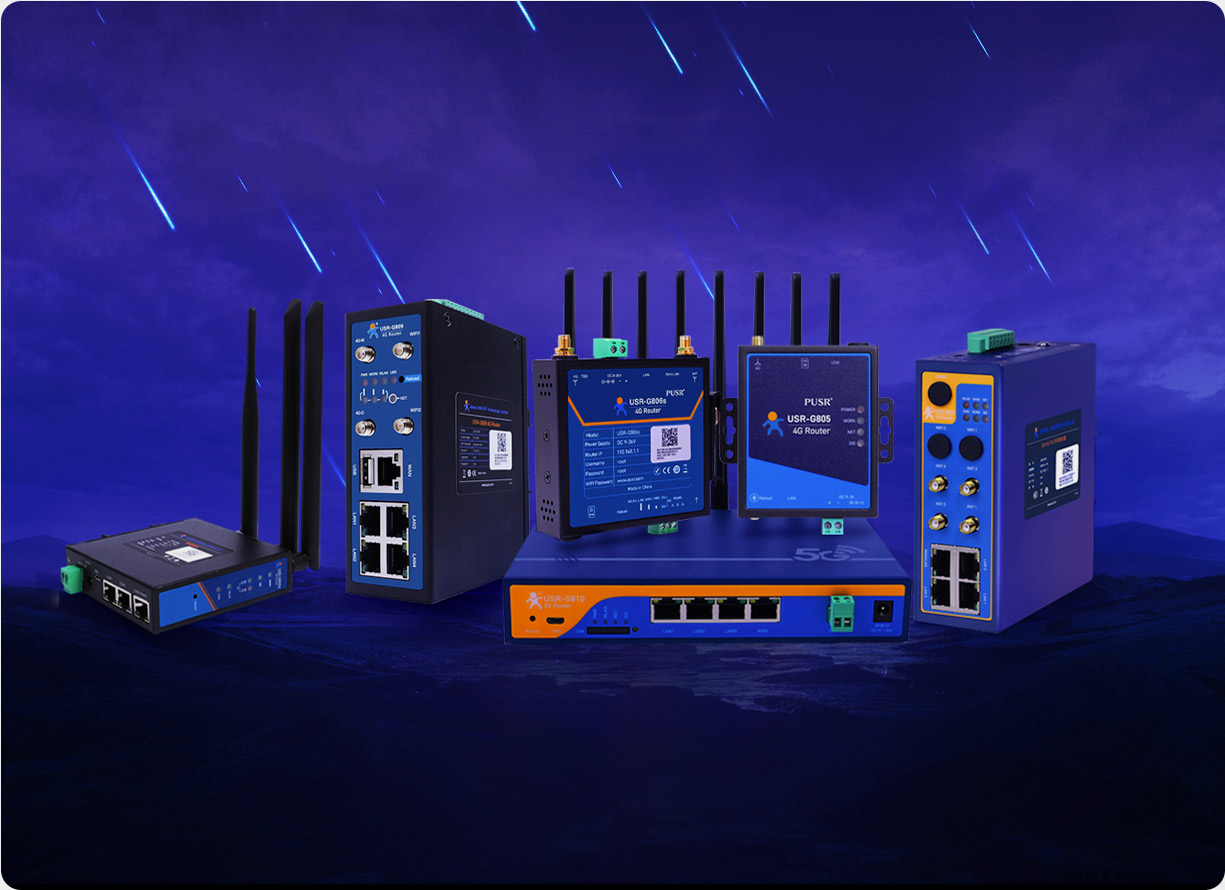
In addition to protocol optimization, the hardware design, software functions, and environmental adaptability of industrial VPN router are also crucial. Taking USR-G809s as an example, its stability optimizations for industrial scenarios include:
It supports Ethernet and 4G/5G multi-link redundancy. When the primary link is interrupted due to interference, the device can switch to the backup link within 2 seconds, ensuring an uninterrupted VPN connection. A wind farm improved the availability of its remote monitoring system to 99.99% through the "dual 4G card backup" function of USR-G809s.
It adopts a metal casing and EMC Level 3 protection (IEC 61000-4-2/3/5), which can withstand ±15 kV electrostatic discharge and 10 V/m radio frequency electromagnetic field interference, adapting to strong electromagnetic environments such as high-voltage substations and welding workshops.
It supports traffic priority classification based on VLANs and can prioritize VPN data transmission bandwidth. For example, marking PLC control commands as high priority ensures that their delay remains stable within 10 ms.
It enables remote configuration, firmware upgrades, and fault diagnosis through the USR Cloud platform, reducing the need for on-site maintenance. A water group shortened the deployment time of 100 remote stations from 3 days to 2 hours by batch-issuing VPN configurations through the cloud.
For latency-sensitive scenarios (such as remote control and video surveillance), enable IKEv2's "Fast Mode" (MOBIKE) to support seamless VPN tunnel migration across networks.
For scenarios with high security requirements, adopt a "certificate+PSK" hybrid authentication method to balance security and ease of use.
Deploy industrial-grade WiFi 6 access points and improve multi-device concurrency capabilities through MU-MIMO technology.
Use network speed testing tools (such as Speedtest) to regularly test bandwidth and turn off background traffic from non-critical devices.
Deploy a network management system (NMS) to monitor VPN tunnel status, device temperature, and traffic distribution in real time.
Set threshold alarms (such as more than 3 disconnections per hour) to automatically trigger work order processing.
The stability of industrial VPNs requires coordinated efforts in protocol optimization, device selection, and network management. IKEv2 has become the preferred protocol for industrial scenarios by reducing negotiation delays and supporting efficient encryption algorithms; while USR-G809s provides enterprises with "hardcore" stability guarantees through its multi-network backup, anti-interference design, and remote operation and maintenance capabilities.
Immediately consult about the USR-G809s industrial VPN router to obtain customized VPN solutions, let your industrial network bid farewell to disconnection anxiety and focus on core business growth!