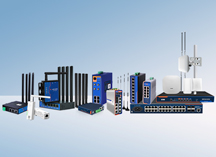
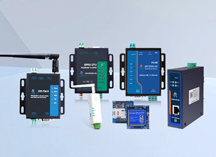
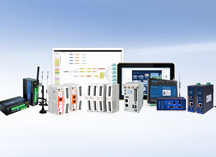
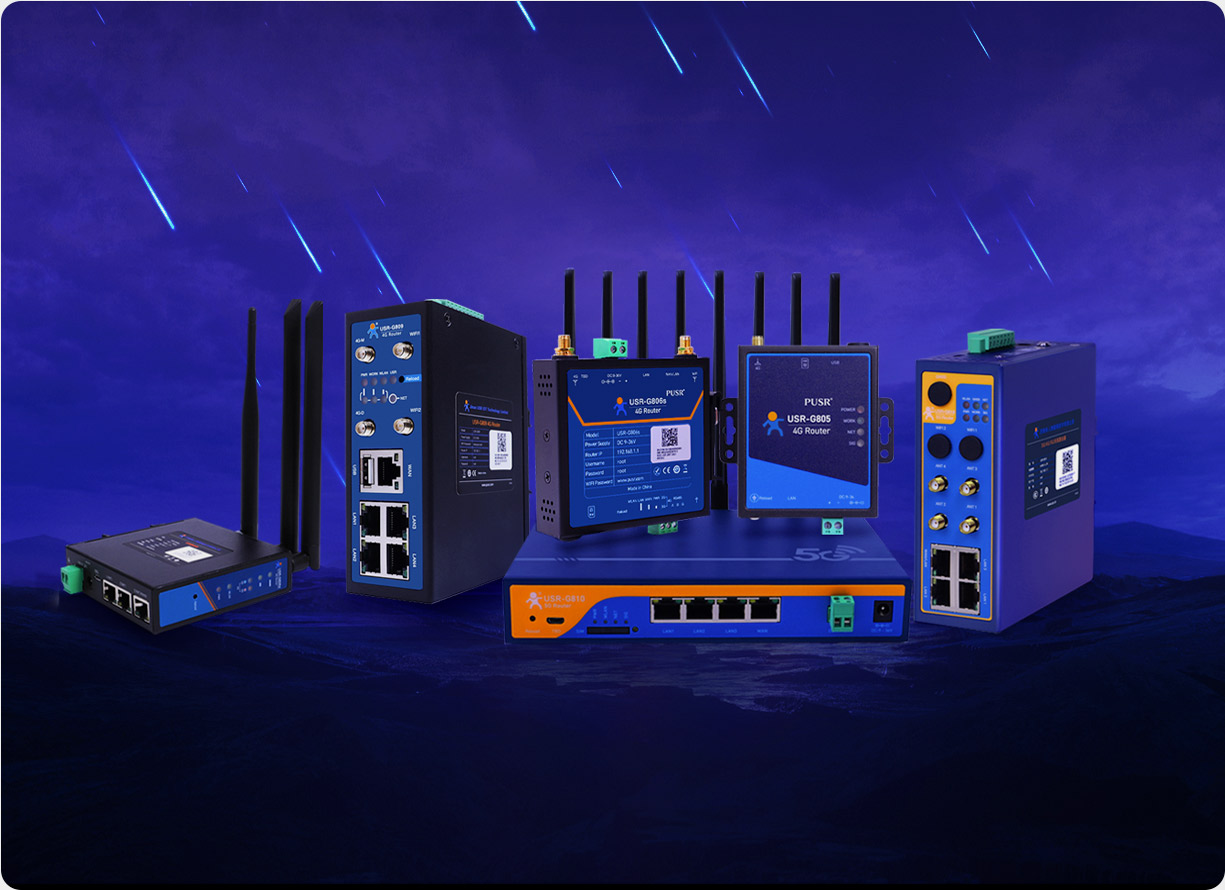
Many projects require a stable, customizable network connection, and off-the-shelf routers often fall short in performance, interfaces, or flexibility. Some buyers spend sixty dollars on a fanless mini industrial PC, flash OpenWrt onto it, and get routing, firewall, and ad blocking all in one pass. This approach has become common practice for home and small-business networks.
But what's the actual difference between running OpenWrt on an embedded industrial PC and using a regular soft router? And what can it do that standard routers simply can't?
A typical home or commercial router can do three things: assign IP addresses, forward packets, and provide Wi-Fi. If a project only needs these, a couple hundred yuan device is enough. Once requirements go beyond that baseline, bottlenecks show up one by one.
① Performance ceiling is low. Most routers use single-core or dual-core ARM chips, and throughput drops noticeably when running a few VPN tunnels or enabling QoS.
② Limited interface variety. Two or three Ethernet ports, one WAN port, no serial ports—industrial equipment can't connect directly.
③ Closed system. Firmware functionality is locked by the vendor, no extra software can be installed, and custom scripts won't run.
④ Poor adaptability to industrial environments. No wide-voltage power input, no wide-temperature design—mount one in a factory workshop or outdoor cabinet, and problems may surface within months.
An embedded industrial PC wasn't designed to be a router. Its core purpose is data acquisition and edge computing: it runs Linux Ubuntu, includes industrial bus interfaces (RS485 / RS232 / CAN), accepts 9-36V wide-voltage input, operates from -25℃ to +75℃, and features a fanless aluminum housing.
On top of Linux's flexibility, routing is an easy secondary capability.
Take the PUSR USR-EG828-GL as an example. This device comes with dual gigabit Ethernet ports, 2.4GHz Wi-Fi (802.11 b/g/n), and global 4G LTE bands. These three can be configured for primary-backup switching or load balancing: when Ethernet fails, traffic switches to 4G automatically; when 4G signal is weak, Wi-Fi takes over. Critical services stay online. Standard routers rarely offer this level of redundancy.
A USR-EG528 industrial PC features an RK3562 quad-core Cortex-A53 processor (2.0GHz), two RS485 serial ports and two RS485/RS232 serial ports. After flashing OpenWrt, it becomes more than a router—it doubles as an edge gateway. Through Node-RED or Docker containers, it can collect Modbus, IEC 61850, IEC 104, DLT645 and other protocol data in real time, apply local logic, then push results to a host system via Ethernet or 4G.
Standard routers lack serial ports and can't connect to PLCs or meters. An industrial PC can.
OpenWrt's core advantage is software-defined networking: traffic shaping, ad blocking, split tunneling, IPv6, multi-WAN aggregation, VPN servers—all implemented in software. Flash a different image on the same box, and almost any network-related function is possible.
More importantly, when OpenWrt runs on an industrial PC, local logic survives network outages. The USR-EG228 uses a RK3506J triple-core processor (1.2GHz) with fanless passive cooling. Even when internet connectivity is lost, local DI/DO interlocking and protocol conversion continue to work—critical for industrial scenarios that depend on real-time response.
Place a router in a factory workshop, outdoor cabinet, or cold-storage warehouse, and the environment is far harsher than an office. A USR-EG928A with a RK3588J processor and 6 TOPS NPU can handle up to 32 network cameras simultaneously, while providing DI/DO, CAN, and RS485 interfaces. The -25℃ to +75℃ operating range and 9-36V wide-voltage input mean continuous operation in extreme temperature fluctuations—something standard routers can't tolerate due to overheating or voltage instability.
If a project only needs to serve a few computers and phones, a standard router is fine. When a scenario calls for the following, using an industrial PC as an OpenWrt router becomes the more rational choice:
A manufacturing workshop with 120 devices needs to monitor all PLCs and upload data to the cloud. A USR-EG828-GL serves as the network hub: dual gigabit ports connect to the switch and host computer, 4G acts as backup, two RS485 ports connect to field meters, and a Node-RED flow performs Modbus-to-MQTT protocol conversion. One machine, three jobs: routing, data collection, and protocol translation.
Another example is a security project. The EG928A's 6 TOPS NPU drives 32 cameras for face recognition, DI channels receive IR beam and door-magnet sensor inputs, DO channels control sirens and electromagnetic locks. When a sensor triggers, local logic completes the interlock in milliseconds: siren, strobe, video snapshot, 4G alert—everything handled locally, no cloud dependency.
Using an industrial PC as an OpenWrt router means running a more capable platform to handle routing tasks while also doing things standard routers can't. Multi-network redundancy, rich industrial interfaces, local logic execution, and industrial-grade reliability—these aren't nice-to-haves in specific project scenarios. They're requirements.
If a project only needs to serve a few computers and phones, a standard router is fine. But when the scenario involves industrial environments, multi-network redundancy, or data acquisition, it's worth asking: one machine handling both routing and edge computation—wouldn't that save effort?
Yes, but architecture compatibility matters. OpenWrt supports x86_64 and ARM architectures. PUSR embedded industrial PCs (such as USR-EG828-GL, USR-EG528, USR-EG228) ship with Linux Ubuntu 20.04/24.04, which is already a complete Linux environment. If only routing functionality is needed, a custom OpenWrt firmware can be compiled for the ARM device. For maximum flexibility, choose an x86 architecture device and flash the standard OpenWrt x86_64 image directly.
Standard router firmware is typically closed, with vendor-defined functionality that users can only configure within limited parameters. OpenWrt is an open-source Linux-based embedded distribution with a fully writable filesystem and package management (opkg). Users can freely install and uninstall software, customize firewall rules, QoS policies, VPN configurations, and nearly any network-related function.
Soft routers typically use general-purpose x86 mini PCs—powerful with abundant interfaces, but lacking industrial-grade features. Embedded industrial PCs offer a wider operating temperature range (-25℃ to +75℃), wide-voltage input (9-36V DC), fanless design, and industrial bus interfaces (RS485 / RS232 / CAN). They also support 4G as a backup network link, providing higher reliability in harsh environments.
In OpenWrt, multiple WAN interfaces can be created (e.g., eth0 for Ethernet, wwan0 for 4G), with primary-backup switching or load balancing achieved through policy routing. For example, set Ethernet as primary and 4G as backup: when Ethernet disconnects, traffic automatically switches to 4G, ensuring critical services stay online. PUSR industrial PCs come with Ethernet, 4G, and Wi-Fi, allowing flexible redundancy combinations.
Initial hardware cost is indeed higher. A USR-EG528 or USR-EG228 costs more than a standard router. However, if one device replaces three separate units—a router, a data acquisition gateway, and a protocol converter—the overall cost can actually be lower. For projects that only need basic networking, a standard router remains the more economical choice.
Yes. OpenWrt can configure a device as a Wi-Fi access point (AP), wireless client, or wireless bridge. Devices like the USR-EG828-GL and USR-EG528 include built-in Wi-Fi modules (802.11 b/g/n). After flashing OpenWrt, the device can function as a wireless AP directly, or be configured as a wireless client to receive an upstream Wi-Fi signal and distribute it via wired Ethernet to other devices.
Yes. Most PUSR embedded industrial PC support "AC Power Loss Restart" in BIOS—after power is restored, the device powers on automatically without manual intervention. Combined with wide-voltage input (9-36V DC) and watchdog timers, the device can self-recover from voltage fluctuations or system lockups, ensuring 7×24-hour continuous operation.
Factory defaults can be restored via the physical reset button: with the device powered on, press and hold the Reset button for more than 10 seconds, or hold it during boot until the indicator light flashes rapidly (Failsafe mode). Alternatively, after logging in via SSH, run firstboot && reboot to reset all configurations. It's recommended to back up the current configuration before making any major changes.