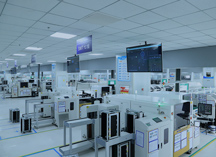
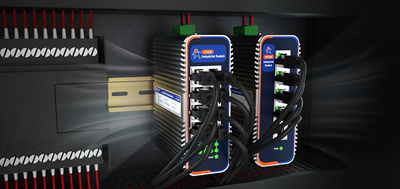
On a manufacturing assembly line, a mini PC goes through more than a dozen processes from bare PCB to finished product — SMT placement, reflow soldering, AOI optical inspection, burn-in testing, temperature cycling, vibration testing. These steps provide quality assurance for consumer products, but when a device needs to be mounted inside machinery, electrical panels, energy storage cabinets, or placed alongside a production line, consumer-grade manufacturing standards alone are not enough.
Industrial computers add several critical steps in design and testing. These differences directly affect long-term stability at the deployment site.
Mini PCs typically use small fans for passive cooling. The fan is the only moving part in the entire unit and one of the most common failure points. Industrial computers widely adopt fanless designs — the chassis itself is the heatsink. A full aluminum enclosure conducts heat from the chips to the surrounding environment through thermal conduction.
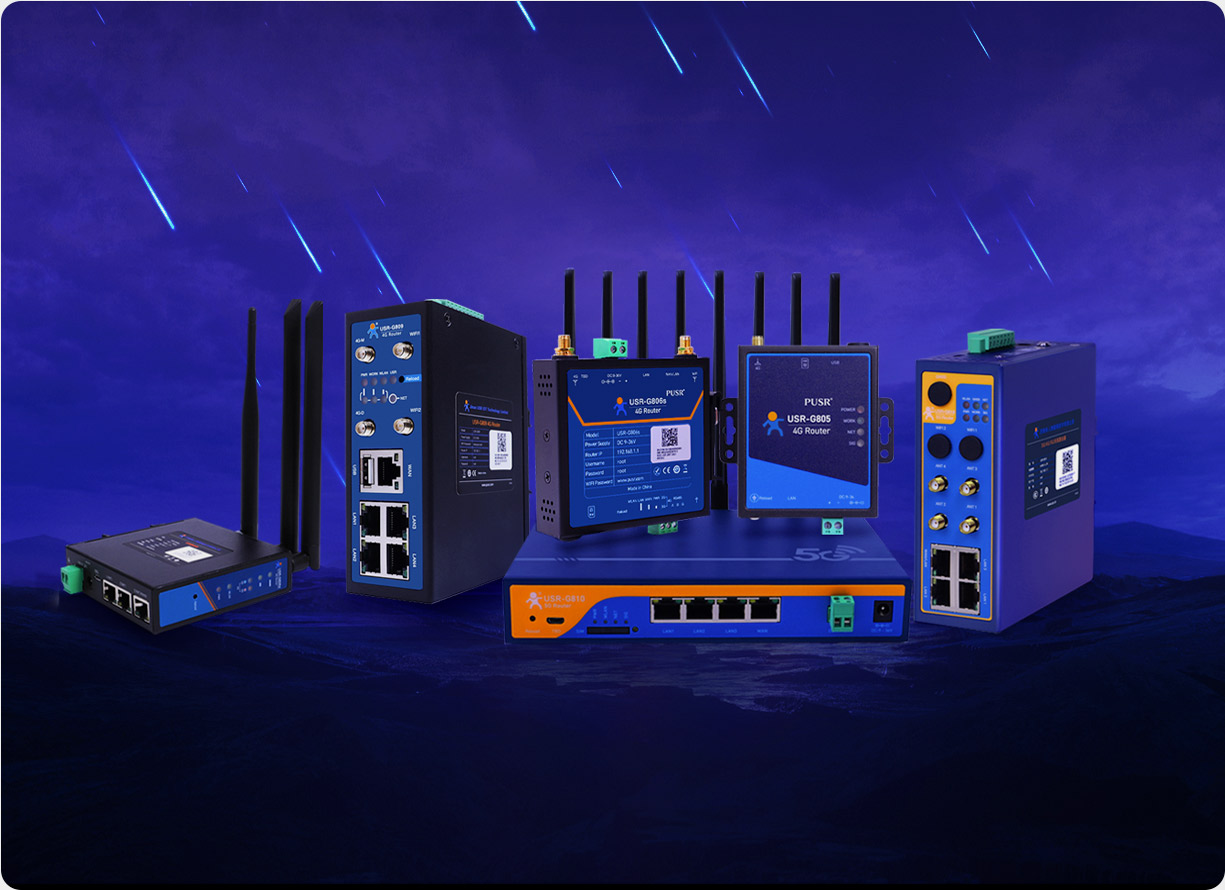
Take PUSR's USR-EG528 as an example. It features a Rockchip RK3562 quad-core processor, fanless construction, natural cooling via aluminum casing, and an operating temperature range of -25 to 75°C. The USR-EC series (EC100/EC300/EC500) also uses a fully enclosed aluminum body with fanless cooling. Paired with a wide-temperature SSD, it runs continuously in environments from -20 to 60°C.
Absence of a fan does not mean compromised performance. By increasing heat dissipation surface area and optimizing thermal design, industrial computers typically maintain surface temperatures between 45-55°C at equivalent compute levels, meeting 7×24-hour continuous operation requirements without a fan.
Consumer mini PCs generally use 19V or 12V fixed-voltage adapters, relying on stable mains power. Industrial power environments are more complex — electrical panels typically provide 24V DC, energy storage cabinets experience voltage fluctuations, and outdoor equipment may run on solar power.
Industrial computers widely support 9-36V wide-voltage DC input, connecting directly to 24V DC power rails on site without additional converters. USR-EG228 supports 12-36V, USR-EG528 supports 9-36V, and USR-EC300/EC500 also accept 12-36V input. Cabinets with existing 24V DC distribution can power the industrial computer directly, eliminating the power adapter as an extra failure point.
Wide-voltage input also includes reverse-polarity protection — connecting positive and negative leads incorrectly will not damage the device, which is important for on-site installation and maintenance.
Mini PC interfaces focus on USB, HDMI, and Ethernet, targeting office and entertainment use. Industrial computers add substantial industrial communication interfaces on top of these.
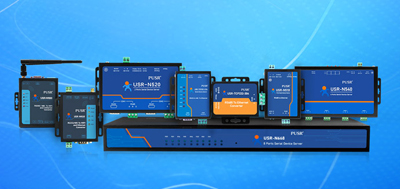
USR-EG228 provides 2×RS485, 2×CAN FD, and 2×Ethernet, connecting directly to sensors, PLCs, and instruments on site. USR-EG528 offers 4×RS485 (2 of which can switch to RS232), 2×Ethernet, and 2×USB 3.0. For more channels, USR-EG828-EMS reaches 8×RS485, 2×CAN, 16×DI (digital input), and 16×DO (digital output), purpose-built for scenarios like energy management systems requiring heavy I/O.
The X86-based USR-EC300 comes with 6×serial ports (2×RS232 + 4×switchable RS232/RS485/RS422), 2×Gigabit Ethernet, and 6×USB 3.0, suitable for Windows industrial software scenarios needing many peripherals.
Mini PCs ship with Windows or standard Linux distributions for general computing. Industrial computers select operating systems based on application scenarios.
ARM-based industrial PCs (such as the EG series) typically preinstall Ubuntu Linux with Node-RED visual programming. Data acquisition, protocol conversion, and edge computing logic can be built by dragging nodes — no coding required. PUSR's WukongEdge engine supports Modbus, IEC 61850, IEC 104, BACnet, and other industrial protocols. Device networking is achieved through simple configuration.
Projects requiring Windows software (CODESYS, LabVIEW, traditional SCADA) should choose the X86-based EC series, which supports both Windows and Linux and maintains direct compatibility with existing software ecosystems.
Edge AI is an important development direction for industrial computers. The USR-EG928A features a Rockchip RK3588J processor with a built-in 6 TOPS NPU, supporting up to 32 IP cameras and running AI applications such as face recognition, license plate recognition, and defect detection. For lighter AI tasks (simple classification, counting), 1 TOPS NPU is sufficient — both USR-EG528 and USR-EG828-GL include 1 TOPS NPU.
During factory quality inspection, industrial computers pass through all the functional and burn-in tests that mini PCs undergo, plus additional industrial-grade tests:
These tests rarely appear in consumer mini PC spec sheets but form the foundation for long-term stable operation in industrial settings.
Industrial computers are designed for industrial environments: fanless cooling, wide-voltage DC power, full aluminum chassis, and passage through temperature cycling, vibration, and ESD tests at industrial grade. Mini PCs target office and consumer scenarios, relying on fan cooling and fixed-voltage adapters, with an operating temperature range typically of 0-40°C. The core difference lies in long-term operational stability and environmental adaptability.
Start with the software you need to run. If the main tasks are device networking, data acquisition, protocol conversion, and edge computing, ARM architecture (such as the PUSR EG series) offers lower cost, lower power consumption, and preinstalled Node-RED for quick setup. If you need to run Windows software (CODESYS, LabVIEW, traditional SCADA) or X86-exclusive Docker containers, choose X86 architecture (such as the PUSR EC series). The principle: software determines architecture; performance comes second.
Fans are moving parts. After long-term operation, bearing wear reduces cooling efficiency and can cause complete failure. Industrial computers are usually mounted inside cabinets or equipment where ventilation is limited. Fan-cooled designs accumulate dust more easily and have higher failure rates. Fanless construction uses a full aluminum外壳 for natural cooling, offering more reliable 7×24-hour operation.
Industrial sites commonly use 24V DC distribution systems. Wide-voltage input (9-36V DC) connects directly without an extra power adapter. It also accommodates voltage fluctuations and includes reverse-polarity protection — incorrect wiring will not damage the device, reducing on-site installation and maintenance risk.
Mainstream industrial computers support Modbus RTU/TCP, IEC 61850, IEC 104, DL/T 645, DNP3.0, BACnet, and other power and industry protocols, as well as OPC UA, MQTT, and other IoT protocols. PUSR's WukongEdge engine includes built-in protocol conversion for multiple standards, achievable through visual configuration without writing code.
Consumer products typically support 0-40°C. Industrial computers generally handle -25 to 75°C (EG series) or -20 to 60°C (EC series), with wide-temperature SSDs enabling operation in even more extreme conditions. When selecting, reserve at least 20°C margin between the on-site ambient temperature and the device's rated maximum.
Yes. Edge AI is a key Development Direction for industrial computers. The PUSR USR-EG928A features a RK3588J processor with a 6 TOPS NPU, supporting up to 32 IP cameras and running AI applications like face recognition, license plate recognition, and defect detection. For lighter tasks (simple classification, counting), the EG528 or EG828-GL with 1 TOPS NPU is sufficient.
Beyond factory functional and burn-in testing, industrial-grade devices should also pass temperature cycling, vibration, ESD protection (6KV contact / 8KV air), and electromagnetic compatibility testing (electrical fast transient bursts, surge interference). When selecting, request test reports from the supplier and conduct small-scale pilot verification at the actual deployment site.