Many people working on industrial projects and remote maintenance have tried to take shortcuts: directly inserting the secondary SIM card from their mobile phones or the data SIM card bundled with their phone plans into a cellular WiFi router. At the very beginning, it indeed feels convenient — no extra trips to the carrier for formal procedures are needed, and the cost seems relatively low. It also works fine for short-term tests lasting a few days. However, when applied to long-term, stable and critical scenarios, many people have encountered real, troublesome pitfalls.
The first and most common risk comes from the carrier's background monitoring, speed throttling and SIM card deactivation. The terms of service for regular mobile SIM cards clearly stipulate that they are designed for use on personal mobile phone terminals, while the internet access behavior of a cellular WiFi router is completely different from that of an ordinary mobile phone.
A cellular WiFi router stays online 24/7, continuously transmitting device data, surveillance video feeds and PLC operation status. Its monthly data usage can easily reach tens or even hundreds of gigabytes. This kind of high-frequency, high-volume data transmission from a non-mobile terminal can be easily identified by the carrier's traffic management system.
Many users have encountered such situations: after using the SIM card for about half a month, the network speed suddenly drops from dozens of Mbps to only a few Mbps, or the service is even cut off directly. When they call customer service, they are informed that "the SIM card is being used on an unauthorized device", which has triggered the carrier's card deactivation mechanism. If this happens in critical scenarios such as outdoor surveillance, unattended photovoltaic power stations and remote PLC control, a few hours of network outage may lead to data loss, device out-of-control and cause considerable losses.
The second easily overlooked problem is that regular mobile SIM cards cannot meet the special requirements of industrial scenarios at all. Industrial sites are often located in suburbs, tunnels or remote factory areas, where signal strength fluctuates drastically and strong electromagnetic interference is common. Regular mobile SIM cards are not optimized for such high-stability scenarios. Worse still, many non-compliant data SIM cards have unclear sources — they are resold by unregulated third-party vendors, with no formal enterprise-level service guarantee from official carriers.
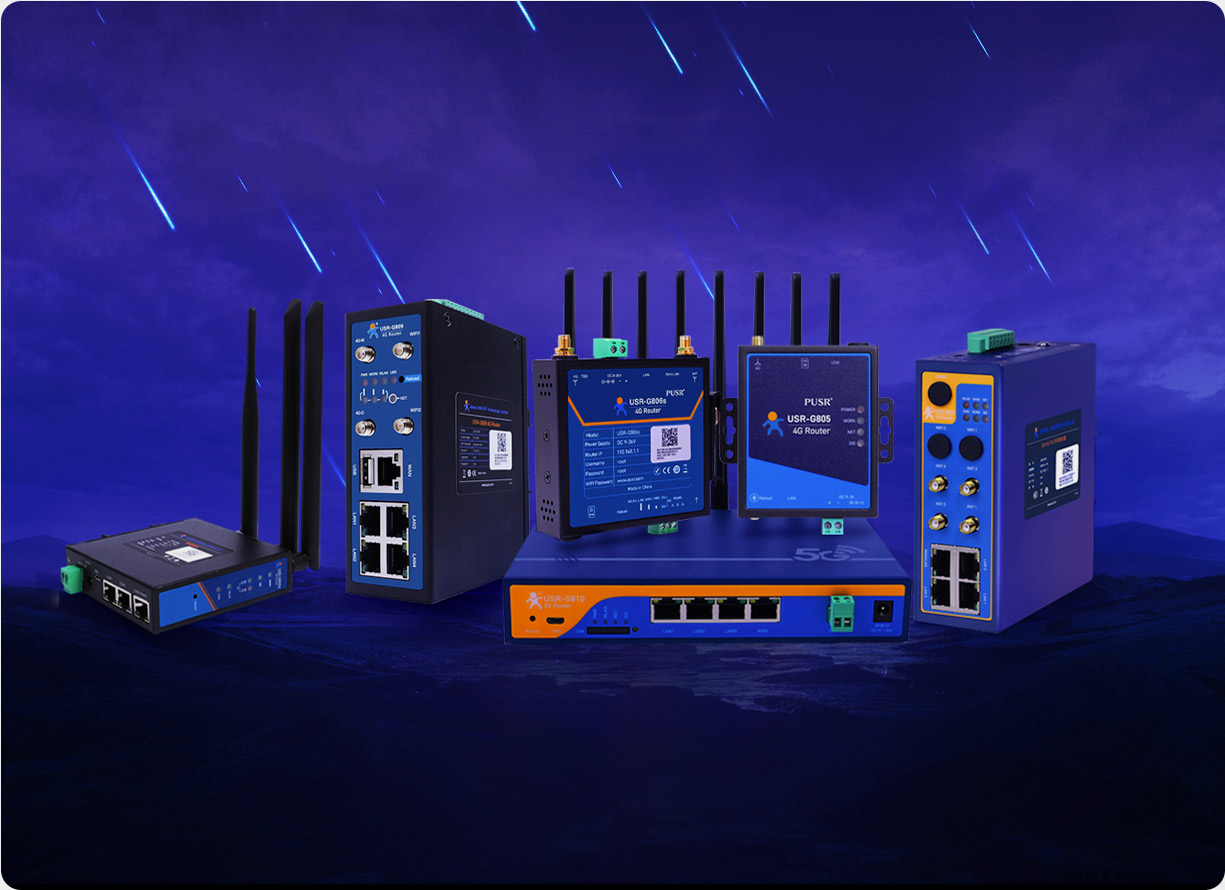
These SIM cards often suffer from sudden disconnection, signal drift, or even direct deactivation by the platform, leaving users with no valid after-sales channels to turn to. In contrast, formal industrial-grade 4G routers, such as the USR-G806w, have passed multiple authoritative certifications including 3C, SRRC and cybersecurity. They are equipped with industrial-grade hardware protection, specially adapted to long-term high-load internet access requirements. When used with compliant industrial IoT SIM cards, they can ensure stable online operation in harsh environments and avoid random disconnection and offline issues.
Many people initially think that inserting a mobile SIM card into the router is "cost-saving and convenient", but in fact, this solution is only suitable for temporary tests and short-term emergency scenarios, and must never be used in formal industrial project deployments.
Once the service is interrupted due to SIM card speed throttling or deactivation, the subsequent maintenance costs and related losses will far exceed the small amount of money saved on data fees in the first place. For long-term critical business deployments, it is essential to choose compliant industrial-grade network devices and corresponding dedicated IoT SIM cards, so as to truly avoid these unnecessary risks.