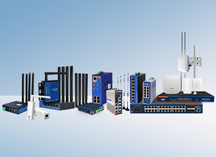
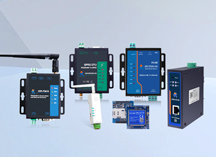
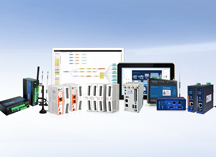
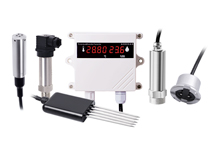
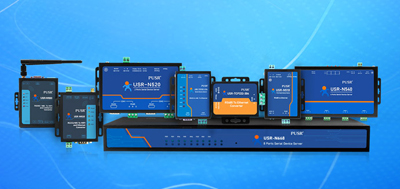
A screen, a computer, communication, and industrial ports in one panel. Fewer trips, fewer boxes.
A field engineer's typical morning: a laptop, an external monitor, a USB keyboard, serial cables, a 4G router, and a handheld terminal piled into a case. Three hours later, cables are tangled, two tools are missing, the laptop battery is dying, and the remote client's screen keeps freezing.
Mount an industrial panel PC on a control cabinet, plug in power and an Ethernet cable, and boot up. That's it.
This isn't about making a PC smaller. It's about reordering the field engineer's workflow—fewer things to carry, fewer cables to connect, fewer points of failure.
A PLC on an automotive welding line needs its motion trajectory parameters adjusted. The engineer squats beside the welder, holding a teach pendant in one hand, typing on a keyboard with the other, eyes glued to a trajectory curve on a screen. The traditional setup: a laptop connected to an industrial monitor, cables running from the floor to the workstation, USB-to-serial adapters when ports run out.
An industrial panel PC mounts directly on the welder's control panel—VESA bracket or flush installation, either works. The capacitive touchscreen works even with gloves on. RS485 connects to the PLC, RS232 connects to the teach pendant, one Ethernet port to the production network, the other to remote support. No adapters. No external keyboard.
A car manufacturing plant using this approach cut line changeover time by 35 percent and reduced product defect rates by 22 percent. The equipment didn't become more capable—the engineers were simply no longer limited by cables and missing ports.
An electrical dispatch center requires field inspections at substations. The engineer needs to view equipment operating temperatures, historical data trends, and real-time video simultaneously, while recording inspection results. Previously: a handheld terminal for data, a laptop for logs, a camera for photos—three devices, no data sharing.
The industrial panel PC splits the screen into three windows: temperature curves on the left, equipment status in the center, inspection checklist on the right. RS485 reads sensor data directly, Ethernet or 4G uploads photos to the cloud. Problems spotted on site get annotated on-screen, data auto-archives, no return-to-office cleanup needed.
A power grid dispatch center using this approach connected multiple panels to display real-time data across the province, raising renewable energy absorption rates by 12 percent. The gain wasn't more screens—it was the ability to integrate on-site data in one place.
Equipment malfunctions. The field engineer needs a back-office expert to see the same screen. A laptop video call means noisy audio, a tiny picture, the expert can't see details. A smartphone video means shaky footage, no live data visible.
An industrial panel PC connects directly over 4G or Wi-Fi. A remote expert sees the same monitoring view on a browser and can push parameter changes. The engineer operates on-screen, the expert watches every step of the feedback. No extra software to install, no complex environment setup.
A device used on-site is not a desktop PC. Don't just check the processor model. These dimensions matter more in practice:
3.1 Are the interfaces sufficient?
Field equipment uses every interface—Modbus RTU needs RS485, legacy machines use RS232, newer systems run on Ethernet. If the panel PC has only one Ethernet port and no serial ports, you'll be lugging adapters to the site, negating the whole convenience. Check for built-in RS232, RS485, dual Ethernet, and USB ports—enough to connect the equipment actually on site.
3.2 Can it handle the environment?
3.3 Is the installation flexible?
VESA bracket mounting works for hanging beside a control cabinet. Flush installation works for embedding into a panel. The form factor shouldn't be too large—space on site is limited. Around 299mm × 239mm × 57mm fits a usable screen without hogging space.
3.4 Is the system open?
Linux Ubuntu supports custom applications. Android suits fixed-function displays. Node-RED–style visual programming lets field engineers build their own dashboards without waiting for a development team's schedule.
3.5 Is communication flexible?
Ethernet is the foundation. Wi-Fi is the backup. 4G or 5G is the last resort. Three modes that can switch freely means a fallback when the on-site network is unstable. OpenVPN and IPSec support keeps remote data transmission secure.
Some "all-in-one" products on the market are just a laptop screen glued to a laptop chassis, running laptop components inside, cooled by a small fan. Fine for an office. In an industrial field, fan dust buildup and fan bearing wear cause failures in months.
An industrial-grade panel PC uses passive cooling—no fan, aluminum chassis dissipating heat naturally. The CPU is soldered, not socketed. Memory and storage are industrial-grade, stable from -20°C to 60°C. These details don't sound impressive, but they determine whether the device survives a year on site or six months.
A field engineer's real need isn't "more computing power." It's "fewer steps to do the job." Every extra device means one more thing that can be forgotten, one more connector that can be wired wrong, one more component that can fail.
The value of an industrial panel PC lies in that exact prob