Can a Cellular Router Keep Your Substation Room Communication Reliable?
You only know it's leaking when it's flooded. You only find out the smoke detector is broken when there's a fire — 90% of substation room remote monitoring fails at "communication."
Don't scroll down yet. Answer me first:
First: Can you see real-time video from your substation room right now?
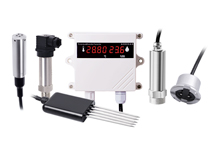
Second: Your smoke detectors, water leak sensors, temperature and humidity sensors — do they upload data every 5 minutes, or… do you have no idea how often they actually transmit?
Third: The last time something went wrong in your substation room, did you knowin advance, or did you find outafter the fact?
If the answer to any of these three questions is fuzzy —
Then this article is written for you.
Not because you're unprofessional. Quite the opposite — it's precisely because you'retooprofessional that you overlook the most inconspicuous, yet most fatal, link in the chain.
I've talked to quite a few substation O&M managers, and I've noticed a particularly ironic phenomenon:
Everyone is doing remote monitoring. Cameras installed. Sensors installed. Platform purchased. Big screen hung up. When the boss comes to inspect, he points at the screen and says, "Nice — digital transformation is going well."
But deep down, you know —
Is the data on that screen real? Is it real-time? Or is it a three-day-old cache?
The most outrageous case I've ever seen: a commercial complex's underground substation room, fully equipped with smoke detectors + water leak sensors + video surveillance. The platform showed "everything normal." Then one day, a rainstorm hit. The basement flooded — water even covered the cable trenches. The water leak sensor on the platform? Its data was stuck at10:23 AM yesterday.
The sensor wasn't broken. The data just never made it up.
Same story with the smoke detector. Another project — a fire broke out, the fire suppression system activated. After the fact, they discovered the smoke detector had had a loose connection for half a year. But because there was no heartbeat data being sent back, the platform had been showing "online" the entire time.
You see — the problem isn't that you didn't install equipment. It's that you installed equipment, but the data never arrived.
The equipment is "alive" on site. But on your platform, it's already "dead."
This is where 90% of substation room remote monitoring loses — not at the sensing layer, not at the platform layer, but at the communication layer.
Because it's invisible.
When you buy sensors, you think about "how sensitive is it?" When you buy cameras, you think about "how clear is the image?" When you buy a platform, you think about "does it have enough features?"
Nobody, when buying equipment, ever asks:"Can this thing's data be transmitted out reliably?"
But that's exactly the question you should be asking.
Let me break down just how brutal the communication environment in a substation room really is:
Scenario 1: Underground substation room.
Reinforced concrete structure. The signal attenuation is devastating. A regular 4G signal goes in and drops 3–4 bars instantly. You've tested it with your phone — in a B2-level underground substation room, making a call is a struggle, let alone transmitting data.
Scenario 2: High-rise rooftop substation room.
32nd floor, 40th floor — too far from the ground-level base station, signal is already weak. On top of that, the rooftop's metal lightning rods and steel structures are all signal killers. You stick a regular router up there — it looks like it's connected to WiFi, but the packet loss rate is shockingly high. You send 10 data packets up, 3 get lost. You don't even know it's happening.
Scenario 3: Substation room in an urban village or remote alley.
The carrier's base station doesn't cover it. You think you have signal, but it's fake — you can make calls, but you can't get online. Data packets go out and vanish into the void. The platform forever shows "device offline."
These three scenarios coverover 80% of substation rooms in China.
And when you originally designed the solution, the communication link was most likely glossed over in one line.
"Just pull an Ethernet cable, right?" — Pulling cable means excavation, permits, wall penetration. The wiring cost for one substation room can bethree timesthe cost of the sensors.
"Just use WiFi, right?" — WiFi degrades after two walls. There's no WiFi coverage in basements.
"Just use a 4G data card, right?" — A data card works, sure. But it has no watchdog — if the network drops, it won't auto-reconnect. No multi-SIM switching — if one carrier has a problem, everything's dead. No industrial-grade protection — the humidity and heat in a basement will burn it out in three months.
So you see — it's not that you don'twantto solve the communication problem. It's that you've never found a solution that's "just right."
Too heavy (pulling fiber) — you can't afford the cost.
Too light (a data card) — it can't survive the environment.
That "just right" thing has actually always existed. Most people just don't know about it.
I don't want to scare you, but I need you to see something clearly:
The gap between "finding out after the fact" and "knowing in advance" isn't a time gap.It's a gap in accident severity.
Water leak sensor alerts 2 hours early → you remotely shut off the pump, notify staff to drain →Loss: a wet floor.
Water leak sensor data never transmitted → you don't know until water's flooding in →Loss: a transformer destroyed, whole building blacked out, hundreds of thousands in compensation.
Smoke detector alerts 5 minutes early → you remotely confirm the fire, trigger fire suppression →Loss: one smoke detector probe.
Smoke detector data never transmitted → you don't know until the fire is raging →Loss: an entire substation room, possibly lives.
You think you're saving the cost of a router. What you're actually gambling on is whether an accident will happen.
I know what you're thinking — "I've been doing this for over a decade, and nothing bad has ever happened."
I've heard that sentence too many times.
But have you ever considered — it's not that you've been lucky. It's that you haven't met the night when "communication just happened to drop"?
Accidents never pick people. They pick the weakest link. And communication is that weakest link. Because it's so quiet — so quiet you don't even feel its existence —until the moment it doesn't exist.
Enough about the problems. Let's talk solutions.
The logic is actually simple: you don't need to rebuild the entire system. You just need to add a"communication insurance policy"behind your existing cameras and sensors.
This insurance policy needs to meet three conditions:
First: Three-network coverage. Carrier-agnostic.
China Mobile, China Unicom, China Telecom — whichever has the stronger signal, use that one. If one carrier has a problem, automatically switch to another. Not "can connect, good enough" — but"there's always one that can connect."
Second: Industrial-grade protection. Survives harsh environments.
What's the environment like in a substation room? High temperature, humidity, dust, electromagnetic interference. You put a home router in there, it's dead in three months. It has to be industrial-grade — wide temperature range, moisture-proof, anti-interference, 24/7 operation without shutdown.
Third: Auto-reconnect on disconnection. You don't have to manage it.
This is the most critical one. You can't get up at midnight and go restart a router in the substation room. It must detect disconnection on its own, reconnect on its own, recover on its own. All you do is leave it alone.
The thing that meets all three conditions is called, in the industry, a cellular router.
It's not a new concept. But in the substation room scenario, it's the true"final piece of the puzzle."
Let me tell you a true story.
A property management company in Hangzhou manages 23 substation rooms, spread across basements, rooftops, and corners of old residential communities. Their previous state was the same as yours — cameras installed, but data came and went. Half the devices on the platform showed "offline."
Then they added a cellular router to each substation room, routing all sensor and camera data back over 4G. Three-network switching. Auto-reconnect on disconnection.
Three months later, their platform online rate went from58% to 99.7%.
One time, a water leak sensor in an underground substation room triggered. The platform received the alert immediately. They remotely confirmed it was a broken air conditioning condensate pipe, and immediately sent someone to shut off the valve. The whole process took 15 minutes. Zero equipment damage.
Without that router, they would have discovered it the next morning during routine inspection — the floor would have been flooded, the transformer might have been soaked.
Their O&M supervisor said something to me that I still remember:
"Before, we were 'putting out fires after they started.' Now, we 'snuff it out before it catches.' The difference between the two? One router."
I know what you're thinking right now.
You're thinking: "I get it, but I don't want the hassle."
I'm not asking you to hassle.
You don't need to rewire. You don't need to replace your existing sensors and cameras. You don't need to overhaul your current platform. You just need to add a"data relay station"in your substation room — to send the on-site data out, steadily and reliably.
That's it.
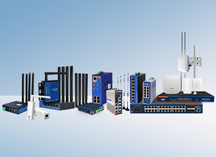
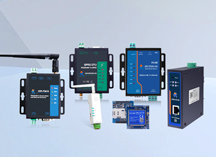
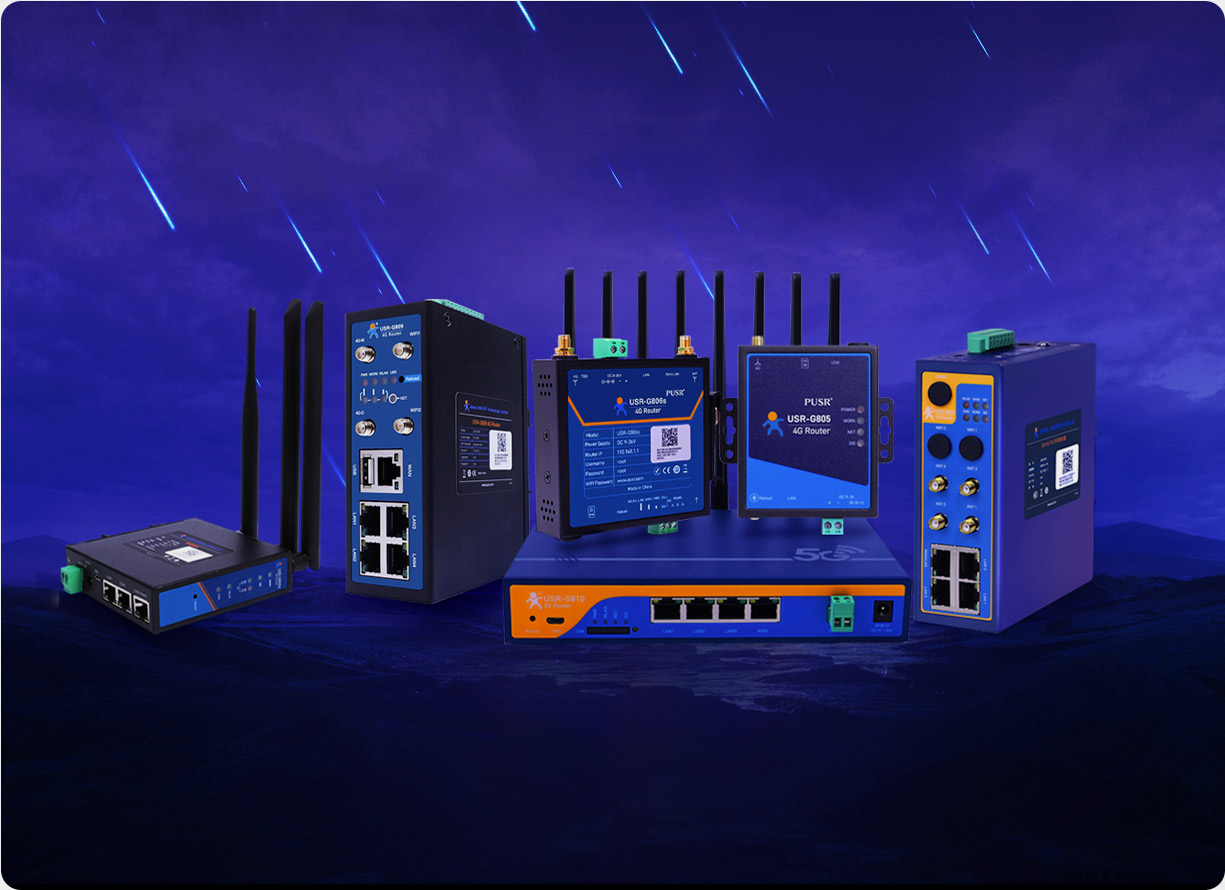
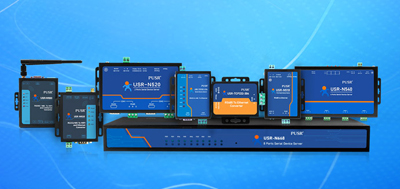
There are quite a few cellular routers on the market that can do this. If you don't want to spend time comparing, take a look at theUSR-G806wthat many people are using. Three-network coverage, industrial-grade protection, auto-reconnect on disconnection — it handles basements and rooftops alike. And it's not expensive. One router per substation room, total cost might be less than the gas money for one of your midnight emergency runs.
But at the end of the day, the product is just a tool. What's really worth your time thinking about is this question:
Is your substation room monitoring actually real — or just a false sense of security?
When it comes to substation room remote monitoring, 90% of people lose at communication — not because communication technology is hard, but because everyone focuses on what's"visible"and ignores what's"transmittable."
Cameras can see, but if the data can't get out — it's blind.
Sensors can detect, but if the signal can't get out — it's useless.
A platform can have all the features in the world, but if the data is three days old — it's fake.
You don't lack equipment.You lack a channel that lets data "arrive alive."
You only know it's leaking when it's flooded — not because you didn't install a water leak sensor, but because the water leak data never reached you.
You only find out the smoke detector is broken when there's a fire — not because you didn't install a smoke detector, but because nobody received its heartbeat packet.
Neither of these things should have happened.
And the cost of preventing them?It might be a lot lower than you think.