How 5G + AGV Break Through the "Efficiency Dilemma" in Pharmaceutical Warehousing? The Practice of This Pharmaceutical Enterprise Provides the Answer
In the pharmaceutical industry, warehousing management serves as a crucial link connecting production and the market, with its efficiency directly impacting a company's cost control, product quality, and customer satisfaction. However, traditional pharmaceutical warehousing models are facing unprecedented challenges:
Tasks such as drug sorting, handling, and inventory counting rely heavily on manual operations, which are not only inefficient but also prone to errors due to fatigue and negligence. The head of a large pharmaceutical enterprise's warehouse candidly stated, "In the past, our warehouse required hundreds of workers. Although we have reduced some manpower through automated equipment, we still need dozens of people to coordinate during peak periods, with labor costs accounting for over 30% of the total operating costs."
Traditional warehousing relies on paper records and manual inventory checks, resulting in delayed data updates and frequent occurrences of inventory overstocking or shortages. The supply chain director of a pharmaceutical enterprise revealed, "Due to inaccurate inventory data, we once missed an important order due to stockouts and also had to scrap expired drugs due to overstocking, resulting in annual losses of several million yuan."
In scenarios involving urgent drug demands (such as during epidemics) or multi-hospital collaborative efforts, the dispatch efficiency of traditional warehousing struggles to meet requirements. The director of the materials department at a top-tier hospital stated, "The average time it takes for emergency drugs to be retrieved from the warehouse to the operating room exceeds 7 minutes, far exceeding the industry standard of 3 minutes, directly affecting the success rate of rescues."
Drugs are sensitive to environmental conditions such as temperature, humidity, and light. Traditional warehousing has limited monitoring means, making it difficult to achieve full-process traceability. The quality inspection head of a pharmaceutical enterprise无奈 (helplessly) said, "Once, a batch of vaccines had to be scrapped due to a lack of cold chain monitoring, resulting not only in huge losses but also damaging the company's reputation."
These pain points act like chains, restricting the efficiency improvement of pharmaceutical warehousing and also hindering the sustainable development of the industry.
In the wave of digital transformation, the integrated application of 5G and AGV (Automated Guided Vehicle) provides a brand-new solution for enhancing the efficiency of pharmaceutical warehousing. Its core value lies in:
The ultra-low latency (<10ms) and high reliability (99.999%) of 5G networks provide a solid guarantee for the real-time control of AGVs. In the 5G smart warehousing project of Yuchi Zhilian in Guangxi, AGVs receive instructions via the 5G network in just 23 milliseconds and can flexibly navigate along preset routes, improving handling efficiency by 40% and reducing labor costs by 80%. This "instant response" capability completely resolves issues such as equipment stagnation and path conflicts caused by communication delays in traditional warehousing.
Through technologies such as laser navigation and visual recognition, AGVs can autonomously complete tasks such as drug sorting, handling, and shelving, with an error rate of less than 0.1%. In the 5G + smart warehousing project of Ganzhou Jinhuan Magnetic Selection, AGVs replaced manual labor for repetitive tasks, with workers only responsible for debugging and monitoring, improving efficiency by 30% while also avoiding the risk of drug damage caused by manual operations. More crucially, AGVs can operate continuously 24 hours a day, completely breaking through the time limitations of human work.
Combined with AI algorithms, the 5G + AGV system can achieve functions such as dynamic path planning, inventory optimization, and fault prediction. For example, in the practice of Kangmei Pharmaceutical, the system automatically adjusted the layout of storage locations by analyzing historical order data, improving the utilization efficiency of warehousing space by 40%. At the same time, by analyzing sensor data such as vibration and temperature, it predicted AGV fault points, reducing unplanned downtime by 80% and maintenance costs by 40%.
This pharmaceutical enterprise boasts the largest production base of traditional Chinese medicine decoction pieces in the country, with a warehousing area exceeding 100,000 square meters and an annual throughput of million tons. However, the traditional warehousing model led to three major challenges:
This pharmaceutical enterprise collaborated with China Mobile to deploy a 5G private network, achieving full coverage of 5G signals within the warehouse. Through 5G slicing technology, a dedicated transmission channel was constructed for warehousing data, ensuring the isolated transmission of core data such as orders and inventory to avoid data leakage risks. Meanwhile, the low-latency characteristic of 5G supported real-time interaction between AGVs and the cloud brain, shortening instruction response times to the millisecond level.
Fifty 5G AGVs were introduced to cover the entire process of sorting, handling, and shelving. Using laser navigation and visual recognition technologies, AGVs can autonomously plan the optimal path, avoiding collisions and congestion. At the same time, combined with RFID technology, they achieve automatic identification and positioning of drugs, with a sorting accuracy rate of 99.9%. During peak periods, the AGV cluster can operate continuously 24 hours a day, increasing the daily order processing volume by 50%.
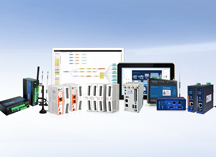
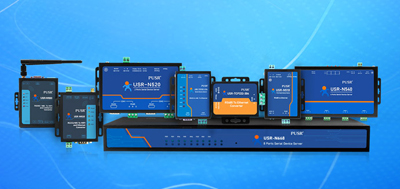
A smart warehousing platform based on the USR-EG628 industrial computer was deployed. This platform integrates functions such as edge computing, PLC programming, and local configuration, enabling real-time collection of data from AGVs, sensors, and other devices, and analyzing it through AI algorithms. For example:
In the aforementioned case, the USR-EG628 industrial computer, as the core of the smart warehousing platform, played a crucial role. Its core advantages include:
With the deep integration of technologies such as 5G, AI, and the Internet of Things, 5G + AGV will play an even greater role in the pharmaceutical warehousing field:
The "efficiency dilemma" in pharmaceutical warehousing is essentially a conflict between traditional models and digital demands. The integrated application of 5G + AGV, with its characteristics of "low latency, high reliability, unmanned operation, and intelligence," provides a solution to this conflict. From the "labor liberation" at Yuchi Zhilian in Guangxi to the "space optimization" at Ganzhou Jinhuan Magnetic Selection, and then to the "full-link upgrade" at a large pharmaceutical enterprise, practice has proven that 5G + AGV is not just a technological upgrade but also the "starting point" of the efficiency revolution in pharmaceutical warehousing.
In the future, as technologies continue to evolve, 5G + AGV will deeply integrate with more innovative technologies (such as digital twins, blockchain, and AI large models), driving pharmaceutical warehousing towards a new stage of "full-link intelligence, full-value creation, and full-ecosystem collaboration." And in this transformation, industrial computers like the USR-EG628 will serve as the "smart foundation," continuously empowering the "efficiency evolution" of pharmaceutical warehousing.