OEE Calculation Still Relies on Manual Statistics? How Edge Computing Gateway's "Digital Twin" Makes Capacity Utilization Transparent
I'm a production director managing three factories.
Every Monday at 8 AM, rain or shine, we hold a production review meeting. Each factory manager reports last week's OEE data. I consolidate it, compare it against targets, then yell at people, then set next week's plan.
I ran this process for five years. I thought I knew my production lines inside out.
Until last Monday.
Factory A reported OEE of 82%. Factory B was 79%. Factory C was 85%. All looked good—all above the target line. I was about to give some praise when the CEO suddenly threw a sheet of paper on the table.
It was from Finance. It read: last month's actual capacity utilization for the three factories was 61%, 58%, and 63%, respectively.
The conference room went silent for three seconds.
I looked at the OEE data in my hand, then at Finance's capacity utilization numbers. Only one thought in my head: how can these two numbers be so far apart?
I spent a week investigating. When I was done, I called all three factory managers into my office, closed the door, and said one thing:
"Half of the OEE numbers you reported were made up."
They didn't want to make them up. They didn't even know what the real OEE was.
OEE—Overall Equipment Effectiveness. The "bible" of manufacturing. Availability × Performance × Quality. Everyone can recite the formula.
But the question is—where does your data come from?
I tore apart the OEE statistics process at all three factories and found the same problem: it's all manual.
Factory A's approach: a paper log sheet taped next to every machine. Operators fill it in every two hours—running, idle, fault, changeover. The shift leader collects the sheets once a day, enters them into Excel. The factory manager consolidates once a week and calculates OEE.
Factory B was slightly better: they used a MES system. Operators tap buttons on a touchscreen to log status. But the touchscreen is at the back of the workshop. Operators found it inconvenient—they often forgot to tap, or would batch-enter three days' worth of data at once.
Factory C was the most "advanced": they installed sensors that could automatically collect equipment status. But sensors were only on the main equipment, not the auxiliary equipment. And the data was uploaded to the cloud with half a day's delay. The OEE they calculated was "yesterday's OEE."
Three factories, three approaches, none of them correct.
It's not that they weren't trying. The statistical method itself is fundamentally flawed.
According to industry survey data: in domestic manufacturing enterprises, the manual statistics error rate for OEE data is as high as 15%–25%. Actual measurements from an auto parts company are even more painful—manually recorded equipment downtime was on average 37% less than actual downtime. In other words, you think your OEE is 82%, but it might actually be 65%.
Those 17 percentage points between 65% and 82% are the money you're burning every year for nothing.
I later did the math: across all three factories, the inflated OEE portions added up to the equivalent of 23 million RMB in overstated annual capacity. That 23 million RMB of capacity—no machine was running, no worker was working—but it sat in the reports, leading me to make wrong decisions for five years.
I wasn't beaten by my competitors. I was beaten by my own data.
Then I started looking for solutions.
At first, I wanted a full digital twin system. I contacted two vendors. Quotes: 1.8 million and 2.6 million RMB. Timelines: 6 months and 8 months.
I said: too expensive, too slow. Is there a lighter option?
A friend who does edge computing said something to me that I still remember:
"You don't need a 'cool-looking' digital twin dashboard. What you need is a 'brain that can do the math' next to every machine."
He was talking about edge computing gateway + local digital twin model.
The logic is simple:
Running, idle, fault, changeover, no-load—no need for operators to manually log. The edge computing gateway reads directly from the PLC, from sensors, from current signals. Every second of status is recorded. Nothing missed, nothing delayed.
Not a 3D model—that's for leadership tours. The real digital twin is a mathematical model: what is this machine's rated capacity? What is its current actual output? What is the theoretical cycle time? What is the actual cycle time? All data is computed locally in real time. No cloud needed.
Not once a week. Not once a day. Every single minute. You open your phone—you can see every machine's real-time OEE, real-time capacity utilization, real-time bottleneck, anytime.
When a machine goes down, the edge computing gateway doesn't just log the word "down." It analyzes the reason—material shortage? Fault? Changeover? Waiting? Each reason corresponds to a different improvement direction. You don't need to go to the workshop and ask the operator "why did it stop just now?" The edge computing gateway already told you.
Where's the power of this logic? It doesn't let you "see" the problem. It lets you "calculate" the problem clearly.
Seeing is vague: "This machine seems to stop a lot." Calculating clearly is precise: "This machine stopped 47 times last week, totaling 38 hours. Of that, changeover accounted for 42%, material shortage 28%, faults 18%, waiting 12%. Changeover time can be compressed from an average of 23 minutes to 15 minutes, projected to improve OEE by 4.2 percentage points."
See? The first one makes you anxious. The second one makes you act.
I know what you're thinking: "I get the logic, but I have three factories, hundreds of machines—how much would it cost to change everything?"
I already did the math for you.
Traditional approach: MES + digital twin dashboard. 1.8 million RMB minimum, 6-month delivery, plus you need to maintain a 3-person IT team.
Edge computing gateway approach: one edge computing gateway per key machine. Unit cost: a few thousand RMB. Hundreds of machines, total investment less than 1/5 of the traditional approach. Deployment timeline: not 6 months—2 to 4 weeks. No dedicated IT team needed. Your electrical engineer can handle it.
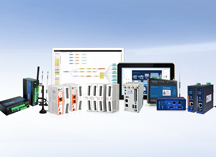
Take PUSR's USR-M300 edge computing gateway as an example. This device supports 2,000-point parallel collection, with built-in Node-RED graphical programming—no coding needed, just drag and drop modules to build your digital twin logic. It supports Modbus, OPC UA, Siemens, Mitsubishi, and hundreds of other industrial protocols. No matter what brand of PLC is on your line, it can read the data directly. OEE is calculated locally, updated every minute—you can see the data without uploading to the cloud.
An auto parts company used this approach to retrofit two production lines. Deployment: 3 weeks. Total investment: under 120,000 RMB. After the retrofit, OEE data accuracy improved from 71% (manual) to 96%. Capacity utilization was transparentized from an actual 63% to 91%. The additional annual output capacity generated was worth over 1.8 million RMB.
You don't need to spend 1.8 million RMB on a "digital twin dashboard" for leadership tours. You just need to spend 120,000 RMB to let every machine "do its own math."
I ran a one-month pilot at Factory A first. The results surprised me.
Week One: I was shocked by the data.The OEE previously reported was 82%. The edge computing gateway's real-time OEE was 64%. An 18-percentage-point gap. I went to the workshop and sure enough—operators had logged all "idle" time as "running." Because idle doesn't count as downtime, but running does. They weren't falsifying data—they were "beautifying" it. But the cost of beautification was that I couldn't see where the real bottlenecks were.
Week Two: I found the real bottleneck.The edge computing gateway's digital twin model told me: Factory A's biggest capacity killer wasn't equipment failure—it was changeover. Average changeover time was 23 minutes, accounting for 42% of total downtime. And 60% of that changeover time was spent "looking for tools" and "waiting for materials." Not an equipment problem. A management problem.
Week Three: I made a decision.I had the tools and materials needed for changeover pre-staged next to each machine. Changeover time dropped from 23 minutes to 14 minutes. Single-machine OEE improved from 64% to 71%.
Week Four: I rolled the solution out to Factories B and C.Two months later, OEE was fully transparentized across all three factories. For the first time, I had "real data."
The CEO never again asked me in the meeting "are your numbers accurate?" Because the data wasn't reported by me—it was calculated by the edge computing gateway. Every minute. Nobody can change it.
I've managed production for five years. My biggest lesson isn't "equipment keeps breaking" or "workers aren't good enough." It's—I've been making correct decisions based on wrong data.
OEE isn't a KPI. It's a mirror. If the mirror is crooked, the reflection of yourself is crooked.
Digital twin isn't a flashy dashboard. It's a ruler. If the ruler is inaccurate, everything you measure is fake.
What the edge computing gateway does is polish that mirror and calibrate that ruler. Then it lets you see the real you.
The real you might not look good. But only by seeing the real you do you know where to start fixing things.
PUSR's USR-M300 is the thing that helped me polish my mirror. Not expensive, not slow, no IT team needed. My electrical engineer deployed it in two weeks.
I'm not saying it's the only choice. But if your OEE data is also "made up"—it deserves a spot on your comparison list.
Your production line doesn't lack effort. It lacks a mirror that doesn't lie.