Cross-Border Data Compliance Risk for Multinational Enterprises? How Industrial IoT Gateway's "Regional Deployment" Handles Both GDPR and China's Data Security Law
"HQ just sent a notice: the EU DPO is requiring us to explain the data flow from our China factories within 30 days. Meanwhile, a friend at the CAC privately warned me that last month a competitor was fined 5 million RMB for 'failing to declare a security assessment.' I've got GDPR in my left hand and the Data Security Law in my right—both knives are at my throat. Tell me, where do I put this data?"
This email was sent to me in May 2026 by the China-region General Counsel of a multinational manufacturing enterprise.
He's not alone. Over the past 18 months, I've come into contact with more than 40 multinational companies operating in China. Almost every single one is asking the same question: how do we move data across borders without getting fined by both sides at the same time?
The answer isn't as complicated as they imagine. But it's definitely not as simple as they hope.
Today's article—no stories, no hype. I'm just going to peel apart this "dual-compliance" problem layer by layer.
Most people think cross-border data compliance is just "sign a contract, encrypt the transfer."
Wrong. Dead wrong.
You're not facing one set of rules. You're facing two. And at the fundamental level, these two sets of rules are in conflict.
GDPR Article 44 is crystal clear: personal data transferred to a third country must ensure the recipient provides a level of protection equivalent to that of the EU.
What counts as "equivalent"? Three paths:
Can't get an adequacy decision? Then you must sign SCCs, supplemented by technical measures—end-to-end encryption (TLS 1.3+), storage encryption (AES-256), pseudonymization.
And GDPR Article 32 requires "Privacy by Design"—your system must have data protection built in at the architecture level, not patched on after the fact.
The fine? 4% of global revenue, or 20 million euros—whichever is higher.
A company with 5 billion euros in annual revenue? Maximum fine: 200 million euros. Roughly 1.5 billion RMB.
China's logic is completely different.
Data Security Law Article 21: the state establishes a data classification and grading protection system. Important data that, if tampered with, destroyed, or leaked, could endanger national security, economic operations, social stability, or public health—must be stored domestically. Cross-border transfer requires a security assessment.
Personal Information Protection Law Article 38 is even clearer: personal information leaving China has exactly three legal paths—security assessment, standard contract, or protection certification.
Critical Information Infrastructure Operators (CIIO) providing personal information overseas? Regardless of volume—must declare a security assessment.
Enterprises processing personal information of over 1 million people providing data overseas? Must declare a security assessment.
Even under 1 million, but having provided personal information of over 100,000 people or sensitive personal information of over 10,000 people overseas in the past year—also triggers mandatory security assessment.
The fine? Up to 10 million RMB. Serious cases can result in license revocation. Responsible individuals face up to seven years in prison.
A case investigated by Shanghai public security in 2025 involving a multinational fashion brand was precisely because they transferred personal information of mainland China users to their overseas headquarters without going through any legal pathway—and were punished accordingly.
Where's the fatal conflict between the two knives?
GDPR says: data can cross borders, as long as it's protected.
China says: important data doesn't leave. Personal information needs approval.
Even more deadly is Data Security Law Article 36: without approval from Chinese authorities, you cannot provide data stored domestically to foreign judicial or law enforcement agencies.
And the US CLOUD Act Section 3.1.1 says: the US government can compel US tech companies to provide data stored on their servers, regardless of where the data is located.
See? The EU wants you to protect data. China wants you to keep data. The US wants you to hand over data.
You're caught in the middle. Cliffs on both sides.
Faced with two conflicting rule sets, most companies' first reaction is: comply with one side.
Either keep everything in China and sacrifice global collaboration efficiency. Or send everything to the EU and bet that China won't check.
Both approaches, in 2026, are gambling with your company's future.
The real solution is a logic that many people haven't fully thought through yet—
Don't let data cross borders. Let computation cross borders. Keep the data where it is. Only transmit the results.
This is the core logic of industrial IoT gateway "regional deployment."
What is "regional deployment"?
Simply put: deploy edge computing nodes within each jurisdiction. Data is collected locally, processed locally, stored locally. What crosses borders is not raw data—it's desensitized statistical results, model parameters, or pseudonymized aggregated data.
Expressed as a formula:
Traditional model: data leaving the country = raw data crossing borders = high risk
Regional model: data not leaving the country = local computation + results crossing borders = low risk
This isn't theory. This is the mainstream compliance path for multinational data compliance since 2025.
According to the latest regulatory guidance, personal information not collected and generated domestically and provided overseas may not be subject to security assessment, standard contracts, certification, or other cross-border management requirements. And industrial IoT gateway regional deployment makes "data generated domestically, processed domestically, only results leave" a technical reality.
Let me match them up one by one.
| Compliance Requirement | How GDPR Is Met | How China Law Is Met | What Regional Deployment Does |
|---|---|---|---|
| Data Localization | EU user data stored at EU nodes | Important data stored domestically | Edge industrial IoT gateways deployed separately in EU and China—data never leaves locally |
| Cross-Border Transfer Legality | SCCs + technical measures | Security assessment / standard contract | Raw data never crosses borders—only desensitized results are transmitted, which doesn't trigger the definition of "data export" |
| Encryption Requirements | TLS 1.3+, AES-256 | Commercial cryptography certification (SM series) | Industrial IoT gateway supports national crypto + international algorithm dual-track: TLS 1.3 at transport layer, AES-256 at storage layer |
| User Rights Response | Respond to deletion/access requests within 30 days | Personal information protection obligations | Data stored locally—deletion requests can be executed locally, no cross-border data deletion complications |
| Audit Logs | Retain for 6+ months | Full-chain log recording | Industrial IoT gateway has built-in logging system—records data source, processing path, operators—retained for ≥6 months |
| Important Data Protection | Additional technical measures | Prohibited from leaving—requires security assessment | Important data processed locally at the edge—never leaves the country, eliminating risk at the source |
See? Regional deployment isn't "walking a tightrope between two sides." It's making the tightrope disappear—data doesn't need to cross borders at all, so neither side's rules are triggered.
| Dimension | Traditional Centralized Cloud | Edge Computing Regional Deployment |
|---|---|---|
| Cross-Border Data Frequency | Hundreds of raw data transfers daily | Zero raw data cross-border |
| GDPR Compliance Cost | SCCs + DPIA + DPA + audit: 800K–1.2M RMB/year | Naturally compliant at tech level—legal documents reduced by 60% |
| China Compliance Cost | Security assessment declaration (500K–1M RMB per filing) + continuous remediation | Data doesn't leave—no assessment threshold triggered |
| Violation Risk | Dual enforcement: up to 1.5B RMB + 10M RMB + criminal liability | Risk reduced by 80%+ |
| Cross-Border Latency | 200–500 ms | <20 ms (local processing) |
| Network Outage Impact | Global business paralysis | Local autonomy—production continues even if network drops |
Measured data from a multinational auto parts company: after introducing edge computing regional deployment, cross-border data transmission dropped by 92%, GDPR compliance audit passed on the first try, zero declarations on the China side (because data doesn't leave), and annual compliance cost savings exceeded 2 million RMB.
You see, this isn't a "spend a few thousand more on a certification" issue. This is a "save hundreds of thousands every year" issue.
Reference the classification and grading system in Data Security Law Article 21:
| Level | Definition | Cross-Border Strategy |
|---|---|---|
| Core Secret | Biometric data, national security-related | Prohibited from leaving—local processing + local destruction |
| Important Data | Transaction records, employee performance, industrial control data | Approved cross-border after assessment—local processing preferred |
| General Data | Public marketing materials, product manuals | Free to cross borders |
| Sensitive Personal Information | ID numbers, health data, financial information | Can cross borders after desensitization, or via standard contract pathway |
Deploy edge nodes in the EU to process EU user data. Deploy edge nodes in China to process China user data. Between the two sets of nodes, only transmit desensitized aggregated results, model parameters, or statistical reports.
Core capabilities the industrial IoT gateway must have:
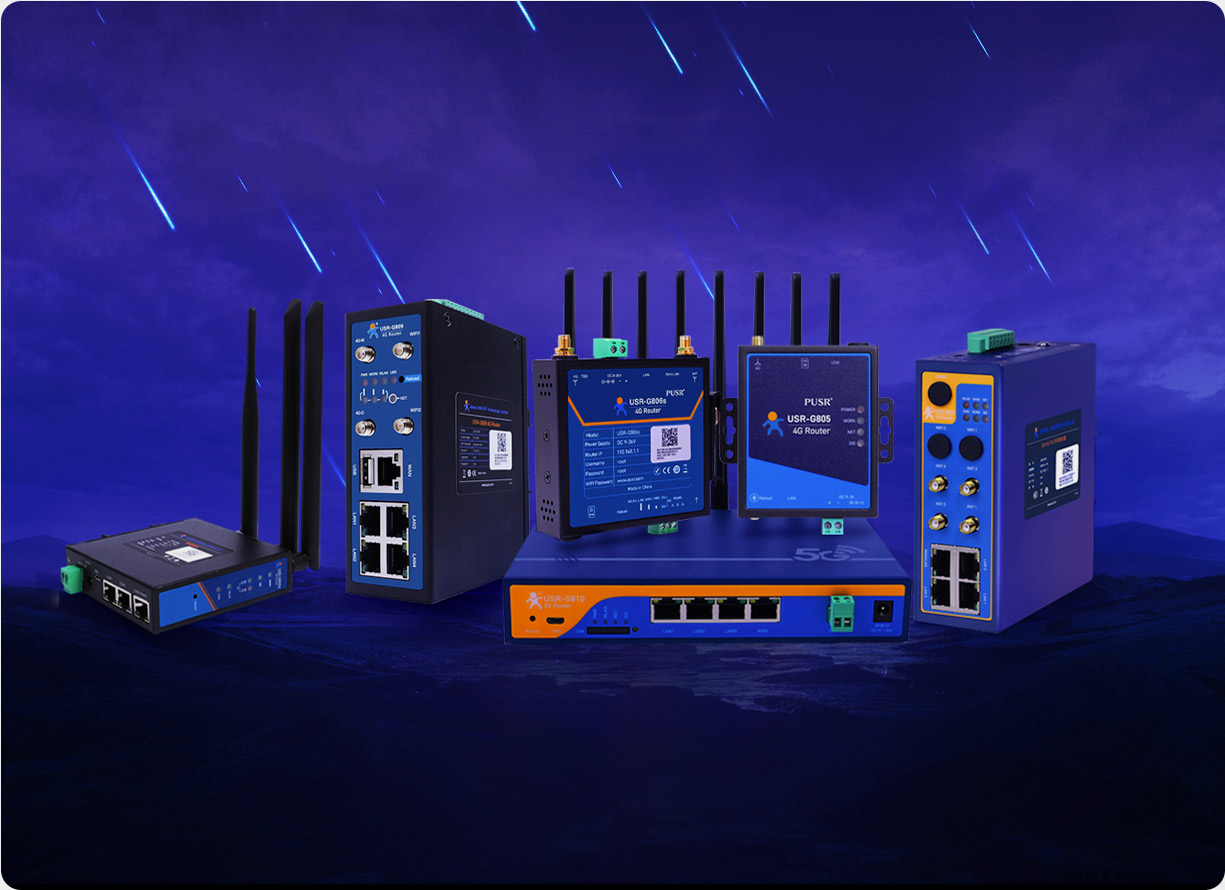
Take USR IoT's USR-M300 industrial IoT gateway as an example. This device supports 2,000+ point parallel collection, with built-in Node-RED graphical programming—no coding needed, just drag and drop modules to build data desensitization and local processing logic. It supports Modbus, OPC UA, Siemens, Mitsubishi, and hundreds of other industrial protocols. Dual-track national crypto + international algorithm encryption. Wide-temp fanless design. An auto parts company deployed one set in China and one in Germany. Cross-border data transmission dropped by 92% directly. Both sides' compliance audits passed on the first try.
Technology solved the "data doesn't leave" problem. But the documents that need signing at the legal level still need signing:
| Document | Purpose | Signing Party |
|---|---|---|
| SCCs (2021 version) | GDPR legal basis for cross-border transfer | EU recipient |
| DPA (Data Processing Agreement) | Define mutual data protection responsibilities | Cloud provider / partner |
| Standard Contract for Personal Information Export | Legal pathway under China law | Overseas recipient |
| DPIA Report | Data Protection Impact Assessment | Internal filing + regulatory inspection |
| ROPA | Record of Processing Activities | Internal management |
It's 2026. Cross-border data compliance isn't a "should we do it" question. It's a "if you don't, you die" question.
GDPR fines you 4% of global revenue. China law fines you 10 million RMB plus criminal liability. The US CLOUD Act leaves you stuck between a rock and a hard place. Three knives hanging over your head—and you're still clinging to the old "centralized cloud + after-the-fact encryption" approach?
Regional deployment isn't a silver bullet. It can't replace legal documents. It can't replace compliance audits. It can't replace employee training.
But it solves the most core problem—making your data never need to cross borders in the first place.
Data doesn't leave the country—GDPR's cross-border transfer rules aren't triggered. Data doesn't leave the country—China's security assessment isn't triggered. Data doesn't leave the country—the US CLOUD Act can't reach it.
You're not picking a side. You're making the question cease to exist at the root.
USR IoT's USR-M300 is built for exactly this. Not expensive, not slow, no need to maintain a 10-person IT team. An engineer deployed both the China and Germany node sets in two weeks, saving over 2.3 million RMB in compliance costs.
I'm not saying it's the only choice. But if your General Counsel is being backed into a corner by two sets of laws—it deserves a spot in your top three.
Your data doesn't need to cross national borders. Let computation go find the data. Don't let the data go looking for loopholes in the law.