Chemical Park Explosion-Proof Requirements Upgraded: How "Intrinsically Safe Design" of a Serial Port to Ethernet Adapter Passes IECEx Certification
I've been an IECEx certification auditor for eleven years.
In eleven years, I've seen over a thousand companies submit explosion-proof certification applications. Fewer than 60% passed. The remaining 40% — it wasn't that their products were bad. It was that they never truly understood what "explosion-proof" actually means.
At the end of 2025, a large chemical park upgraded its safety systems. The client's tender document contained one sentence: "All data collection equipment entering explosion hazard zones must hold an IECEx certificate or equivalent explosion-proof certification."
That one sentence sent the entire supply chain into a panic.
Because they discovered — 80% of serial port to ethernet adapter on the market don't have explosion-proof certification. Not that they don't want to get it. They can't. Or more accurately, the "good enough" design philosophy blocked the path from the very start.
Today's article — no technical specs, no architecture diagrams. I'll break down IECEx certification from an auditor's perspective — why your serial port to ethernet adapter can't pass? What's so hard about intrinsically safe design? And what kind of product is born with the DNA to "pass certification from day one."
After reading this, you'll understand: explosion-proof isn't about slapping on a label. It's about making different choices from the very first line of code, the very first component.
Many people tell me: "Our equipment is explosion-proof. It has an Ex mark."
I say: "Which Ex?"
They freeze.
The letter after Ex is what matters.
Ex d — Flameproof. Contains the explosion inside a tough enclosure.
Ex i — Intrinsically Safe. Circuit design keeps energy so low it can't ignite anything.
Ex e — Increased Safety. Enhanced insulation and heat dissipation to prevent ignition.
These three are for completely different scenarios.
Data collection terminals in chemical parks mostly use RS485 serial ports, installed next to instruments in explosion hazard zones. For this scenario, Ex i (intrinsically safe) is the optimal solution — and also the hardest one.
Why? Because flameproof relies on "tough shells." Intrinsically safe relies on "low energy." Tough shells — test the pressure resistance once and you know if it works. Low energy? You have to prove that every component, every trace, every solder joint in your circuit, under any fault condition, releases energy insufficient to ignite the surrounding explosive gas.
That's not tested into existence. It's designed into existence.
This is the core logic of IECEx certification: it doesn't just check whether your sample can survive one test. It checks whether your factory can consistently and stably produce compliant products.
That's why IECEx is a "three-in-one" system — Sample Testing (ExTR) + Factory Audit (QAR) + Certificate Issuance (CoC). All three are mandatory. The whole process takes 4 to 9 months as standard.
You think you just buy an explosion-proof label and stick it on? No. You have to prove compliance from the BOM all the way to the production line.
The most common cause of failure I see in audits isn't failing a test. It's landmines buried during the design phase.
A real case.
In 2024, an instrument manufacturer submitted a serial port to ethernet adapter for certification. All sample tests passed — enclosure pressure resistance: OK. Temperature rise: OK. Insulation dielectric: OK. I flipped through their BOM and found a problem:
The isolated DC-DC module they used had no explosion-proof certification number.
I asked: "Did you do an intrinsic safety assessment on this module?"
They said: "It's a generic component. It should be fine."
Should. There's that word again.
IECEx rules are clear: every critical component on the production line must exactly match the BOM submitted with the application, and every single one must have a traceable explosion-proof certification number.
One DC-DC module without a certification number directly caused the entire batch to fail the QAR audit. Not that the product was bad — you couldn't prove it was good.
The more hidden trap is in PCB design. I once saw a project where the explosion gap was 0.3mm. The standard requires at least 0.5mm. You can't see it with the naked eye. But in an intrinsic safety assessment, that 0.2mm is the difference between "can ignite" and "cannot ignite."
80% of explosion-proof certification failures originate from design-stage defects. This isn't my claim — it's industry statistics.
That's why the IECEx system repeatedly emphasizes one thing: intervene at the design stage. You must introduce the IEC 60079 series standards early in product R&D, not wait until mass production and then try to "retrofit certification."
Retrofit? You can't. Intrinsically safe design is systemic — pull one thread and the whole thing unravels. Change one resistor, and the entire energy assessment may need to be redone.
If your serial port to ethernet adapter is going for Ex i intrinsic safety certification, there are three life-or-death lines. Any one of them can kill you.
The core logic of intrinsic safety: under any single fault condition, the electrical sparks and thermal energy released by the circuit must be below the Minimum Ignition Energy (MIE) of the explosive gas.
For IIC-class gases common in chemical parks (such as hydrogen, acetylene), the MIE is as low as 20 microjoules. 20 microjoules is what? The static shock you get from touching a doorknob releases more energy than that.
So an intrinsically safe circuit must achieve: low voltage, low current, low capacitance, low inductance. The energy storage of every component must be strictly limited.
What does this mean? It means you can't use a regular DC-DC module — you need an intrinsically safe one. You can't use a regular TVS diode — you need a low-capacitance one. Your PCB traces can't be too long, because the traces themselves have inductance.
This isn't a component selection problem. It's an architecture problem. From day one, your entire hardware architecture must be designed around "low energy."
The IECEx QAR audit focuses on three things:
Machining precision of flameproof surfaces. Intrinsically safe designs don't rely on flameproof enclosures, but the creepage distance and clearance on the PCB must strictly meet the standards.
Adhesive and potting processes. If you use potting compound for intrinsic safety protection, the compound ratio, curing temperature, and curing time — every item must have an SOP and must be documented.
Material traceability and change management. Every batch of components you use must be traceable to a specific supplier and specific lot. Any design change or process change affecting explosion safety must be re-evaluated by the certification body.
In plain terms: passing the sample isn't enough. You have to prove you can build ten thousand identical units.
This requires the factory to be ISO 9001 certified, with additional explosion-proof-specific supplementary requirements (per ISO/IEC 80079-34). Without this foundation, the QAR audit fails outright.
Many people think once you get the IECEx certificate, you're done.
You're not.
After certification, the factory must undergo a surveillance audit every 12 to 18 months. The purpose: ensure your production hasn't "drifted" — component supplier changes, process adjustments, personnel changes — all can cause the product to no longer be compliant.
If the surveillance audit fails, the certificate is suspended. Products shipped during the suspension period are not recognized in many markets.
This isn't a scare tactic. In 2025, a chemical company had a supplier secretly swap a capacitor. The surveillance audit failed. An entire batch of equipment worth 3 million yuan was returned.
After all this "can't," you must be asking: so what "can"?
I won't give you a spec sheet. I'll give you the "DNA."
The MCU used in a regular serial port to ethernet adapter has high clock speed and high power consumption. Performance is strong, but so is the energy. Intrinsically safe design needs "just enough" — you don't need 400MHz, but every microamp of quiescent current must be accounted for.
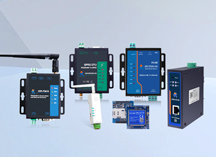
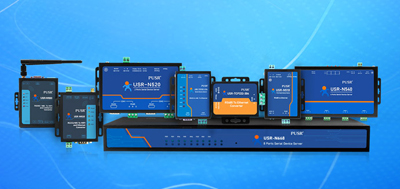
USR IOT's USR-N510 uses a Cortex-M7 core at 400MHz. You might ask: with such a high clock speed, can it do intrinsic safety?
The key isn't clock speed — it's power management and circuit architecture. The N510 supports 5–36V wide-voltage input, built-in dual watchdogs and multiple keepalive mechanisms, and EMC protection up to Level 3. These features show it was designed from the ground up for harsh industrial environments — although it currently targets industrial-grade rather than intrinsic safety, this "reliability-first from the bottom layer" design philosophy shares DNA with intrinsically safe design.
More importantly, the N510 supports Modbus multi-master polling, dual-socket design, and TCP/UDP/HTTPD/MQTT multiple operating modes. These features mean that in chemical park data collection scenarios, it's not just a "transparent transmission pipe" — it's an intelligent node capable of edge computing.
Under the trend of tightening explosion-proof requirements, this "scalable, upgradable" architecture has more staying power than a single-function "dumb pipe."
You buy industrial-grade today. Tomorrow you need intrinsic safety — the hardware architecture doesn't need major changes. You just need to do an intrinsic safety assessment and certification on the critical circuit stages. That's the smart selection logic.
IECEx application requires: assembly drawing, circuit schematic, PCB layout, BOM (critical components marked with explosion-proof certification numbers), nameplate drawing, product manual, and explosion-proof quality manual.
Many companies fail at this step — not because the product is bad, but because the documentation is incomplete. PCB layout doesn't show explosion paths. BOM capacitors aren't marked with certification numbers. The manual doesn't state usage conditions and maintenance requirements.
If your supplier can't produce a complete English technical documentation package, their product most likely won't pass IECEx.
Component lot traceability, critical process SOPs, change management procedures — these aren't prepared just for certification. They're run every day.
When selecting a supplier, don't just look at specs. Ask them one question: "Can your BOM trace every component back to its explosion-proof certification number?"
Only those who can answer "yes" are worth talking to further.
I know what you're thinking.
"IECEx certification takes 4 to 9 months. Our project can't wait."
"Intrinsic safety design costs too much. Leadership won't approve it."
"Let's just use it for now. Deal with it if something happens."
I've been an auditor for eleven years. I've heard these three sentences countless times.
And then I watched those companies either spend three times the money to "retrofit certification," or get shut down after an accident.
Article 36 of the Work Safety Law is crystal clear: failure to use explosion-proof equipment or improper maintenance leading to an accident — the company faces shutdown, hefty fines, and even criminal liability.
This isn't a cost issue. It's a life-and-death issue.
Chemical park explosion-proof requirements will only get stricter. 2025 already demands IECEx certificates. What about 2026? 2027?
The certification fees you save today will come back at ten times the cost tomorrow.
Intrinsically safe design isn't a burden. It's your entry ticket to survive in this industry.
And a serial port to ethernet adapter designed with explosion-proof compliance from day one is your first step toward that ticket.
You don't need to get there in one leap. But the first step must be in the right direction.
You don't need to become an explosion-proof expert. You just need to ask one more question when selecting equipment: "Can this device pass IECEx?"
Only suppliers who can answer that question deserve your trust.