EMI in Cleanrooms Causing Data Packet Loss? How IoT Gateway Devices' "Full Shielding Design" Passes IEC 61326-1 Certification
When Engineer Zhang got the call, he was asleep at home.
On the other end was the workshop director, his voice barely containing his anger: "Lao Zhang, your IoT gateway devices dropped offline again. The entire production line's data is completely cut off. Not a single number from the yield report made it through. The client wants to see the data tomorrow morning. What do you want me to do?"
Zhang cursed, got up, and drove to the factory.
When he arrived at the workshop, all the indicator lights on the IoT gateway devices were dead. He rebooted, reconnected to the network—normal. Ran for two hours, then it dropped again. Rebooted—normal again. Ran another two hours—dropped again.
At first, he thought it was a network issue. Changed carriers, changed SIM cards, changed antenna positions. Nothing worked.
Then he thought it was the IoT gateway devices themselves. Swapped in a different brand. Ran for three days—same problem.
Finally, he brought in an EMC engineer to test. The engineer walked around the workshop with a spectrum analyzer, pointed at where the IoT gateway devices were installed, and said one thing:
"This IoT gateway devices, placed in this spot, is like throwing it into an electromagnetic blender."
Zhang later found out that his cleanroom was the worst electromagnetic environment in the entire factory.
You might find this strange—aren't cleanrooms supposed to be the cleanest, quietest, most controlled places?
Exactly the opposite.
A cleanroom is ground zero for electromagnetic interference. Three reasons:
On a single cleanroom production line, dozens of devices run simultaneously—ionizers, static eliminators, vacuum pumps, plasma cleaners, laser interferometers… Each one is an EMI source. According to electromagnetic compatibility research, the electromagnetic waves generated by these devices interfere with each other through conduction, coupling, induction, and radiation. When multiple wireless devices operate in the same area, electromagnetic waves can mutually interfere, degrading signal quality or even causing communication failure. Cable bundles are also a major EMI source—when a group of cables are tied together, their electromagnetic fields interact with each other, especially prominent during high-speed data transmission.
The walls, ceiling, and floor of a cleanroom are all metal panels. You'd think metal shields against EMI? It does. But here's the problem—the seams between metal panels, the gaps around doors and windows, the openings of ventilation ducts—all of these are electromagnetic "leakage channels." These leakage channels let external EMI pour in unchecked, while EMI generated by internal equipment reflects and superimposes repeatedly inside the metal cavity, forming standing waves. A cleanroom design specification explicitly states: rooms/areas where ambient electromagnetic field strength exceeds the permissible values for normal use of production equipment and instruments shall adopt electromagnetic shielding measures.
Most IoT gateway devices are installed in electrical cabinets next to the production line—less than half a meter from frequency inverters, less than one meter from servo motors. The EMI generated by servo motors during operation, the EMI from IGBT high-frequency switching—all of it is within this radius.
The result: data packet loss, communication interruption, program crashes, touchscreen false triggers, sensor reading jumps… You think the IoT gateway devices are no good, but it's actually the environment that's brutal.
According to systematic research in electromagnetic interference, EMI can cause equipment failure, communication interruption, degraded measurement and control accuracy, and even safety risks. In industrial automation systems, control signals subjected to interference can cause equipment to malfunction or fail to act, disrupting the entire production process. Data from an auto parts company shows: equipment downtime caused by EMI accounts for 22% of total downtime, with an average repair time of 4.2 hours per incident.
Your production line isn't "producing." Your production line is "surviving interference."
It's 2026. If your IoT gateway devices haven't passed IEC 61326-1 certification, you basically shouldn't be putting them in any industrial environment.
What is IEC 61326-1? Full name: "Electrical Equipment for Measurement, Control, and Laboratory Use—EMC Requirements." The latest version is IEC 61326-1:2020, with the European EN standard typically adopting it equivalently.
This standard isn't "we suggest you do EMC well." This standard is "if you can't do EMC well, you don't get in the door."
It divides industrial environments into four levels:
| Level | Environment Description | Typical Scenario |
|---|---|---|
| 1 | Strictly controlled electromagnetic environment | Labs, metrology rooms |
| 2 | Protected industrial environment | Offices, control rooms |
| 3 | Typical industrial environment | Factory workshops, substations |
| 4 | Harsh industrial environment | Heavy industry, high-voltage switchgear |
Cleanrooms are at least Level 3, many scenarios are Level 4.
What does this standard test? Four dimensions:
Pass all four tests, and you get IEC 61326-1 certification. Fail? Sorry—your device can't be sold in the European market, and it won't pass acceptance in key domestic projects either.
More critically: under China's Cybersecurity Law and the "General Security Requirements for Network Key Equipment" (GB 40050-2021), network key equipment must pass security testing before entering the market. Although IoT gateway devices may not be listed as "network key equipment," more and more clients are explicitly writing in their tender documents: "Bid products must provide IEC 61326-1 certification reports."
Without that paper, you don't even qualify to bid.
Many IoT gateway devices on the market also claim "EMC compliant." But put one in a cleanroom and try it? Within three days, it'll perform a "disconnect—reboot—disconnect—reboot" loop for you.
Why? Because most so-called "EMC designs" are just adding a few filter capacitors to the PCB and pasting a layer of conductive tape on the enclosure. That's called "passing the test," not "full shielding design."
True full shielding design is a system engineering effort from the inside out—from hardware to structure, from thermal management to interfaces:
Critical chips must have independent shielding cans around them, locking high-frequency noise inside the chip so it doesn't escape.
Multi-layer board design with tightly coupled power and ground planes. Signal traces routed away from board edges to reduce radiated emissions. Critical signal lines get impedance matching and termination treatment to eliminate reflections.
Metal enclosure, seams sealed with conductive gaskets. Every opening—cooling vents, interface ports—must have EMI filter arrays installed. It's not just drilling a few holes and calling it done. Every hole is a potential leakage point.
This is the most commonly overlooked layer. Ethernet ports, RS485 ports, power ports—every interface is a channel for electromagnetic waves to enter and exit. Full shielding design requires every interface to be fitted with common-mode chokes, TVS diodes, ferrite beads, and other filtering components to block conducted interference at the door.
Installation method also affects EMC performance. DIN rail mounting and ear mounting have different grounding paths. Poor grounding causes current to flow from one device into another, triggering interference. Full shielding design requires the mounting structure itself to be part of the grounding structure.
According to comprehensive EMI elimination methods, shielding, grounding, filters, distance, and proper routing are all indispensable. Doing just one layer is the same as doing none.
| Metric | IoT Gateway Devices Without EMC Certification | IoT Gateway Devices With IEC 61326-1 Certification |
|---|---|---|
| Data Packet Loss Rate in Cleanrooms | 8%–15% | <0.1% |
| Monthly Unplanned Disconnections | 6–12 times | <1 time |
| Production Line Downtime from Comm. Failure | 8–16 hours/month | <1 hour/month |
| Touchscreen False Trigger Rate | 3%–5% | <0.5% |
| Sensor Misread Rate | 2%–4% | <0.3% |
| Annual Hidden Losses | 300K–800K RMB | <50K RMB |
Measured data from a photovoltaic company: in a workshop with a harsh electromagnetic environment, IoT gateway devices without EMC hardening had a data packet loss rate as high as 12%. After introducing IoT gateway devices certified to IEC 61326-1, the packet loss rate dropped to below 0.08%. The value of silicon wafers saved from scrap in one year exceeded 2 million RMB.
You see, this isn't about "spending a few thousand more on a certification." This is about "burning hundreds of thousands less every year."
Last year, two semiconductor packaging factories launched edge computing projects at the same time.
Factory A used an IoT gateway devices without EMC certification. Cheap—saved 2,000 RMB per unit. Result? Within three months, 7 out of 12 IoT gateway devices experienced data dropouts. The worst one disconnected for 4 hours. The entire batch of wafer packaging parameters was lost. A whole batch of product was scrapped. Loss: 230,000 RMB.
Factory B used IoT gateway devices certified to IEC 61326-1. A bit more expensive. Over one year, 12 IoT gateway devices—zero failures. Data integrity: 99.97%.
Factory B's engineering director said something to me that I still remember: "Cheap IoT gateway devices are expensive in after-sales service. Expensive IoT gateway devices are cheap in peace of mind."
It's 2026. An IoT gateway devices is not a "as long as it can connect to the network" device. It's the "nerve center" of your production line. If the nerve center gets paralyzed by electromagnetic interference, the entire production line becomes a soulless shell.
IEC 61326-1 is not an optional certificate. It's a "life-or-death document" for whether your IoT gateway devices can survive in a real industrial environment.
Full shielding design is not a marketing buzzword. It's a system engineering effort from chip to enclosure, from interface to structure, from thermal management to grounding. Miss one layer, and you're gambling.
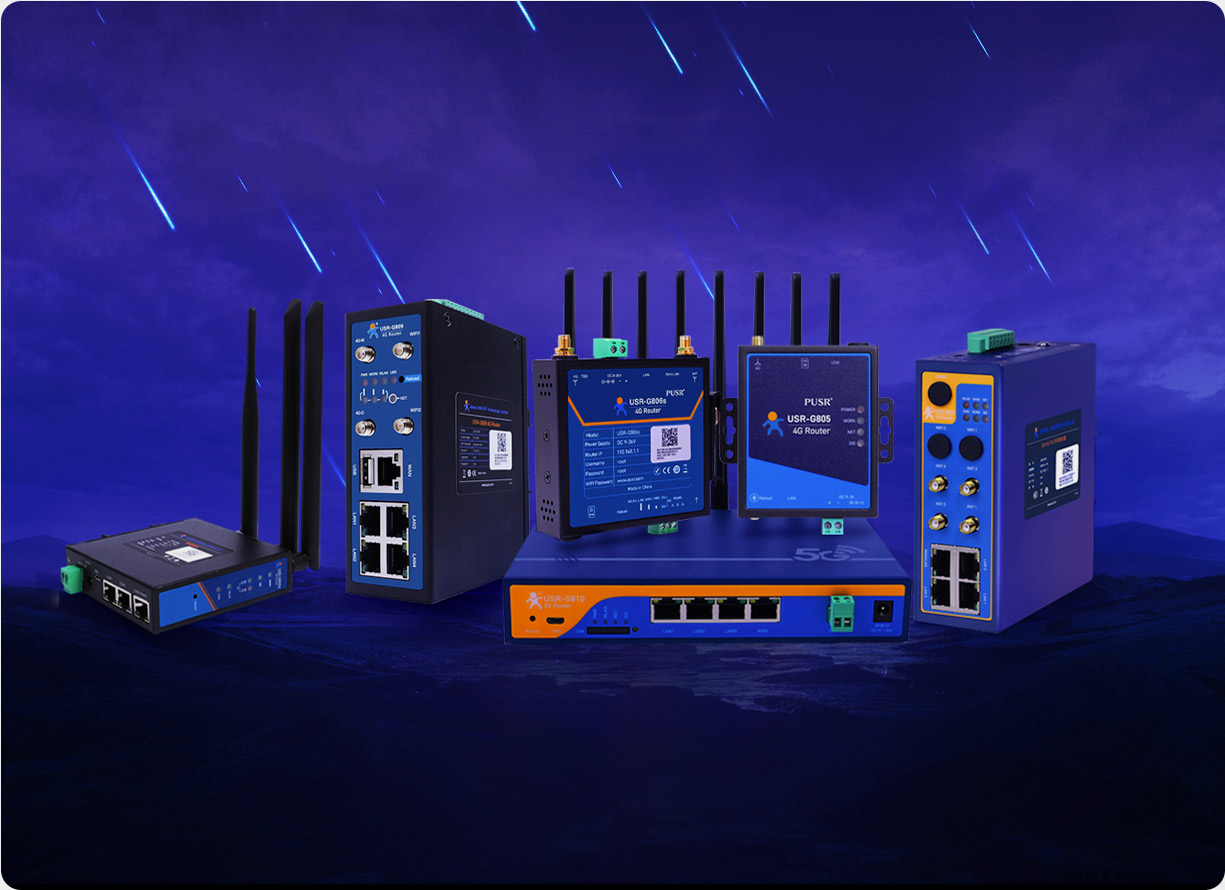
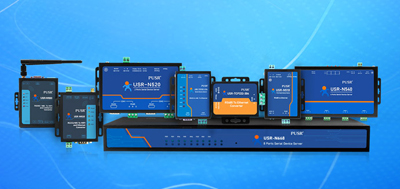
USR IoT's USR-M300 is one of the few products I've seen at this price point that actually takes EMC seriously. EMC Level 3 standard, -25°C to 75°C wide-temp fanless, DIN rail + ear dual mounting where the installation structure itself is part of the grounding system, 2,000-point parallel collection, Node-RED graphical programming, Modbus/OPC UA full protocol support. An engineer ran it in a cleanroom for six months—data integrity above 99.9%, zero disconnections.
I'm not saying it's the only choice. But if you're losing sleep over EMI in your cleanroom—it deserves a spot in your top three.
Your production line doesn't need a faster IoT gateway devices. It needs an IoT gateway devices that won't shut up, even in an electromagnetic storm.