Old Substation Room Retrofit: 5 Pitfalls I Fell Into (and 1 Shortcut)
Bottom line first: Don't pull fiber.
I know your first reaction when you see that is — "If you don't pull fiber, how does the data get transmitted?"
Don't rush.
This article is one honest sentence I earned over three years, seventeen old substation room retrofit projects, and countless times getting screamed at by clients until I was soaked in dog blood.
If you're taking on an old substation room remote monitoring retrofit project right now — limited budget, tight deadline, terrible site conditions — please spend ten minutes reading this. It might save you three months of arguing.
Three years ago, I took on my first old substation room retrofit project.
An 80s-era commercial building. Two substation rooms in underground level B1, one on the ground floor. Client's requirement: all remote monitoring, data sent back to the central control room.
I was young back then. I immediately said: "Pull fiber. Stable, high bandwidth, once and done."
The client said: "Fine. Give me a quote."
I gave the quote. The client went silent for ten seconds.
In those ten seconds, I heard the budget crying.
What does pulling fiber mean?
It means you have to excavate the floor or drill through walls from the substation room all the way to the nearest weak current shaft. Old buildings don't have pre-installed conduit — you have to cut slots, thread pipes, and seal them on the spot. Underground substation rooms need waterproofing. Ground-floor substation rooms need to look good.
One substation room's fiber cabling — materials + labor + permits — minimum 8,000 RMB, up to 20,000 RMB. Three substation rooms? 60,000 RMB at a bare minimum.
60,000 RMB. How many 5G cellular routers could you buy with that?
But I didn't know that back then. I thought fiber was the "right answer."
The result? The construction team got blocked by property management on day one — no floor excavation allowed. Fine, switch to the ceiling. Got to the ceiling and found the rebar was too dense to drill. Switch to the exterior wall. Exterior wall cabling needs permits. Permits take two weeks.
Two weeks. Just for permits. Two weeks.
The client called me every day: "Xiao Wang, when exactly will it be done?"
I said: "Almost, almost. Just going through permits."
The client said: "I paid the money, and you're telling me you're going through permits?"
That's when I finally understood: the biggest enemy of old substation room retrofit isn't technology.It's the site conditions.
Fiber wasn't working, so I took a step back: "Let's use WiFi. Install an AP in the substation room, data goes over WiFi to the switch upstairs."
Sounds reasonable, right?
Until I took my phone into the substation room and measured the signal.
The underground B1 substation room — WiFi signal went in at full bars, dropped to one bar instantly, then vanished. Not slow. Completely disconnected.
Why? Because substation rooms are reinforced concrete structures. The attenuation of 2.4G and 5G signals is devastating. On the ground floor, WiFi can go through one wall. Inside a substation room, one wall is an iron curtain.
The ground-floor substation room did have signal, but it was unstable. The moment someone nearby turned on a microwave or used a walkie-talkie, the signal started jumping.
You say install a high-gain antenna? There's nowhere to mount an antenna inside a substation room. And high-gain antennas are directional — you have to aim precisely at the AP upstairs. Off by one degree and it's useless. Temperature swings inside substation rooms cause metal cabinets to expand and contract. You aim it today, it's off by tomorrow.
WiFi solution: deceased.
WiFi doesn't work, so let's go 4G.
I bought a batch of 4G data cards and plugged them into the monitoring hosts in the substation rooms.
First two weeks: everything normal. I even told the client: "See? Problem solved."
Week three: started dropping offline.
First, the underground substation room's data card died. I sent someone to check — signal was too weak, the card disconnected on its own. Rebooted it, it worked. Two days later, dead again.
Then the ground-floor one. One day during a rainstorm, lightning interference fried a data card. Replaced it, it worked. A month later, fried again.
In three months, I replaced seven data cards and sent someone to the site to reboot eleven times.
You know what the most crushing part was?
It wasn't the cost of the cards. It wasn't the gas money for the site visits.
It was the client's sentence:"Is your solution actually reliable or not?"
I couldn't answer. Because it wasn't reliable.
A data card is made for laptops, not for substation rooms. It has no industrial-grade protection — can't handle high temperature and humidity. It has no watchdog — when the network drops, it won't reconnect on its own. It's single-SIM, single-network — one carrier has a problem and everything's dead.
You stuffed an "office supply" into an "industrial site." Of course it broke.
This is the most soul-crushing pitfall, because it has nothing to do with technology.
Old building retrofit — you think as long as the client agrees, you're good?
Too naive.
You have to get past property management — "Can't damage the original structure."
You have to get past fire safety — "Cabling can't block fire exits."
You have to get past the homeowners' committee — "Exterior wall cabling looks ugly, residents don't agree."
You have to get past the power company — "Any work inside the substation room must be reported."
Every gate needs a signature. Every gate needs waiting. Every gate can send you back to square one.
I had one project where permits alone took a month and a half. By the time the permits came through, the client's leadership had changed. The new leader's first sentence: "Why isn't this project done yet?"
I said: "Going through permits."
The new leader said: "Going through permits again???"
Old substation room retrofit: 50% of the time is spent on technology, 50% on arguing. If your solution requires a lot of on-site construction, you'd better be prepared to fight with every department.
The last pitfall. Also the most hidden one.
Many projects have beautiful proposals in the early stages — equipment procurement, construction plans, acceptance criteria — dozens of pages of PPT.
But when it comes to acceptance, the client looks at the platform —
"Why do half the devices show offline?"
"Why is the temperature data from yesterday?"
"Why does the smoke detector status always say 'online,' but I'm not sure if it's actually online?"
You worked hard to install a system, but the data doesn't come back. Equals not installed at all.
The most outrageous case I've ever seen: a client spent 120,000 RMB on remote monitoring. At acceptance, they discovered that out of seventeen sensors, only nine could stably transmit data back. The other eight? Come and go like a lottery.
The client's face was ugly.
Mine was ugly too.
Because the problem wasn't the sensors. It wasn't the platform. It was the communication. But the communication link — in the early-stage proposal — almost nobody took it seriously.
Everyone focused on "what to install." Nobody focused on "how to transmit."
After falling into all five pits, I started changing my thinking.
If fiber is too expensive, WiFi is too weak, data cards are too fragile, permits are too slow — is there a solution that needs no construction, no permits, no cabling — just plug in and go?
Yes.
5G cellular router, 4G/5G solution.
The logic is dead simple:
Put a 5G cellular router in the substation room. Connect your monitoring cameras, sensors, smart meters — all via Ethernet cable. The 5G cellular router itself takes three SIM cards (China Mobile + China Unicom + China Telecom) and transmits the data to the cloud platform over 4G/5G.
No fiber. No slot cutting. No wall drilling. No permits.
You only need to do three things:
Put the 5G cellular router into the substation room.
Connect the cameras and sensors to the router with Ethernet cables.
Plug in the power. Turn it on.
Done.
Data transmits back automatically. Platform comes online automatically. Alarms push automatically.
The first time I used this solution, the client was stunned: "That's it? No construction needed?"
I said: "Nope."
Client: "No permits?"
Me: "Nope."
Client: "Then how long?"
Me: "Three days. Three substation rooms, all online in three days."
The client looked at me like I was a con artist.
But three days later, on his screen, all three substation rooms' data was live in real time. He looked at me like I was a god.
You might ask: isn't this just a data card?
No. The difference is huge.
| Comparison Item | 4G Data Card | 5G Cellular Router |
|---|---|---|
| Network | Single SIM, single network | Three SIMs, three networks, auto-switch |
| Protection | None, consumer-grade | Industrial-grade, wide temp, moisture-proof, dust-proof |
| Reconnection on dropout | No, manual reboot needed | Watchdog mechanism, auto-reconnect |
| Connected devices | 1–2 | Multiple — cameras + sensors simultaneously |
| Lifespan | 3–6 months | 3–5 years |
| Deployment | Needs a computer | Plug and play, no computer needed |
A data card is "works." A 5G cellular router is "reliable."
In a substation room — a "can't-afford-to-fail" scenario — the gap between "works" and "reliable" is 80,000 miles wide.
Last year we used the 5G cellular router solution to retrofit 11 substation rooms in an old residential community.
Fiber solution quote: 230,000 RMB, 45 days.
5G cellular router solution quote: 38,000 RMB, 3 days.
Saved 192,000 RMB. Saved 42 days.
More importantly — after going live, the data online rate for all 11 substation rooms was99.8%.
The commercial complex that used the data card solution before? Online rate was 82%.
Tell me — which one does the client choose?
If you decide to go the 5G cellular router route, there are a few hard requirements you can't compromise on:
Three-network coverage— Don't touch single-network models. The signal environment in old buildings is too complex.
Industrial-grade protection— A substation room is not an office. High temperature, high humidity, high interference is the norm.
Watchdog + auto-reconnect on dropout— Without this, you're still running to the site at midnight.
Multiple Ethernet ports— Cameras and sensors need to connect simultaneously. One port isn't enough.
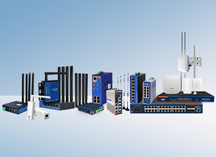
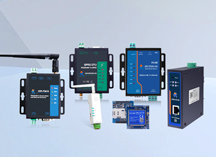
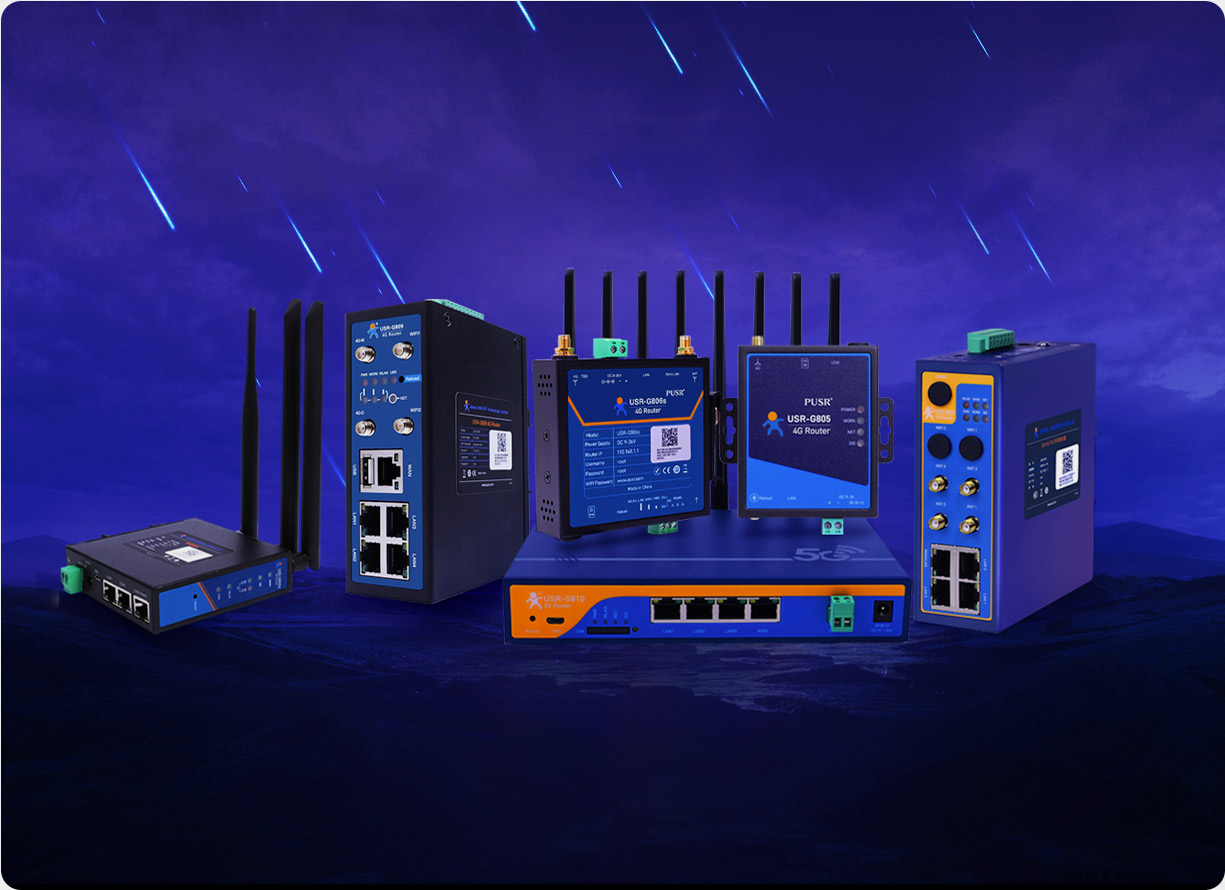
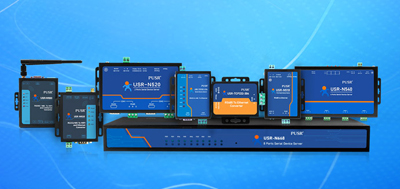
Filter by those rules, and the one we use most in our own projects is theUSR-G816 by USR IoT. Three-network switching, industrial wide temperature, dual Ethernet ports, watchdog — it has everything. And deployment is genuinely simple — put it in, connect the Ethernet cables, plug in the power, done.
Of course, there's more than one product on the market that meets these criteria. Pick by the rules I mentioned, and you won't fall into a pit.
After all these years of old substation room retrofits, my biggest takeaway is one sentence:
Old building retrofit isn't a technology problem. It's a "don't mess with it" problem.
You can't afford to mess with it. The budget can't afford it. The schedule can't afford it. The permits can't afford it. The client's patience definitely can't afford it.
So — no construction if you can avoid it. No permits if you can avoid them. If you can finish in three days, don't drag it to three months.
The 5G cellular router 4G/5G solution is the optimal answer to those three words:"don't mess with it."
It's not perfect — 4G bandwidth is indeed not as good as fiber, and signals do fluctuate in extreme weather.
But it solves the core contradiction of old substation room retrofit: you need data transmission, but you can't pull fiber.
Between "perfect but impossible" and "good enough and deployable" — I always choose the latter.
Because a substation room doesn't wait for you. It won't hold off on having an accident just because you're going through permits.
What you need to do is get the data running as fast as possible, with as little hassle as possible.
Then — and only then — do you have the right to talk about "optimization," "upgrades," and "digital transformation."
Survive first. Then survive well.That's the first iron rule of old substation room retrofit.