Breaking Through in Mine Mining: How PUSR Industrial Cellular Router Reshape the Underground "Digital Lifeline"
In the monitoring center of an open-pit coal mine in Inner Mongolia, the electronic large screen flashes a red alert at 2 a.m.—the gas concentration monitoring data from underground has been interrupted, while 37 miners are still working underground. Engineer Zhang, on duty, breaks into a cold sweat instantly: the traditional wired monitoring system has suffered cable breakage due to blasting vibrations, and the interruption of data transmission means that safety warnings are ineffective. This is not an isolated case; 83% of mining enterprises nationwide are facing the same dilemma: network interruptions, data silos, and inefficient operation and maintenance have become the three core pain points restricting intelligent upgrades in complex geological environments.
The mining operation environment is the ultimate test for network communication. Measured data shows:
At 300 meters underground, the 4G signal strength attenuates by over 90%, and the transmission distance of traditional LoRa devices is less than 80 meters;
The shielding effect of metal ore bodies on 2.4GHz Wi-Fi signals results in a transmission loss of 30dB;
Electromagnetic pulses generated by blasting can cause ordinary routers to restart frequently, with an average of 12 disconnections per day.
These physical environment limitations directly lead to:
A delay of over 15 seconds in gas monitoring data, lagging safety warnings;
Unmanned mining equipment frequently getting "lost" due to signal interruptions, with a 65% decrease in operational efficiency;
The emergency command system being unable to retrieve underground images in real-time during accidents, extending rescue response times by 40 minutes.
A smart transformation project at a gold mine revealed typical problems: the deployed 5G base stations had a signal coverage radius of less than 50 meters due to the winding underground roadways, leaving 30% of the monitoring equipment "offline." The project was delayed by six months, with direct economic losses exceeding 20 million yuan.
The mining equipment ecosystem presents a chaotic landscape of "seven kingdoms and eight systems":
Tunneling machines use the CAN bus protocol;
Ventilation systems employ the Modbus RTU protocol;
Personnel positioning systems are based on the ZigBee architecture;
Energy management systems rely on the OPC UA protocol.
This protocol fragmentation forces enterprises to:
Deploy seven independent gateways, increasing hardware costs by 500%;
Maintain operation and maintenance teams for four different protocols, significantly increasing labor costs;
Face system integration cycles as long as 18 months, missing market windows.
More critically, protocol compatibility issues with older equipment are becoming increasingly prominent. When a coal mine carried out a smart transformation on a hoist that had been in operation for 15 years, the transformation costs soared by 400% due to the inability to parse the equipment's proprietary protocol, and data acquisition delays reached as high as 3 seconds.
The fragility of traditional routers is infinitely amplified in mining environments:
Temperature variations cause capacitor bursts, shortening device lifespans by 60%;
Dust intrusion leads to poor contact, with failure rates five times higher than those of surface equipment;
Vibration impacts cause solder joint detachment, with an average mean time between failures (MTBF) of less than 8,000 hours.
Maintenance records from a copper mine show that in 2025, there were 327 network anomalies throughout the year, of which 85% required on-site troubleshooting. Operation and maintenance personnel walked an average of 25 kilometers per day, covering only 40% of the equipment. Fault location took an average of 5.2 hours, with single downtime losses exceeding 1.2 million yuan.
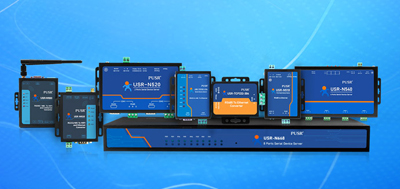
Industrial cellular router, represented by the USR-G809s, construct a redundant transmission network through "5G + Wi-Fi 6 + LoRa" tri-mode communication:
5G private network: Provides 10ms-level low-latency control instruction transmission for underground unmanned mining equipment, supporting real-time dynamic path adjustment;
Wi-Fi 6 Mesh: Forms a self-healing network at roadway intersections to ensure signal coverage without dead spots;
LoRa backup link: Automatically switches to LoRa transmission for critical safety data when the primary network fails, maintaining basic operations.
In tests at a coal mine in Shanxi, this solution increased the data transmission success rate of unmanned mining equipment from 88% to 99.98%, with network switching delays below 50ms. In a transformation at an iron mine, traditional SLAM navigation mining vehicles required 5 hours of manual remapping after environmental changes, while with the UWB + laser SLAM fusion solution supported by the USR-G809s, the avoidance response time of 50 mining vehicles was shortened from 300ms to 50ms, with an overall handling efficiency increase of 40%.
The USR-G809s is equipped with standardized communication protocol libraries such as BACnet, Modbus, and CANopen, supporting:
Edge computing gateways: Parse proprietary protocol data from traditional equipment into standard protocol data for upload to cloud platforms;
Protocol interconversion: Enable rapid bidirectional transparent transmission of RS232/RS485 serial data with 4G, Ethernet, and Wi-Fi networks;
VLAN subnet division: Construct independent subnets through one 100Mbps WAN port and four 100Mbps LAN ports to avoid broadcast storms.
Practices at a smart mine demonstrate that this solution successfully integrated over 500 devices from 15 brands, achieving real-time data synchronization and centralized display. Transformation costs were reduced by 70%, and data acquisition delays were controlled within 80 milliseconds.
The USR-G809s, through the "U-Cloud" management platform, achieves:
Remote monitoring: 7×24 real-time monitoring of device status, shortening fault warning response times to the minute level;
Batch configuration: Supports remote firmware upgrades and fault troubleshooting through web or app interfaces, reducing manual inspection costs;
AI algorithm optimization: Predicts equipment failures through LSTM networks, providing 48-hour advance warnings. Equipment failure rates continuously improve over time, with positioning errors after one year of operation reduced by 50% compared to the initial state.
Practices at a semiconductor factory show that this solution increased operation and maintenance efficiency by 90%, shortening single fault repair times from 5.2 hours to 0.9 hours.
In the transformation of a gold mine in Shandong, the USR-G809s was deployed in gas sensors, roof pressure monitors, and other equipment, achieving:
Multi-device protocol conversion: Unifies Modbus RTU, CAN, and other protocols into MQTT format for upload to the safety management and control platform;
RTK + GPS positioning: Supports centimeter-level precision positioning for outdoor AGVs, reducing trajectory tracking errors from 2 meters to 0.3 meters;
Dynamic obstacle avoidance: Combines laser point clouds with visual semantic segmentation to distinguish between "temporary obstacles" (such as mining vehicles) and "fixed obstacles" (such as roadway walls), reducing collision accident rates by 80%.
In the transformation of an open-pit coal mine in Inner Mongolia, the USR-G809s connected over 3,000 sensors, achieving:
Real-time data acquisition: Collects energy consumption data for electricity, gas, water, and other resources at a frequency of 1 second;
AI prediction and optimization: Predicts energy demand through deep learning algorithms and dynamically adjusts equipment operation strategies, achieving a 30% energy savings rate;
Virtual power plant coordination: In regions with abundant distributed photovoltaics, automatically adjusts mining power consumption strategies based on photovoltaic output predictions, prioritizing the use of clean energy.
In the transformation of a tin mine in Yunnan, the USR-G809s supported:
Environmental adaptability design: Withstands extreme temperatures ranging from -40°C to +75°C and adapts to high-humidity and strong salt spray environments;
Multi-level protection mechanisms: Includes built-in hardware watchdog circuits, 9-36V wide voltage access, and multiple protections against electrostatic discharge, surges, and pulse trains;
Unmanned inspections: Transmits 4K video streams through a 5G private network and combines the YOLOv5 model to identify roadway numbers and obstacle types in real-time, increasing inspection efficiency by six times.
With the maturity of 6G networks and digital twin technology, mine mining will enter a new stage:
Full-element mapping: Construct a real-time updated digital twin mine in the cloud, achieving precise synchronization between the virtual and physical worlds through the USR-G809s' UWB + laser SLAM fusion solution;
Vehicle-road coordination 2.0: Deeply coordinate mobile equipment such as mining vehicles and drones with fixed infrastructure within the mine to achieve fully autonomous operation throughout the entire process;
Energy Internet: Enable bidirectional interaction between the mine and the power grid, allowing energy storage devices to supply power back to the grid and obtain peak shaving benefits, reshaping the mine's energy role.
On the track of mine mining, PUSR industrial cellular router are no longer just "digital bridges" connecting devices but have become the "nerve centers" reconstructing the mining ecosystem. From gas monitoring in open-pit coal mines in Inner Mongolia to roof pressure warnings in gold mines in Shandong; from unmanned inspections in tin mines in Yunnan to clean energy substitution in open-pit coal mines in Inner Mongolia, the USR-G809s is breaking through industry pain points with technological innovation and reshaping mining value with data intelligence.
For mine developers, it is essential to reserve standardized communication interfaces during the planning stage to avoid technical barriers in later transformations. For equipment manufacturers, they should actively embrace open protocols to break the monopoly of proprietary systems. For users, it is necessary to establish a data-driven management mindset and fully exploit the value-added services after device interconnection. When technology returns to humanity and intelligence serves safety, mines will ultimately evolve from "silent rock formations" into intelligent entities that can "think and warn."