FMCG Warehouse AGV "High-Efficiency Sorting": How Powerful Is the Industrial Computer's Visual Recognition Technology?
Have you ever seen a scene like this?
3 AM. A fast-moving consumer goods (FMCG) warehouse is blazing with lights. A picker pushes a cart, weaving through more than 20,000 SKUs, sweat soaking through his uniform. In his hand is a work order that reads: "487 units — must ship today." He's been walking for four straight hours, his step count already past 40,000, but the system shows — 32 items still unfound.
Even worse: 5 of those 32 items were placed on the wrong shelves.
This is not an isolated case. The data in the China Logistics Association's 2023 Smart Warehousing Development Reportis chilling: 75% of enterprises handle fewer than 100,000 units at daily peak, error-picking and missed shipments account for 17% of total warehousing costs, and 45% of companies see picker turnover rates exceeding 30%.
You think this is just a "not enough people" problem? No. This is the entire sorting logic failing to keep up with the pace of the FMCG industry.
What is FMCG? It's SKU explosion. It's seasonal pulses. It's today's hot seller becoming tomorrow's dead stock. It's never knowing which single product will get buried by orders in the next second. On this battlefield, relying on human eyes, memory, and experience — that's not fighting. That's walking into a death trap.
That's why more and more FMCG companies are turning their attention to one thing: AGV + industrial computer visual recognition systems.
But here's the question — is this stuff actually reliable?
Before we dive into the technology, I want to talk about your psychology. Because I know that when you opened this article, a few thoughts were already spinning in your head:
You've seen too many "smart warehousing" PowerPoint decks. They always throw around "300% efficiency boost" and "99.99% accuracy," but when it actually lands on the floor, it's still a bunch of people running around the warehouse. You've been burned before, so your first instinct is — show me the truth. You want real data, real cases, real scenarios. You don't want stories. You want results.
You're the one who does the math. How much is labor per month? How much do mis-shipments cost in customer complaints? How much does it cost to hire temporary workers during peak season? You know these numbers better than anyone. You're running a calculation: if I invest one million, can I get it back in eight months? Your profit-seeking instinct is driving your judgment.
What you fear most isn't spending money — it's spending money and then having the system crash, ship the wrong goods, and lose your customers. Your safety instinct is making you hesitate. What you need isn't just a product — it's a promise that "it won't fail."
Your warehouse might have ambient zones, cold-chain zones, tall racks, narrow aisles. You're worried this system will show up at your site and just "not fit." What you need is adaptability, flexibility — "don't make me redesign my warehouse to accommodate the machine."
I understand you. Because behind every hesitation is real money at real risk.
So from here on, I'm not going to throw concepts at you or paint rosy pictures. I'm only going to talk about — how powerful is the industrial computer's visual recognition technology really, and how does it help FMCG warehouses flip sorting from "person finds goods" to "goods find the person."
Most people think machine vision is just mounting a camera, snapping a photo, and matching a barcode. That was the logic ten years ago.
The industrial computer visual systems of 2025 have evolved to an entirely different dimension.
What's the biggest nightmare in an FMCG warehouse? Goods piled on top of each other, similar packaging, barcodes blocked from view. Traditional vision systems basically collapse in these scenarios, with recognition rates dropping below 85%.
But today's AI vision solutions are completely different. Take a leading vision solution as an example: using RGB-D cameras to capture 3D data, combined with deep learning algorithms, it achieves millimeter-level recognition precision. After deployment in a South China warehouse, shelf-position recognition accuracy jumped from 75% straight to 99.7%, and abnormal occupancy response time shrank to 0.5 seconds.
What does that mean? While your AGV is running, it suddenly detects a box that's tilted ahead. Within 0.5 seconds, it knows — and automatically reroutes. No human intervention needed. No stopping to wait for someone to handle it.
Even more impressive: this system automatically adapts to lighting changes. Bright light, darkness, reflections, black packaging — scenarios that used to "blind" vision systems now see a 60% improvement in robustness. A 3D vision system from a certain migration technology can even recognize transparent-packaged goods, achieving a 98.7% recognition rate on Coca-Cola bottled water.
You read that right. Even transparent bottles can be identified.
This is the industrial computer's real killer app.
The traditional approach: camera takes a picture → sends it to a server → server analyzes → issues a command. This whole pipeline takes seconds of delay. In a high-speed AGV scenario, what does one second mean? It could mean hitting a rack, taking the wrong turn, or mixing up goods from two different orders.
Today's industrial computer solutions integrate AI computing power directly at the edge. Visual data never leaves the device. Localized processing compresses response time from seconds to milliseconds. At a Chongqing warehouse, AGV path-adjustment latency dropped by 80%.
What does that mean? It means your AGV is no longer an "obedient porter" — it's a "thinking porter." It can plan routes in real time while running, avoid obstacles in real time, and judge in real time: "this cargo goes to which dock."
This is the true meaning of "goods find the person" — it's not the person going to find the goods. The goods themselves "know" where to go.
Technology talk might not hit home, so let's look at some real cases.
Over 20,000 SKUs. When seasonal hot products hit, the picking delay rate soared to 25%. After deploying 12 sets of AI vision picking robots, order processing time was crushed from 4 hours to 35 minutes, and warehouse throughput efficiency jumped 270%. The mis-shipment rate dropped from 0.5% to 0.02% — what does that number mean? It means virtually zero customer complaints.
After deploying the vision system, warehouse turnover rate improved by 42%, and annual inventory counting costs were slashed by 3.8 million yuan. Their CTO said one sentence: "Through the 3D vision system, we achieved a digital twin of the warehouse."
Replaced manual QC with an industrial computer + vision inspection solution. Packaging defect recognition rate jumped from 85% to 99.9%, and labor costs were cut by 60%.
RFID reader + AGV collaborative inventory counting reduced counting time from 72 hours to 4 hours, with inventory accuracy at 99.8%.
These aren't lab numbers. These are results earned with real money.
You might ask: what does this have to do with me?
Everything. The FMCG industry's profit margins are already razor-thin — 3% to 5% net profit. A single mis-shipment rate can eat half your margin. What visual recognition technology brings isn't just a 40% efficiency boost — it turns "uncertainty" into "certainty," and "relying on people" into "relying on systems."
By now, you probably understand the power of visual recognition. But you may have overlooked a key player — the industrial computer.
The camera is the eye. The algorithm is the brain. But what is the industrial computer? The industrial computer is the "body" that puts the eye and brain together — and can survive dust, high temperatures, and vibration in the warehouse.
How long does a regular computer last on a factory floor? High temperature, dust, vibration — it starts failing in three months. An industrial-grade industrial computer? Aluminum die-cast housing, fanless design, IP-rated protection — it can run continuously in environments from -40°C to 75°C, with a failure rate below 0.1%.
That's not a spec sheet. That's the lifeline of whether your system can run 24/7 without going down.
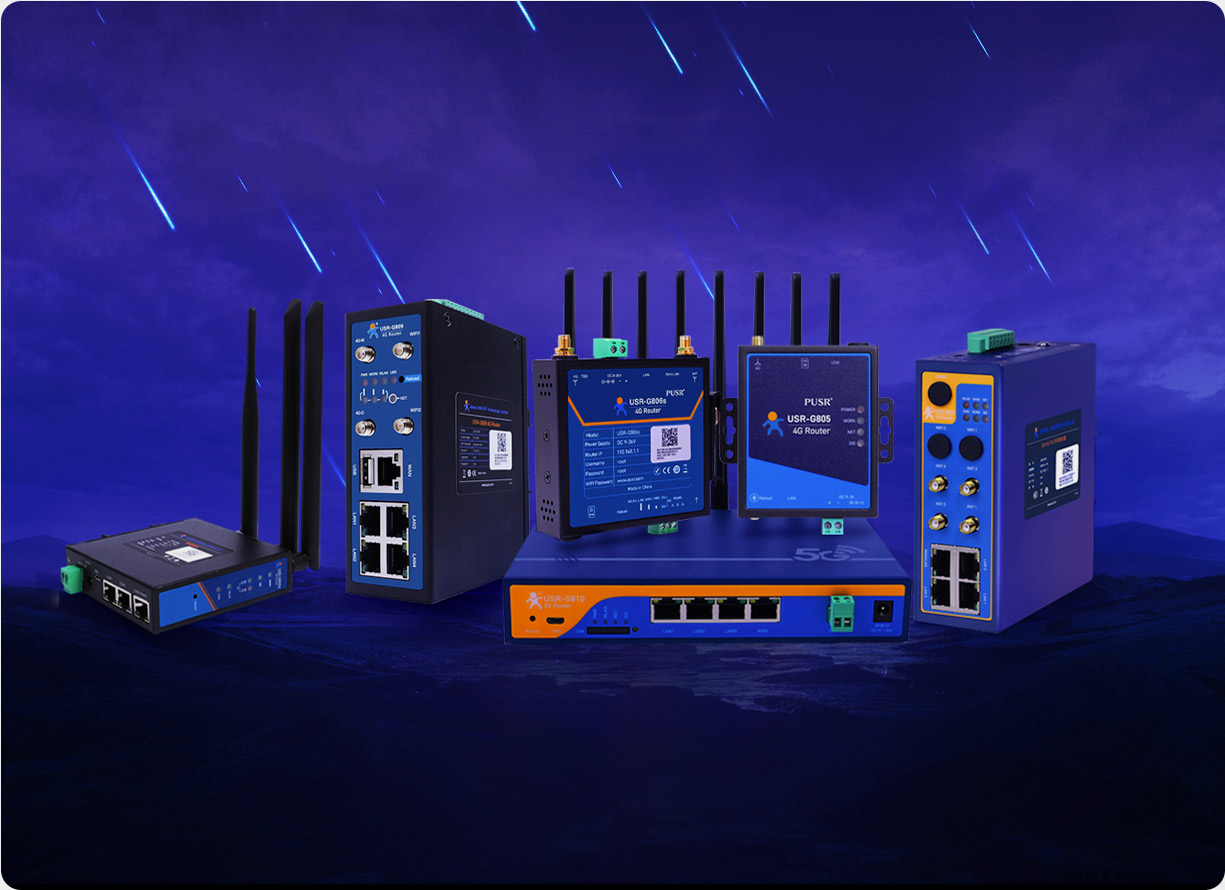
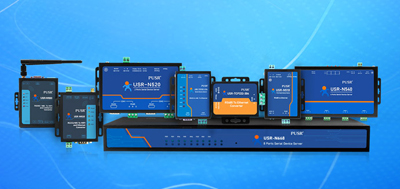
And today's industrial computers are no longer the "big, ugly, black boxes" of the past. Take USR-EG628 from USR IoT as an example. This palm-sized device packs a quad-core ARM processor, 1 TOPS of built-in AI computing power, supports 100+ industrial protocols, and can simultaneously connect to Siemens, Mitsubishi, Omron, and other brands of PLCs. In plain terms: one machine can do what you used to need an industrial computer + protocol gateway + IO controller + edge computing box to accomplish.
Here's a real story: a production line engineer bought two EG628s on a whim, just to try them out. Turns out, a job that used to take two people a week with the old setup was done in half a day. It ran for 30 straight days in a 60°C workshop — zero failures. The next week, he ordered 10 more. Total savings: 236,000 yuan in equipment procurement costs.
I'm not selling you a product. I'm telling you: when the industrial computer has evolved to do "five jobs in one machine," and you're still stitching three devices together to build a system — that's not being safe. That's being wasteful.
Let's go back to those thoughts you had at the start:
Want proof?The data is all here: 99.7% recognition rate, 0.5-second response, 270% throughput boost — this isn't a PowerPoint, it's deployed cases.
Want ROI?Labor costs down 60%, mis-shipment rate down 92%, inventory counting saves 3.8 million a year — eight-month payback isn't a fantasy, it's a verified ROI.
Want safety?Industrial-grade protection, edge computing that doesn't depend on the cloud, runs even when the network is down — those "what ifs" you're afraid of? The engineers thought about them before you did.
Want compatibility?From ambient to cold-chain, from tall racks to narrow aisles, from 8 cameras to 2,000 RFID tags read simultaneously — today's system doesn't make you change your warehouse. It makes the warehouse adapt to it.
The FMCG industry is going through a silent revolution. Those warehouses still running on manpower aren't not trying hard enough — the game has changed.
When your competitor has already used AGV + visual recognition to pull sorting efficiency to three times yours, and you're still debating "should I try?" — the gap is already irreversible.
How powerful is the industrial computer's visual recognition technology? Powerful enough that it's no longer an "option" — it's a "must-have" for FMCG warehousing.
The only question is — do you get on board now, or do you wait until everyone else has already run far ahead, and then chase?