When I say that, you probably think I'm talking nonsense.
Isn't a substation room just a few walls, a few transformers, a few rows of switchgear? How could it possibly be a "person"?
But think about it carefully —
Does it have a body temperature?Yes. Transformer operating temperature, ambient temperature — that's its body temperature. When the temperature rises, it has a fever. If you ignore the fever, it burns out.
Does it have breathing?Yes. Humidity is its breathing. Too humid, it can't catch its breath — insulation drops, breakdowns become likely. Too dry, static builds up — equally dangerous.
Does it have a sense of smell?Yes. The smoke detector is its nose. When something starts to scorch, it tells you immediately.
Does it have a sense of pain?Yes. The water leak sensor is its pain nerve. When water gets in, it hurts. It screams.
Does it have a pulse?Yes. Voltage, current, power factor, harmonics — these electrical parameters are its heartbeat. Whether the heartbeat is stable directly determines whether it can keep living.
You see — a substation room has body temperature, breathing, smell, pain, and a pulse. It's not a pile of dead iron. It's a living system.
But here's the problem —
You can feel your own body temperature, breathing, and heartbeat because you have a nervous system. What's the substation room's "nervous system"?
It's the data link.
And for most substation rooms, that "nervous system" is broken.
I've seen too many substation rooms like this:
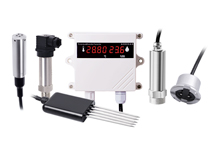
Temperature sensor — installed. Humidity sensor — installed. Smoke detector — installed. Water leak sensor — installed. Electrical parameter acquisition module — also installed.
All five senses, fully equipped, the solution looks beautiful on paper. The boss comes to inspect and praises you for being "professional."
But the data?
Temperature data — from three days ago. Humidity data — from last week. Smoke detector status — the platform says "online," but you don't know if it's really online or fake online. Water leak sensor — when was its last heartbeat? No idea. Electrical parameters — when was the last update? Forgotten.
All five senses are installed, but everything is in a "vegetative state" — organs are there, but no sensation.
You know what that means?
It means that monitoring system you spent tens of thousands on is essentially a decorative wall.
Looks good. Useless.
Let me tell you a real scenario. Think about it:
A factory substation room — smoke detector installed, water leak sensor installed, temperature sensor installed. One night at midnight, a transformer overheated. Temperature spiked to 95°C. The smoke detector didn't trigger (because it hadn't reached the smoking point yet). The water leak sensor didn't trigger (because there was no water leak).
But the temperature data? It never made it up.
The next morning during routine inspection, they discovered the transformer windings had already burned and deformed.
Tell me — what good was that smoke detector? What good was that water leak sensor?
It's not that the sensors are useless. It's that the sensors' "words" never reached your ears.
This is the biggest irony of substation room remote monitoring: you think you're doing "remote monitoring," but you're actually doing "remote guessing."
Now you know where the problem is — it's not a lack of sensing. It's a lack of transmission.
Sensors are the five senses. The industrial wireless router is the nerve. No matter how sensitive the senses are, if the nerve is severed and the brain can't receive the signal, the person is paralyzed.
What an industrial wireless router does is complicated if you make it complicated, and simple if you make it simple:
It collects all the sensor data from inside the substation room and transmits it in real time to your screen via 4G/5G network.
Temperature? Transmitted. Humidity? Transmitted. Smoke detector status? Transmitted. Water leak alarm? Transmitted. Voltage, current, power factor? All transmitted.
And not just "transmitted, good enough" — transmitted stably, transmitted continuously, transmitted without losing a single packet.
You might say: "I can use a 4G data card to transmit too."
You can. But a data card is a "single nerve" — one break and you're paralyzed. An industrial wireless router is "three nerves" — China Mobile, China Unicom, China Telecom, three SIM cards online simultaneously, intelligent switching. One breaks, the other two take over. Your substation room will never become a "vegetative patient."
You might also say: "Why don't I just pull an Ethernet cable?"
You could. But the substation room is on underground level B2. Pulling cable means excavation, wall penetration, permits. The wiring cost for one substation room could buy you ten industrial wireless routers. And once you pull the cable, you're locked into that location. Want to add a sensor later? Want to adjust the layout? You have to rewire everything.
The value of an industrial wireless router isn't "it can transmit data." It's"it lets your substation room grow a nervous system — and that nervous system doesn't care about location, doesn't care about environment, and doesn't need maintenance."
Now let's pull the picture back.
On your desk, there's a screen.
On the screen, on the left is the real-time feed from Substation Room A. On the right is the data dashboard for Substation Room B.
You click on Substation Room A:
Five data points, five colors, all updating in real time, timestamps precise to the second.
You don't need to go to the site. You don't need to make a phone call. You don't need to guess.
You"see"the substation room's body temperature, breathing, sense of smell, sense of pain, and pulse. It's alive. You know it's alive. And it's doing just fine.
This is what an industrial wireless router does — it doesn't produce data. It just lets data "arrive alive."
And those four words — "arrive alive" — how much are they worth?
Let me calculate:
One transformer burnout — direct loss: 100,000–500,000 RMB. Indirect loss (power outage, production halt, compensation) could be 3–5 times the direct loss.
One fire — you don't even dare to calculate.
One water leak causing equipment scrap — tens of thousands to hundreds of thousands.
And one industrial wireless router? A few hundred RMB. What it protects is hundreds of thousands or even millions of RMB worth of equipment in your substation room — and the human safety that could be involved.
Tell me — is that a good deal or not?
I deliberately used the word "fit into," not "connect to."
Because "connect to" is technical language. "Fit into" is human language.
What does "fit into" mean?
It means you never have to think about "where is the substation room, is the signal good, did the data get transmitted" — those annoying things ever again. It's right there on your screen, as natural as the weather app on your phone.
You don't open your weather app every morning and worry "do I have internet today," do you?
Your substation room monitoring should be the same — open it and it's there, close it and forget about it, but it's always there.
This is the ultimate value of industrial wireless router + cloud platform: to turn remote monitoring from "a project you have to worry about" into "a habit you don't have to worry about."
You don't need to care whether it's using China Mobile or China Unicom. You don't need to care whether it's in a basement or on a rooftop. You don't need to care whether the network dropped today.
You just need to look at the screen.
Everything on the screen is normal? Go do something else.
There's a red alarm on the screen? Handle it.
That simple.
There are quite a few industrial wireless routers on the market. But for the substation room scenario, there are a few things you can't skip:
First: Three-network switching must be there.Don't touch single-network models. The substation room environment is too complex — you can't afford to gamble.
Second: Industrial-grade protection must be there.A substation room is not an office. High temperature, humidity, dust, electromagnetic interference — a home router will be dead in three months.
Third: Watchdog and auto-reconnect must be there.Without this, you'll still have to get up at midnight when the network drops.
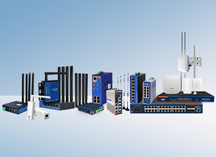
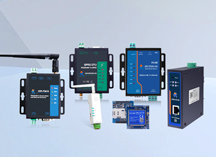
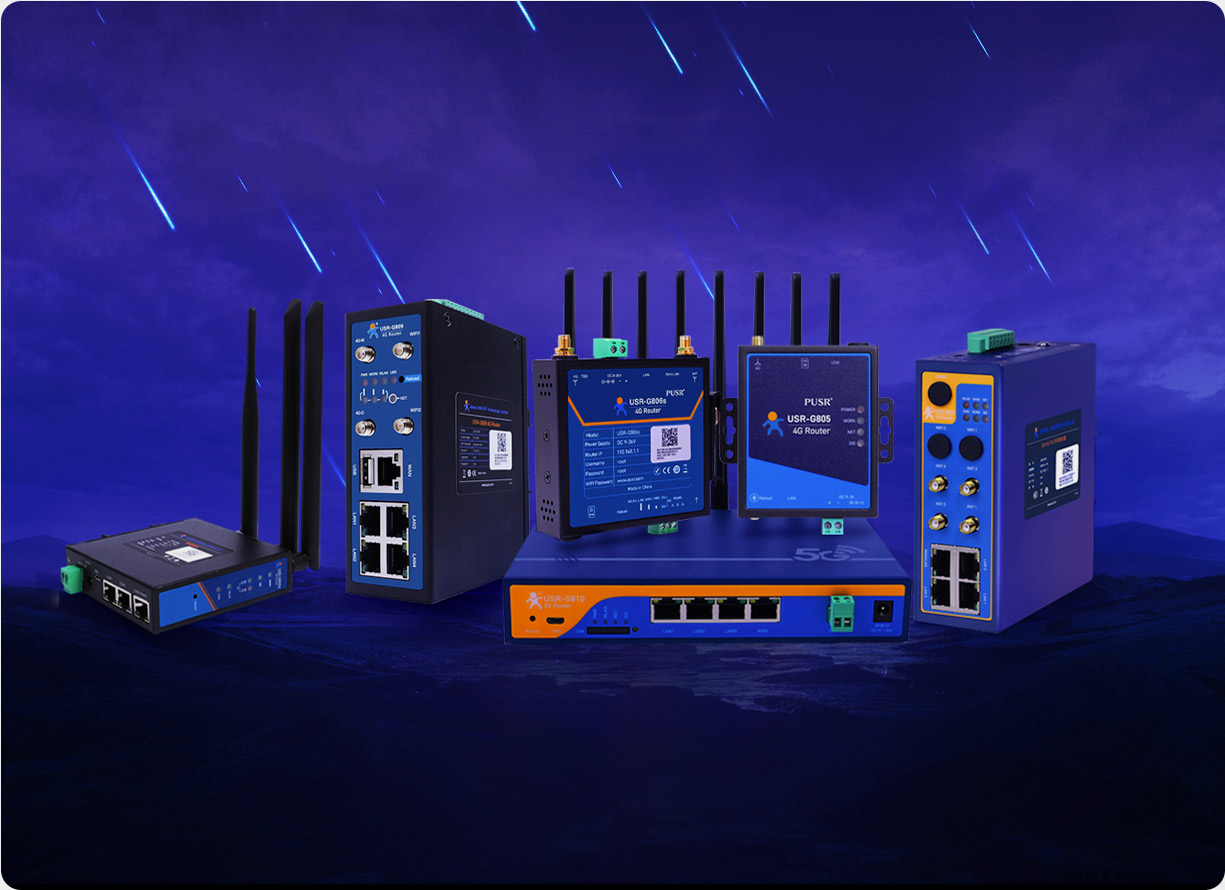
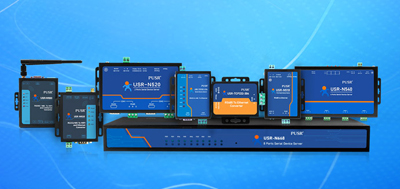
Filter by those three rules, and the choices actually shrink quite a bit. The one we use most in our own projects is the USR-G806w by PUSR— three-network coverage, industrial-grade wide temperature, built-in watchdog, dual Ethernet ports that can connect cameras and sensors simultaneously. The price isn't much higher than a data card, but the stability is on a completely different level.
Of course, you can also pick your own by those three rules — it doesn't have to be this specific model. The key point is —stop toughing it out with data cards. Your substation room deserves a real "nervous system."
A substation room is a person.
It has a body temperature — you need to know.
It has breathing — you need to know.
It has a sense of smell — you need to know.
It has a sense of pain — you need to know.
It has a pulse — you need to know.
Miss any one of these five things, and it could cause a major problem at a moment you don't even know about.
And the industrial wireless router is the thing that lets you have all five senses simultaneously.
It's not expensive. It's not complicated. You don't need to understand the technology.
You just need to put it in the substation room, plug it in, connect the Ethernet cable.
Then, on your screen, there will be one more "living" substation room.
Temperature is jumping. Humidity is changing. The smoke detector is watching. The water leak sensor is on guard. The electrical parameters are running.
You don't have to do anything. But you know everything.
This is what substation room remote monitoring should look like.