Old Substation Room Retrofit: Client Lao Zhang's Three Emails
Email 1 | Monday 08:17
To: Project Team All
Subject: Underground Substation Room Remote Monitoring Retrofit — Must Go Live This Month
Everyone,
Just got out of a meeting. The leader's exact words were — "Before the end of this month, remote monitoring for all 12 old substation rooms must be fully online. Data must be transmitted back to the central control room big screen."
Budget? The leader said, "Don't talk to me about fiber. The last project spent over 200,000 on fiber. This time the budget is only 40,000."
40,000. Twelve substation rooms.
I did the math. Pulling fiber — just the cabling for one substation room costs close to 2,000. Twelve rooms is 24,000, and that's not even counting labor and permit fees. 40,000 won't even cover the tail end of the fiber.
And these substation rooms — the oldest one was built in the 80s. The walls are solid brick, the floors are poured concrete, and there are zero pre-installed conduits. You want me to pull fiber? From where? Through the walls? Property management won't allow it. Through the ceiling? It's all rebar. Through the floor? Need to excavate — permits alone take at least a month.
A month? The leader gave me twenty days.
Right now I feel like this: the leader gave me an impossible task, then told me "it must be done."
Can anyone tell me — besides pulling fiber — what other options are there?
Lao Zhang
It's not a technology problem. It's a triple squeeze of"not enough money, not enough time, not enough conditions."
Lao Zhang's anxiety isn't his alone. Go ask anyone who manages O&M for old buildings — nine out of ten are exactly like Lao Zhang:
They know remote monitoring needs to be done. They know the data matters. They know the cost of fixing things after an accident is too high —
But they just don't know how to do it.
Because every "correct" solution falls apart in front of an old substation room.
Pull fiber? Too expensive, permits too long, construction too complicated.
Use WiFi? The substation room is underground — the signal can't get in. It's like it doesn't exist.
Use a 4G data card? It works, but it drops offline every other day, and you still have to send someone to reboot it at midnight.
You're trapped in a dead loop:"the correct solution can't be done, and the doable solution isn't reliable."
Lao Zhang doesn't not want to do a good job. He just has terrible cards in his hand.
To: Project Team All
Subject: Fiber Plan Rejected. WiFi Plan Rejected. I'm Losing My Mind
Everyone,
Spent the whole day running around. Here's the conclusion:
Fiber plan: Rejected.Not because the technology doesn't work — because the construction team took one look at the site and shook their heads. "Your underground substation rooms have no conduits. You either cut slots or run exposed cables. Cutting slots — property management won't allow it. Exposed cables — fire safety won't allow it. The ground-floor ones could work, but the homeowners' committee won't approve exterior wall cabling. Permits alone take a month. We can't wait."
WiFi plan: Rejected.I brought an engineer to the underground substation room to test the signal. His phone went from four bars straight to "No Service." The engineer said the signal attenuation from reinforced concrete is exponential — on the ground floor, one wall costs you one bar. Inside a substation room, one wall costs you everything. Unless you install a base station inside the substation room — then the cost goes back up.
4G data card plan: Tried it. Works for now, but I don't dare recommend it.Installed data cards in three substation rooms today. The two underground ones have very weak signal — data comes and goes. The ground-floor one is stable, but the engineer said data cards are consumer-grade — no watchdog, won't auto-reconnect when the network drops. Which means: if the network drops at midnight, I have to send someone to the site to reboot.
I can't get up at midnight and run to twelve substation rooms.
Current situation:
17 days left until the end of the month.
12 substation rooms. Not a single plan decided.
The leader asks me for progress every day. I say "it's moving forward" every day.
I know the words "it's moving forward" won't hold up much longer.
Can anyone point me in a direction? Even a wild path is fine. As long as it can be done in 20 days, and the data can be stably transmitted back — I'll buy them dinner for a month.
Lao Zhang
Lao Zhang tried every "normal" solution. All rejected.
Fiber — rejected by site conditions.
WiFi — rejected by the laws of physics.
Data card — rejected by reliability.
This isn't Lao Zhang's problem. It's that old substation rooms, as a scenario, arenaturally incompatible with "conventional solutions."
Have you ever wondered why remote monitoring for old substation rooms is always a "half-finished project"?
It's not because nobody wants to do it right. It's because every conventional communication solution, in front of an old substation room, is"theoretically feasible, practically nonsense."
Fiber is theoretically the most stable — but you can't pull it.
WiFi is theoretically the most convenient — but you can't penetrate it.
Data cards are theoretically the cheapest — but you can't rely on them.
What you need isn't a "better data card." What you need is a"communication solution designed for substation rooms."
And that solution has always existed. Most people just don't know about it.
To: Project Team All + Leader
Subject: Plan Decided. All Going Live Next Monday
Everyone,
Let me start with the result: 12 substation rooms, all done. All data transmitted back. Total time: 3 days.
Here's what happened:
Wednesday night, I couldn't sleep. I was randomly searching online and found something —industrial LTE router, 4G/5G solution.
Honestly, I was skeptical at first. A router? Really? In a substation room environment? A home router would burn out in three days, right?
But I looked into it more carefully and realized this thing is nothing like a home router. It's industrial-grade — wide temperature design, moisture-proof, dust-proof, anti-interference. And it supports three SIM cards simultaneously — China Mobile, China Unicom, China Telecom — three networks online at the same time, intelligent switching. If one carrier drops, it automatically switches to another. You don't have to do anything.
Most importantly: it has a watchdog mechanism — auto-reconnects when the network drops. No more sending someone to reboot at midnight.
I placed the order Thursday morning. It arrived Friday.
Then I did one thing —
Put the industrial LTE router into the substation room. Connected the cameras and sensors with Ethernet cables. Plugged in the power. Turned it on.
That's it.
That simple.
No fiber. No slot cutting. No wall drilling. No permits. No construction team.
One substation room, from unboxing to data online: average 40 minutes.
Friday at 5 PM, I sat in my office and opened the central control room big screen —
12 substation rooms. 12 sets of data. All live in real time.
Temperature, humidity, smoke detection, water leak, electrical parameters — all updating.
The underground B2 substation room with the worst signal? Data was transmitting too. Because the industrial LTE router automatically switched to China Telecom's network. China Mobile and China Unicom signals were indeed weak at that location, but China Telecom's base station happened to cover it.
I stared at the screen for ten minutes and said one sentence:"Why didn't this thing show up sooner?"
Cost? 12 industrial LTE routers, plus SIM cards — total 18,000 RMB. Less than half the fiber plan.
Timeline? 3 days. Not 3 weeks. 3 days.
The leader saw the big screen today and said one sentence: "Lao Zhang, this is well done. Use this solution for other projects next quarter."
I can finally sleep well now.
Lao Zhang
Look back at these three emails. Sound familiar?
Email 1: Anxiety.The task is here, but you have no cards to play.
Email 2: Breakdown.Tried every path. All dead ends.
Email 3: Relief.Found the right tool, and everything suddenly clicked.
This isn't just Lao Zhang's story. This is the inevitable path of every old substation room retrofit project.
The only difference: some people gave up after Email 2. Some people searched one more night and found the industrial LTE router.
On the surface, you're changing the communication solution.
In reality, you're changing theentire project logic.
The traditional logic: first you need conduits, then fiber, then a network, then data.
But old substation rooms don't have conduits. So the traditional logic doesn't work.
The new logic: first you have the industrial LTE router, then 4G/5G network, then data. Conduits? Not needed. Fiber? Not needed. Construction? Not needed.
You're not "going around" the problem. You'reredefiningthe problem.
When communication no longer depends on cabling, old substation room retrofit changes from an "engineering project" to "equipment deployment."
An engineering project needs permits, construction, coordination, and a month.
Equipment deployment needs what? Put it in, connect the Ethernet cable, plug in the power. Done in three days.
If you're right now in the same state as Lao Zhang on Wednesday night — fiber won't work, WiFi has no signal, data cards aren't reliable, time is running out, budget is running out, the leader is breathing down your neck —
I want to tell you three things:
First, it's not that you're not capable. It's that the tool in your hand is wrong.Taking a home router to retrofit a substation room is like performing surgery with a kitchen knife — it can cut, but it can't cut precisely.
Second, stop grinding away at fiber.The physical conditions of old buildings determine that fiber isn't the "optimal solution" — it's the "most expensive solution." Your budget and timeline can't afford the most expensive solution.
Third, the industrial LTE router 4G/5G solution is currently the "only solution" for old substation room retrofit.Not because it's perfect — because it's the only one that needs no construction, no permits, no cabling, plug-and-play, three-network switching, and auto-reconnect on dropout.
You don't need it to be perfect. You need it to be deployable.
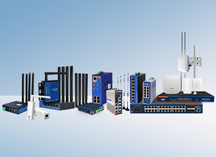
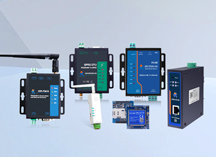
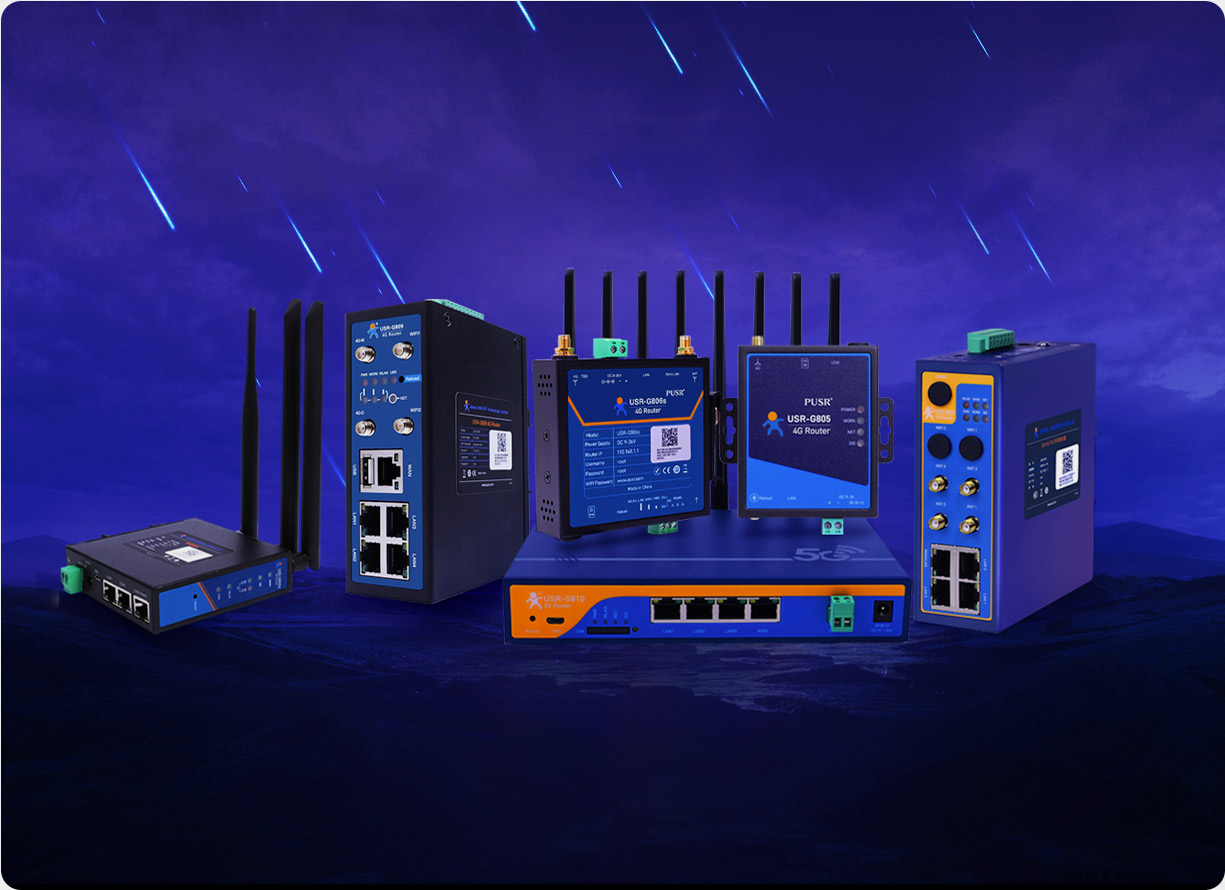
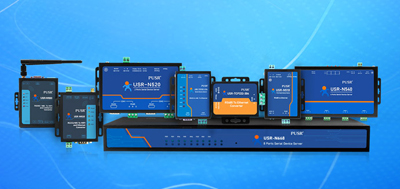
The one we use in our own projects is theUSR-G809 by USR IoT. Three-network coverage, industrial-grade protection, watchdog, dual Ethernet ports. It's been sitting in a substation room for over a year — not a single problem. Deployment is genuinely simple — put it in, connect the Ethernet cable, plug in the power, done.
But honestly, the product is just a tool. What really let Lao Zhang sleep well wasn't that router — it was that he finally found a path that actually works.
Your substation room is the same. It doesn't lack sensors. It doesn't lack cameras. It doesn't lack a platform. What it lacks is a path that can bring the data out"alive."
The industrial LTE router is that path.
No fiber. No permits. No construction.
Three days. Plug and play. The data comes back on its own.
(Lao Zhang's fourth email should be to his wife: "No more midnight site visits this month. I'll take you shopping this weekend.")