Substation Data Security Transmission: Why Has the Cellular Router Become the "Standard Config" for State Grid / China Southern Power Grid Renovations?
Note Before We Begin: This Is Not a Technical Article. It's a Letter Written to Power Industry Professionals.
If you work for State Grid or China Southern Power Grid, you've definitely been through moments like this—
It's 2 AM. The phone rings at the dispatch center. The data channel from a substation has gone down. The backend can't see real-time data. The dispatcher doesn't know whether to issue an order. You stare at that flat line on the screen, and there's only one thought in your head: this line cannot go down.
But you know something else even better: this line will have to be replaced sooner or later.
Not because it's old. Because the entire logic of the grid has changed.
In 2024, State Grid released theAction Plan for New Power System Construction. In 2025, China Southern Power Grid followed up with its Three-Year Digital Transformation Plan. The two documents combined have over 100,000 words—but the core message boils down to one sentence: data must flow, security must hold, and accountability must be clear.
Think about those three words.
"Data must flow"—this isn't the old "as long as it transmits, it's fine." What's required now is real-time, complete, zero packet loss. Distribution automation, distributed PV integration, charging pile monitoring, energy storage dispatch… every single business is stuffing data into the substation, and not a single data stream can be interrupted.
"Security must hold"—this isn't the old "just install a firewall and you're done." What's talked about now is end-to-end encryption, identity authentication, link redundancy. Classified Protection 2.0 Level 3 is the baseline; critical nodes must pass Level 3 or above. Data intercepted during transmission? That's not a technical incident. That's a security event.
"Accountability must be clear"—these four words carry the most weight. When data goes wrong, whose fault is it? The O&M team? The integrator? The equipment vendor? Now everything is traceable and auditable. What you need isn't just a channel that can transmit data. You need a channel where every single bit can clearly explain "where it came from, where it's going, and who touched it."
So you see—that substation renovation proposal in your hands? On the surface, you're selecting equipment. In reality, you're answering exam questions. And the grading criteria for this exam are completely different today than they were three years ago.
I know what you're thinking: "We already have fiber laid in our substation. Why do we need a cellular router too?"
Because fiber solves the "transmission" problem. What you're facing now is the "secure transmission" problem. Those two words differ by one word—"secure"—and that one word is a universe apart.
Fiber is indeed immune to electromagnetic interference. Fiber does have high bandwidth and low attenuation. Fiber is indeed the only choice for process-layer GOOSE and SV messages—no one would argue with that.
But think carefully—what in your substation is actually connected by fiber?
It's the differential signals between protection devices. It's the sampled values on the process-layer network. It's those core services that demand latency under 4 milliseconds and reliability of 99.999%.
For these services, fiber is standard. No argument.
But what about everything else?
What does the station-level remote monitoring data travel over? What about the video streams from the auxiliary control system? What about the power generation data from distributed PV? What about the billing data from charging piles? What about the remote configuration commands from O&M personnel?
Did you really lay fiber for every single one of these?
No. In most substations, this data travels over Ethernet—or even wirelessly. And these "non-fiber links" are precisely the high-incidence zones for security incidents.
Why? Because you protect your fiber links with priority. But your Ethernet ports? You don't. Your wireless links? Even less so. Attackers won't touch your fiber—they'll go after your weakest Ethernet cable.
This is your real anxiety: your core services are well protected, but your edge services are running naked.
I've talked to many power automation engineers. Their attitude toward cellular routers has gone through three stages:
Stage 1: Look down on it."Isn't that just a 4G router? How can it compare to fiber?"
Stage 2: Give it a try."Station-level data isn't that important anyway. Let's just use it for now and see."
Stage 3: Can't live without it."How is this thing so much more stable than I expected?"
How did Stage 3 happen? Reality educated them.
At a certain 110kV substation, station-level data originally traveled over Ethernet, uplinked through a managed switch. One day, the switch failed. Data was down for 4 hours. The dispatch center couldn't see any data from that station and nearly misjudged it as a total station blackout. Post-incident investigation? A hundred-yuan-class switch had a burned-out power module.
Later, they switched to a cellular router—4G/5G dual-link, primary and backup with automatic failover. Three months later, a carrier base station went down. The primary link dropped. The backup link took over within 200 milliseconds. Zero data interruption. The dispatch center never even knew anything had happened.
This is the real value of the cellular router: it's not that its transmission speed beats fiber. It's that where fiber can't reach, it gives you a path that "never goes down."
And that path is encrypted, auditable, and remotely manageable.
Let me say something you might not like to hear: when you select equipment, technical specs only account for 30% of the weight. The remaining 70% is "what happens when things go wrong."
Fiber breaks—you wait for the fusion splicer to show up. If it breaks at 2 AM, you wait until dawn. Fusion splicing requires specialized equipment you don't have on site—you have to borrow it from another substation. After repair, you test. After testing, you integrate. The whole process takes at least half a day on the fastest timeline.
Cellular router goes down? Remote reboot. Remote link switchover. Remote firmware upgrade. Remote log review. You sit in the dispatch center, sipping tea, and get it done.
More critically—every disconnect, every switchover, every reconnection of the cellular router is logged. Who did what operation at what time—everything is on record. The "full-link traceability" required by classified protection? Fiber can't give you that. But the cellular router has it built in.
This is what State Grid and China Southern Power Grid people truly care about. Not how big the bandwidth is or how low the latency is. It's—when something goes wrong, can you explain it clearly? If you can explain it clearly, you don't have to take the blame.
Three years ago, the cellular router was still an "edge player" in the power industry. Back then, 4G signals were unstable, device power consumption was high, and security wasn't good enough. Power professionals didn't dare use it, and didn't want to.
But things are different now.
5G coverage has ramped up. Industrial-grade routers have achieved telecom-grade reliability. Hardware watchdog, software watchdog, dual-SIM auto-switchover, national cryptographic algorithm encryption—these things were concepts three years ago. Now they're standard.
More importantly, policy is pushing it.
State Grid's "Digital New Infrastructure" explicitly requires: distribution-side equipment must have wireless communication capability and support remote O&M. China Southern Power Grid's "Intelligent Upgrade" lists wireless communication as a mandatory option. In the tender documents of both grids, the frequency of "cellular router" appearances has tripled in two years.
It's not that the cellular router suddenly got better. It's that this industry has finally reached the point where it needs it.
And the stations that were earliest to try it have already proven one thing with their results: process layer on fiber, station-level and auxiliary control systems on cellular router—this is the highest cost-performance, lowest-risk combination available today.
Not the most advanced. But definitely the most "right."
Let me say a few things that won't appear in any proposal—but you know in your heart.
The money your leader gives you will only ever cover the core services. But edge services can't go down either. A cellular router costs a few thousand yuan per unit and can patch every link your budget can't reach. It's not the optimal solution. But it's the only one.
You can't assign a communication engineer to every substation. The cellular router supports remote management—one person can manage dozens of stations. This isn't a technical advantage. It's a management advantage.
The outage window is only a few hours. Fiber construction takes half a day. Cellular router deployment takes ten minutes. Which one you choose isn't a technical question. It's a scheduling question.
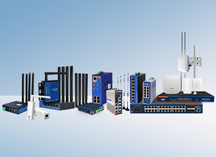
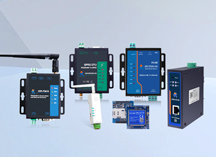
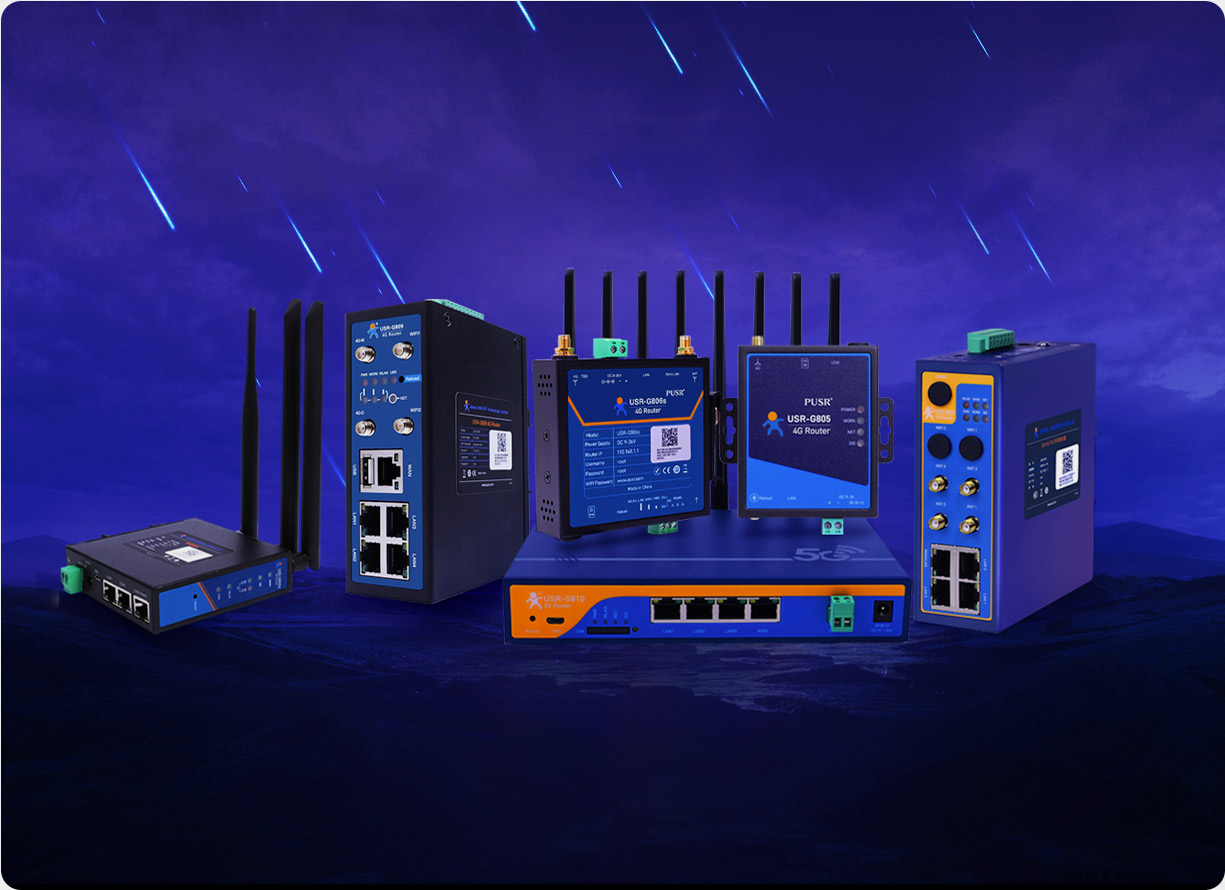
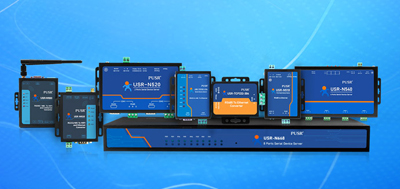
I saw a substation using USR's G806w from USR IOT. Full metal housing, IP30 protection, wide-temperature operation, supports 4G/5G and multiple VPN encryptions. Not the most expensive, but it has every security feature that matters. On deployment day, the engineer arrived on-site in the morning. By the afternoon, data was already streaming back to the dispatch center. The station master said one sentence: "If I'd known it was this simple, I would have switched last year."
You might still be torn: should I go all-fiber, or do a hybrid deployment of fiber plus cellular router?
My advice is simple—stop overthinking it. Process layer: all fiber. That's the bottom line, non-negotiable. Station-level, auxiliary control systems, O&M management: go cellular router. Not because it's better than fiber. Because in the places your budget can't reach, your people can't reach, and your timeline can't reach—it plugs the last mile for you.
The power industry has an old saying: "Better to have it and not need it, than to need it and not have it."
The cellular router is your "have it." It doesn't steal fiber's job. But it guards the places fiber can't guard.
Secure data transmission has never been something you solve by "using the best technology." It's about minimizing risk under limited conditions.
And the cellular router is the thing that lets you sleep at night under those limited conditions.
You don't need to explain to anyone why you used a cellular router. You only need to calmly say, when the phone rings at 2 AM: "The data didn't drop. Don't worry."
That's all it takes.