One Person Managing 200 Power Distribution Rooms — It's Not Bragging. The 5G Cellular Router Makes "Minimal Staffing" Actually Happen
7:15 AM. Lao Zhang's phone rings.
He's the O&M supervisor for a real estate group, managing 23 power distribution rooms across the city. The moment his phone rings, his stomach tightens — a call at this hour means either a trip-out or a leak.
Sure enough. The distribution room on the east side of the city — transformer temperature control alarm. He has to drive 20 minutes to get there. Once he arrives: check the equipment, fill out the log, take photos, file the report. By the time he finishes the whole process, the morning is gone.
On the other side of the same city, Xiao Li has just made his tea and opened his laptop.
Xiao Li is also an O&M supervisor. But he manages 217 power distribution rooms.
His phone rings too. East-side distribution room, transformer temperature alarm. He glances at the data on his screen: 68℃ — hasn't hit the trip-out threshold yet. He clicks "remote view," pulls up the distribution room's camera, takes a look — the ventilation fan is spinning. No anomaly. He clicks "confirmed, continue monitoring" in the system, and goes back to his tea.
From alarm received to resolution complete: Xiao Li took 47 seconds. Lao Zhang took the whole morning.
You think Xiao Li is more capable than Lao Zhang? No.
It's that Xiao Li's 217 distribution rooms each have "eyes" and "ears." Lao Zhang's 23 are still blind and deaf.
Those "eyes" and "ears"? The 5G cellular router.
I've talked to many O&M people from property management and real estate companies. They all share the same feeling:
"It's not that I don't want to manage the stations well. It's that I physically can't."
One power distribution room. Under the traditional O&M model, what do you need to do?
Daily inspection once — meter reading, temperature measurement, check for leaks, check switch status. Weekly maintenance once — tighten bolts, clean dust, test protection devices. Monthly report once — compile data, analyze trends, report to leadership.
One room. One person can visit 5 rooms a day — that's already the limit. 10 rooms? You need 2 people. 20 rooms? You need 4 people. 50 rooms? You need a whole team.
But what's the reality? Many real estate groups have over a hundred distribution rooms in a single city. Some have over a thousand nationwide. You can't staff every room. You can only "prioritize the important ones" — check the critical rooms daily, check the unimportant ones once a week, and deal with problems when they happen.
That's not O&M. That's gambling.
You're gambling that the unimportant rooms won't have problems. But luck — you can gamble once or twice. Gamble ten or eight times, and you'll lose eventually.
And what's the cost of losing once? At best: power outage and compensation. At worst: equipment destruction, personal injury, regulatory penalties.
You're not bad at managing. You're one person split into ten pieces, and none of them are enough.
I later visited Xiao Li's monitoring center.
It's not big. One room, three screens. On the screens: the real-time status of 217 distribution rooms — which room's temperature is high, which room has abnormal current, which room's door was opened, which room's AC stopped — all visible at a glance.
I asked him: "How do you know which room has a problem?"
He pointed to an unremarkable metal box on the corner of his desk: "It tells me."
That metal box is the 5G cellular router.
One installed in each distribution room. Connected via RS485 to the meters, temperature controllers, access control, smoke detectors, and cameras. All data converges to the router and is transmitted in real time back to the monitoring center via 4G/5G network.
217 distribution rooms, 217 5G cellular routers, one person, three screens — all manageable.
It's not because Xiao Li is a superhuman. It's because this system does three things for him:
First, it "sees" for him.
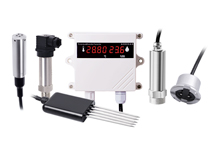
Every distribution room's camera, temperature and humidity sensor, smoke detector, water leak sensor — all connected to the 5G cellular router. Data transmitted in real time. Anomalies automatically alarmed. Xiao Li doesn't need to run to the site. He sits in the monitoring center and can see the status of every single room.
Second, it "runs" for him.
Remote switching, remote parameter tuning, remote device reboot, remote OTA upgrade — operations that used to require a site visit. Now they're done from his computer. The work orders Xiao Li handles in a day outnumber what an entire team used to handle in a week.
Third, it "records" for him.
All data is automatically collected, automatically stored, and reports are automatically generated. Monthly energy analysis, annual carbon emission reports, equipment health assessments — all produced automatically. Xiao Li doesn't fill out Excel. The system fills it out for him.
See — it's not that Xiao Li is more capable than Lao Zhang. It's that Xiao Li's system has a pair of extra eyes, a pair of extra legs, and an extra brain compared to Lao Zhang's.
And those extra eyes, those extra legs, that extra brain? The 5G cellular router.
I know what you're thinking. "I get the theory. But what about when something actually goes wrong?"
Fine. Let me break down the three scenarios you fear most.
Scenario One: 3 AM, the distribution room is flooding.
Traditional mode: Water floods the switchgear, short circuit, trip-out. You don't find out until morning. The entire residential complex loses power. Residents complain. Leadership yells.
5G cellular router mode: The water leak sensor detects standing water. Within 30 seconds, an alert is pushed to Xiao Li's phone. Xiao Li remotely checks the camera and confirms it's a broken AC condensate drain pipe. He remotely shuts off the breaker for that circuit, containing the damage to a single loop. Then he dispatches a repair technician the next morning.
The entire process — Xiao Li never left his bed.
Scenario Two: Transformer temperature is abnormal, but hasn't hit the trip-out threshold yet.
Traditional mode: You don't know. By the time you find out, it's either already tripped or the equipment is already burned.
5G cellular router mode: Temperature data is collected every 5 seconds and uploaded to the edge for trend analysis. The temperature hasn't hit the trip-out threshold, but the rate of rise is abnormal — the system flags "overheating risk" and issues an early warning. Xiao Li remotely reduces the load, bringing the temperature back down.
The equipment didn't burn. The power didn't cut. Xiao Li didn't even know it happened — the system handled it on its own.
Scenario Three: The boss suddenly wants last month's energy consumption data.
Traditional mode: You dig through Excel, find the data, make charts, adjust formatting. Half a day gone. The boss is still not satisfied and tells you to redo it.
5G cellular router mode: Data is automatically collected, automatically categorized, and charts are automatically generated. Xiao Li clicks "export" — 10 seconds later, a perfect report lands in the boss's inbox.
You didn't become more diligent. You became smarter. Because the system did the dirty work for you.
| Item | Traditional Mode (20 rooms) | 5G Cellular Router Mode (200 rooms) |
|---|---|---|
| O&M personnel | 4 people | 1 person |
| Annual labor cost | ~480,000 CNY (120K/person/year) | ~120,000 CNY |
| Avg. annual fault losses | ~150–300K CNY (outage + equipment + compensation) | ~20–50K CNY (early warning) |
| Annual report labor hours | ~360 hours (4 people × 90 hours) | ~10 hours |
| Unmanned coverage rate | 0% | 95%+ |
| Carbon data reporting | Not real-time | Real-time automatic |
See — it's not that "one person managing 200 rooms" is some superpower. It's that the cost of the traditional mode simply can't support the results you want.
You don't not want to manage well. You can't afford to.
The 5G cellular router doesn't let you "manage more." It lets you use fewer people to manage more rooms — and manage them better.
The 5G cellular router isn't a magic wand. But it's the most realistic path to "minimal staffing" available today.
To make it work, you need to think through three things:
First, do your distribution rooms have network access?
Most distribution rooms are in basements, on rooftops, in remote parks. No fiber, no broadband. 4G/5G is the only option. So the 5G cellular router must support 4G/5G, preferably with multi-SIM auto-switchover — single-carrier signals are unstable. Dual-SIM auto-switchover is what you can rely on.
Second, can your devices connect to the network?
Meters, temperature controllers, and access control systems in older distribution rooms often don't have Ethernet ports. The 5G cellular router must have RS485, DI/DO, and analog inputs — to bring all those "mute devices" online.
Third, can you accept "remote replacing on-site"?
This is the hardest one. It's not a technical problem — it's a psychological one. Many O&M people don't believe remote can replace on-site. But data doesn't lie — stations using the 5G cellular router can complete 95% of daily O&M operations remotely. You don't need to run to the site. You just need to trust the system.
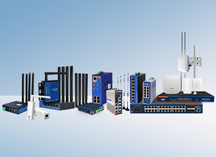
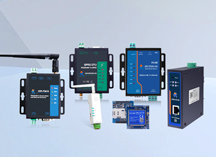
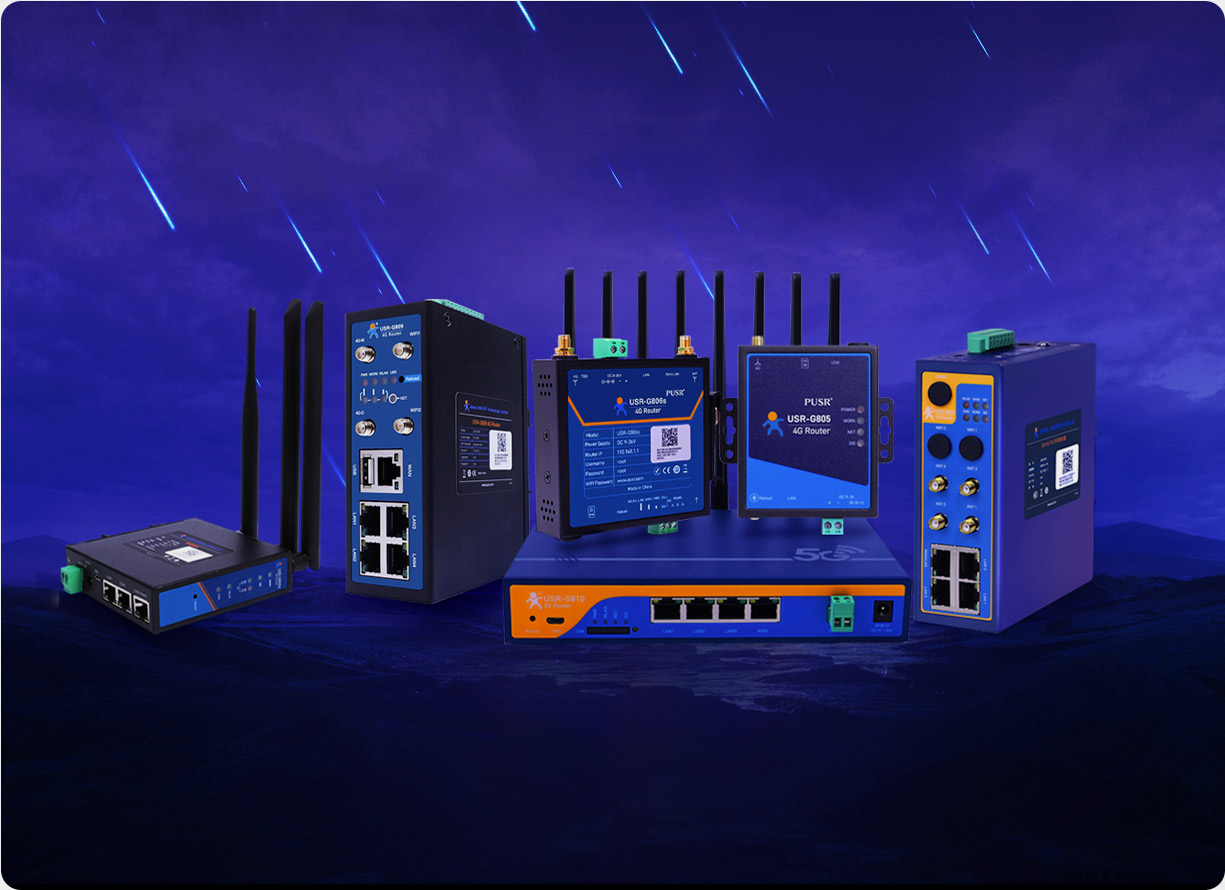
USR IOT's USR-G816 was built on exactly this logic. Metal casing, wide-temperature range from -40℃ to 70℃, 5G/4G dual-mode, built-in RS485 and DI/DO, supports multi-SIM auto-switchover and VPN encryption. In a commercial real estate project, one person managed 186 distribution rooms. Half a year after the system went live: zero unplanned outages. Not the most expensive option — but it has every function that matters.
You can use it as a reference point to compare against the other options on your table. Fit or not — measure and you'll know.
I know where you are right now.
Leadership says "cut costs, improve efficiency" — so you have to manage more stations with fewer people. Leadership says "smart transformation" — so you have to do more with less. Leadership says "zero unplanned outages" — so you have to stay awake 24/7.
But no one ever asks you one question: "Can you hold on?"
The 5G cellular router won't ask you that question. But it will help you hold on.
It watches the rooms you can't see. It runs to the sites you can't get to. It records the data you can't keep up with.
You don't need to become a superhuman. You just need to give yourself an "assistant" that never gets tired, never sleeps, and never takes a day off.
One person managing 200 distribution rooms — it's not bragging.
It's that someone is finally sharing the load with you.
And you can finally get a good night's sleep.