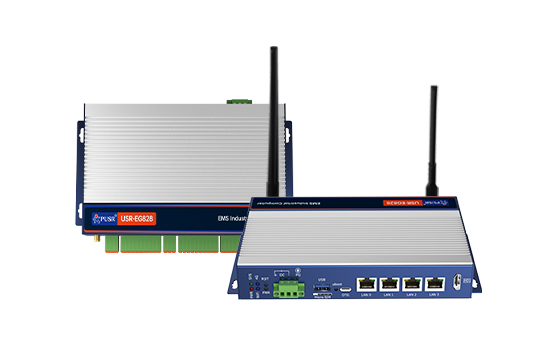
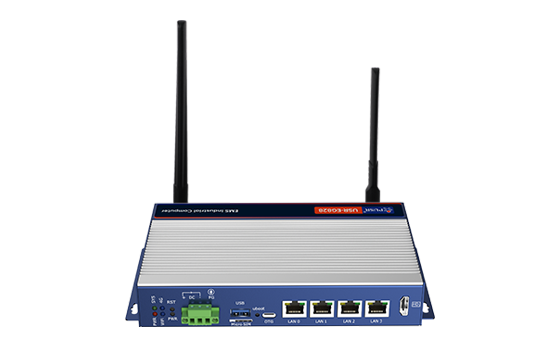
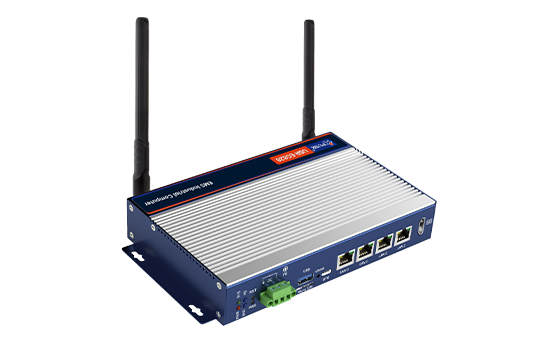
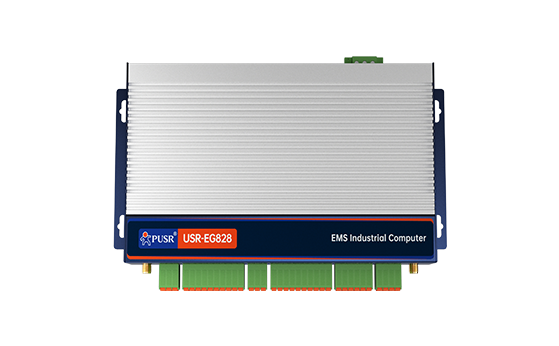
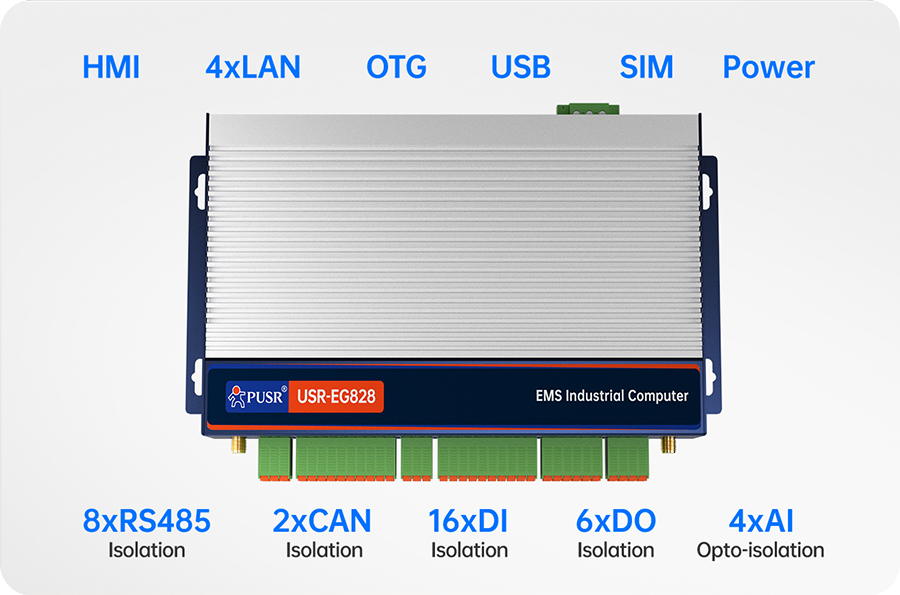
The USR-EG828-EMS gateway adopts Rockchip RK3568 quad-core processor and integrates multiple industrial-grade communication interfaces, including 8 isolated RS485 channels, 16 isolated GPIO channels, 6 relay control channels, 2 CAN buses, etc.
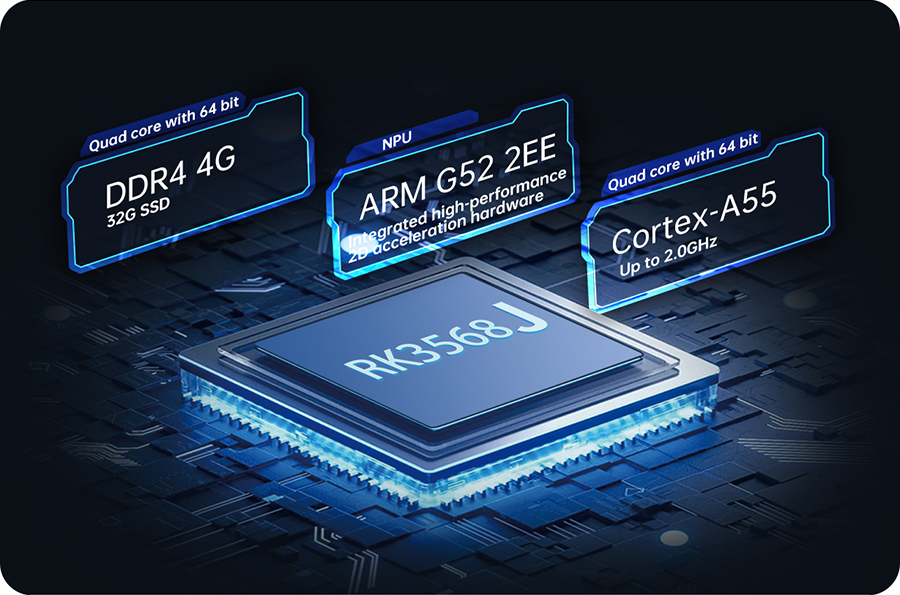
Powerful chip
RK3568J, quad core with 64 bit, 2.0GHz
Reach Interface
RS485 , CAN, DI/DO, AI, HDMI and etc.
A Gateway Designed for Microgrid StorageUbuntu OS | Diverse I/O Interface | Rich Fieldbus Protocol | Edge ComputingThe USR-EG828-EMS gateway adopts Rockchip RK3568 quad-core processor and integrates multiple industrial-grade communication interfaces, including 8 isolated RS485 channels, 16 isolated GPIO channels, 6 relay control channels, 2 CAN buses, etc. IT also supports 4G cellular communication. The equipment is equipped with a wide voltage input range (12-48V DC), suitable for harsh industrial environments. Meanwhile, it provides dual-band WiFi6 and Gigabit Ethernet to meet diverse network requirements.
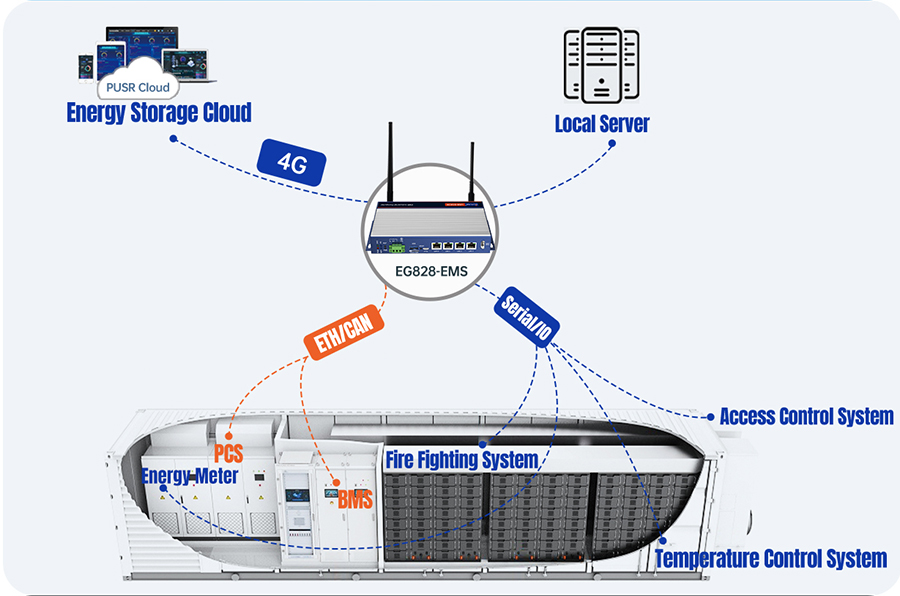
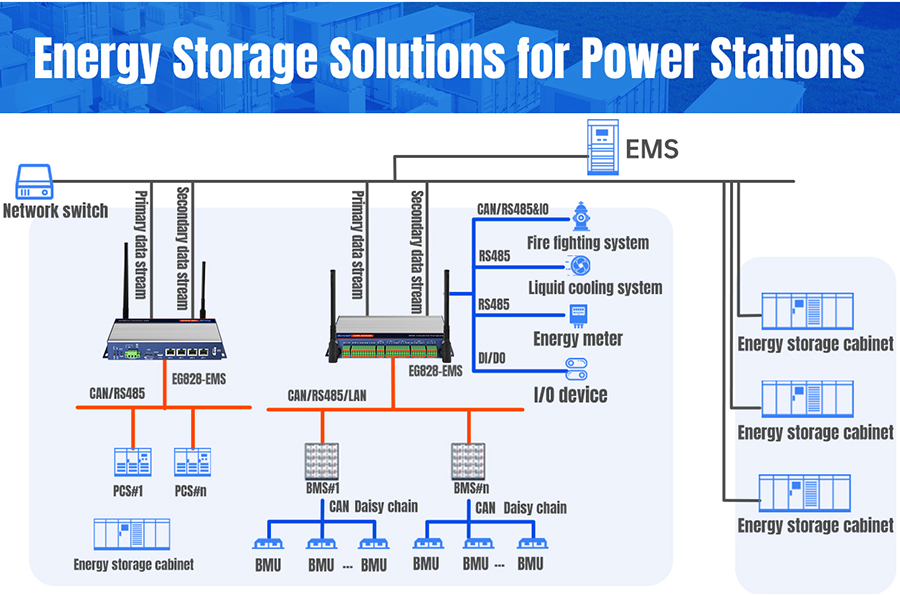
All-Scenario Adaptive Energy Storage System Integration CabinetThe EMS Energy Storage Gateway can serve as the core controller within the energy storage cabinet, performing edge data acquisition from devices such as the battery BMS, PCS, thermal management system, fire protection system, access control system, and temperature/humidity sensors. It connects to the cloud-based EMS management system via MQTT.
Powerful Hardware PerformanceEquipped with an RK3568J CPU, with a main frequency up to 2.0 GHz, enabling rapid response for on-site device data processing.
Diverse I/O InterfaceSpecially designed for energy storage equipment, it comes with a diverse range of I/O interface. This all-in-one design integrates an industrial computer, serial server, router, and I/O controller into a single unit.With one EMS gateway,you can connect all devices within the energy storage cabinet, meeting various energy storage scenarios.
Powerful Edge Computing Capabilities
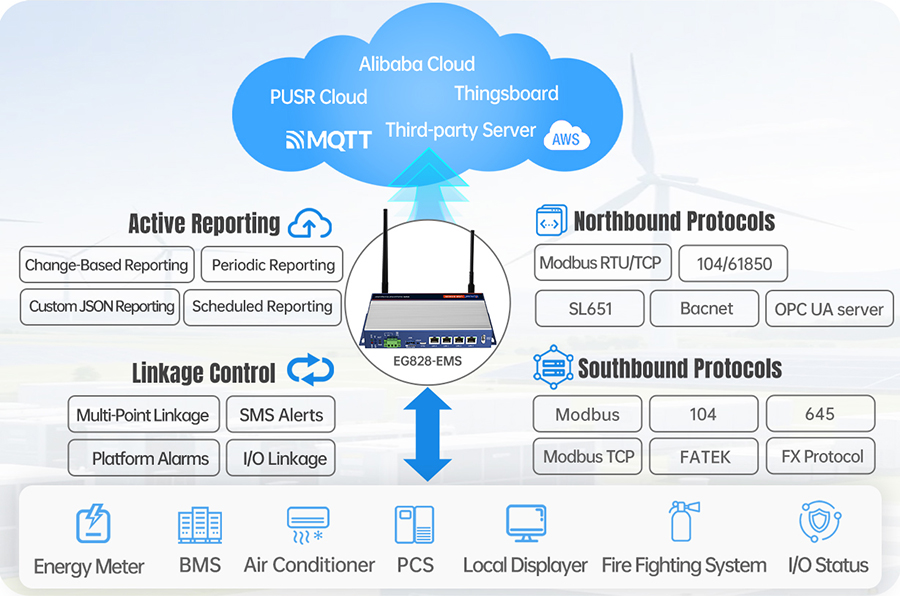
Supports connecting to smart energy storage monitoring platforms via MQTT, and also can connect to third-party management platforms using MQTT.
Meets multiple management requirements, supports data reporting and remote command delivery.
Fulfills diverse low-cost needs, reduces power station development costs, and improves operational efficiency.
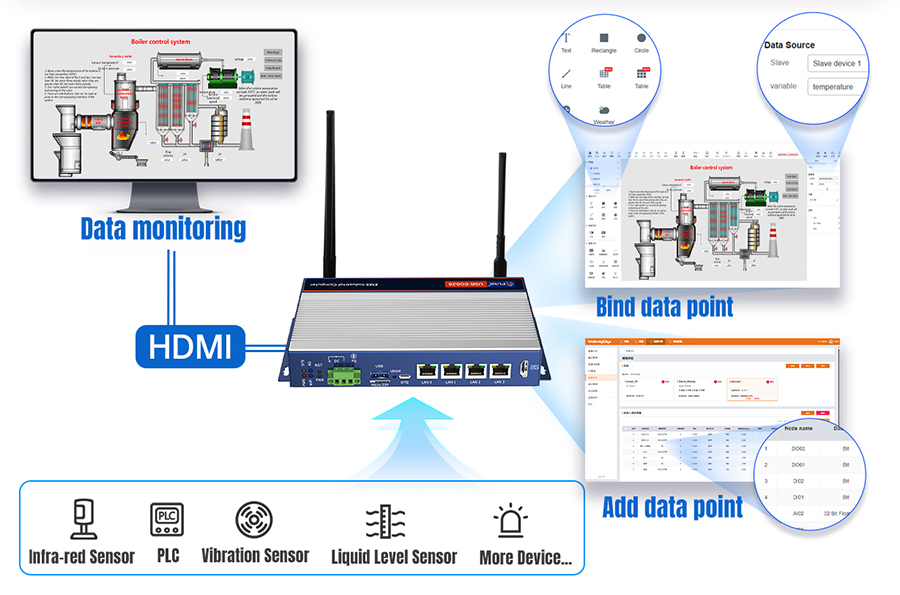
Built-in Local SCADA/HMI
Efficient data configuration,complete on-site data collection in just three steps.
Enables local data monitoring and control, satisfying personalized visual experience requirements.
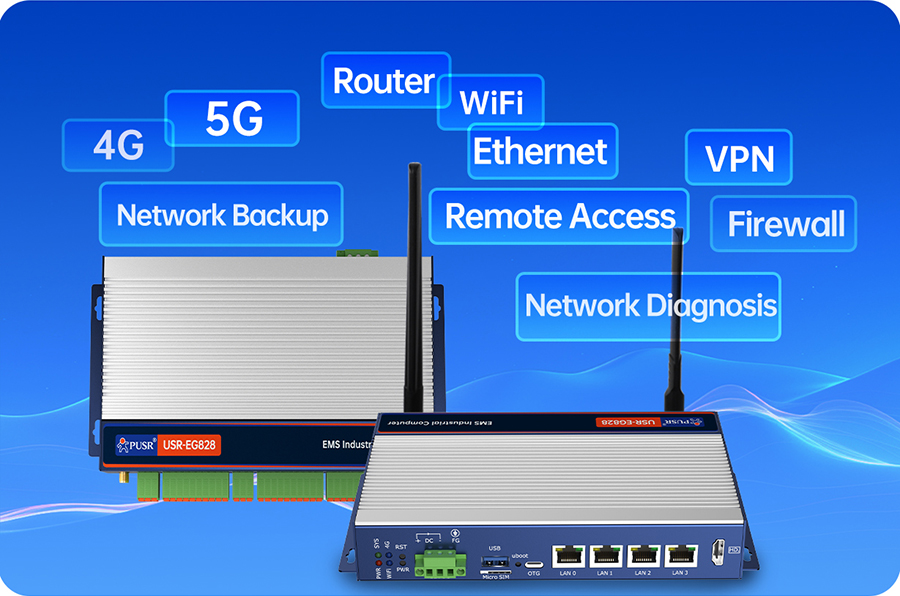
Multiple Connectivity OptionsEG828-EMS can access Internet via Wired-WAN, Cellular, and WiFi. And it integrates with WukongEdge network management, featuring routing/VPN functionality.
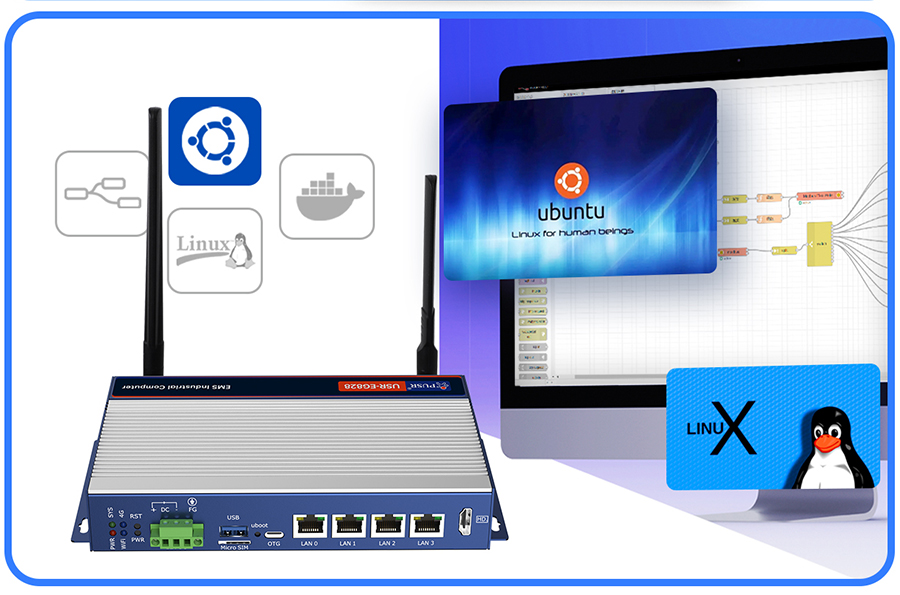
Linux Distribution, Programming for Energy Storage Algorithm
Ubuntu 20.04 with comprehensive driver integration for visual desktop development interfaces for faster application development.
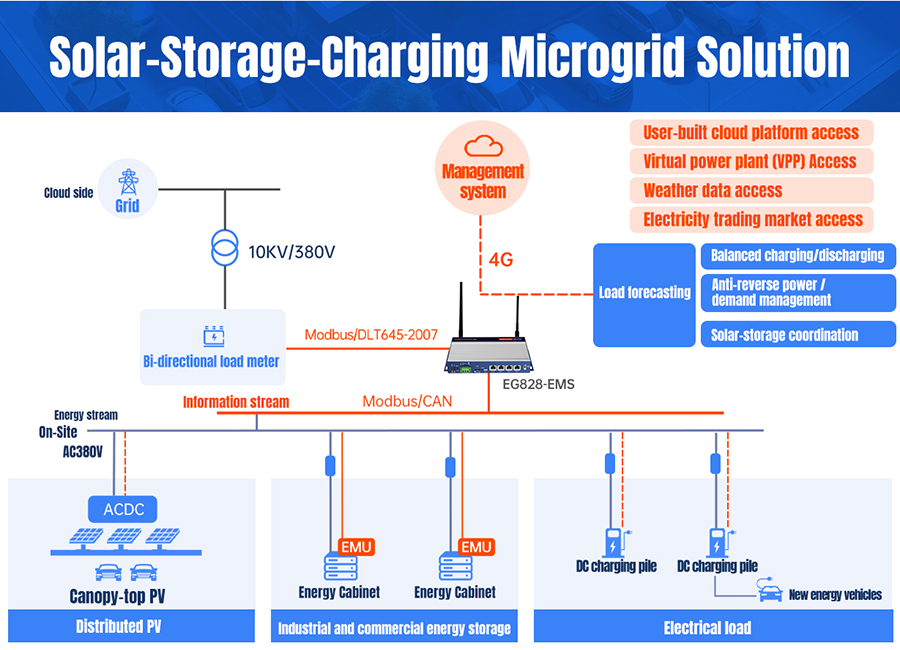
Users can develop microgrid algorithms like peak shaving & valley filling, dynamic strategy adjustment, data analysis, demand control and so on.
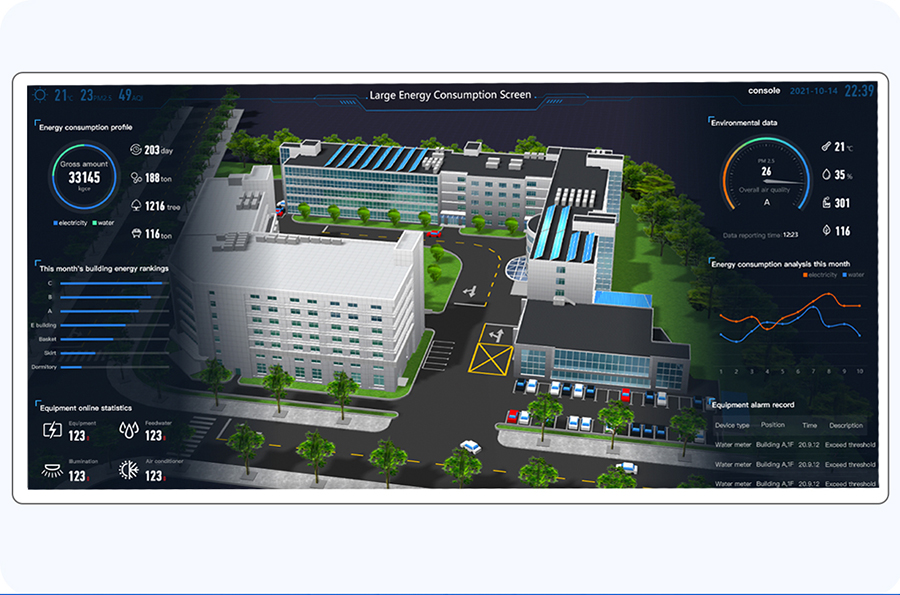
One-stop Solar Energy Management, Powered by PUSR CloudThrough PUSR cloud, home owners, integrators, equipment suppliers, and investors can monitor real-time station data and access data analysis for intelligent operation and maintenance.
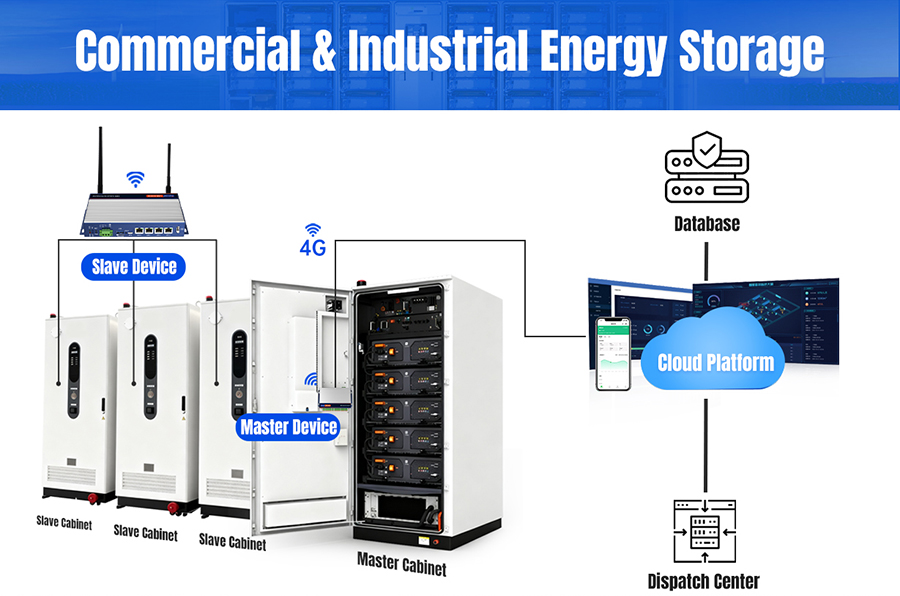
Commercial & Industrial Energy StorageThe EG828-EMS adopts a completely new integrated design, integrating functions such as serial communication, I/O, and routing into one unit. With just one gateway, all the devices in the energy storage cabinet can be connected, thereby enhancing operational efficiency and reducing maintenance costs.
1. What is Gateway Energy Storage? - A Revolution from Chaos to Order in Energy Management
In a microgrid project on a remote island, operations and maintenance personnel once faced a dilemma: frequent starts and stops of diesel generators shortened equipment lifespan by 30%, a lack of precise scheduling for photovoltaic (PV) power generation resulted in a 15% curtailment rate, and manual monitoring of battery pack status required four inspections per day. This scenario reflects the fatal shortcomings of traditional energy management models—lack of collaboration among multi-source heterogeneous devices, data silos leading to delayed decision-making, and inefficient manual intervention.
Gateway Energy Storage (Energy Management System Gateway) was born precisely to solve this dilemma. Serving as the "nerve center" of microgrids, it integrates devices such as PV inverters, energy storage converters (PCS), battery management systems (BMS), and diesel generators through standardized interfaces, constructing a digital management platform covering the entire chain of power generation-storage-consumption. Taking the USR-EG828-EMS as an example, its Rockchip RK3568 quad-core processor and 1 Tops computing power NPU can simultaneously handle data streams from over 200 devices, enabling real-time scheduling with millisecond-level response.
Insights into User Psychology:
An energy supervisor in an industrial park once admitted, "We tried using ordinary industrial control computers for energy management, but the incompatible protocols of devices from different brands and data delays often exceeding 3 seconds led to a 10% power deviation in the energy storage system during peak-valley switching." This anxiety about system stability is precisely the core pain point that the EMS gateway needs to address.
2. Features and Functions of Gateway Energy Storage - The Five Pillars for Building an Intelligent Energy Ecosystem
2.1 The "Interpreter" for Multi-Protocol Compatibility
The USR-EG828-EMS supports 12 industrial protocols, including Modbus TCP/RTU, IEC 61850, and DL/T 645, enabling seamless connection with devices from mainstream manufacturers such as Sungrow, CATL, and Siemens. In a PV-storage-charging integrated power station, the gateway's protocol conversion function enabled data interconnection between Tesla superchargers, BYD energy storage systems, and Huawei PV inverters, increasing equipment utilization by 22%.
2.2 The "Decision-Maker" for Edge Computing
The built-in WukongEdge edge computing framework possesses three core capabilities:
Real-time Data Processing: Completes 90% of data cleaning and aggregation locally, reducing the amount of data uploaded to the cloud by 70%.
Dynamic Strategy Engine: Automatically generates charging and discharging strategies based on parameters such as electricity price fluctuations, light intensity predictions, and load curves.
Fault Pre-diagnosis: Provides 48-hour advance warnings of potential faults through 12 indicators such as battery internal resistance changes and temperature gradients.
A case study in a steel enterprise showed that this function extended battery cycle life by 15% and reduced annual maintenance costs by RMB 400,000.
2.3 The "Bridge" for Cloud-Edge Collaboration
Adopts a hybrid architecture of "edge decision-making + cloud optimization":
Edge Side: Executes real-time control commands to ensure stable system operation even in off-grid conditions.
Cloud Side: Optimizes scheduling strategies through big data analysis, improving the consumption rate of renewable energy by 18% in a virtual power plant project.
Secure Channel: Uses the national cryptographic SM4 encryption algorithm to ensure data transmission compliance with Class III requirements of the Information Security Technology - Protection Profile for Information Security Technology (GB/T 22239-2019).
2.4 The "Guardian" of Industrial-Grade Reliability
Environmental Adaptability: Operates in a wide temperature range of -40°C to 70°C and withstands salt spray corrosion with an IP67 protection rating.
Electromagnetic Compatibility: Passes IEC 61000-4-6 level anti-interference testing, ensuring stable operation in strong electromagnetic fields of substations.
Redundancy Design: Features dual power inputs and a watchdog mechanism, achieving a 99.999% online rate.
2.5 The "Cockpit" for Visualized Operation and Maintenance
The accompanying energy management platform provides three core interfaces:
Real-time Monitoring Dashboard: Dynamically displays power flow, device status, and carbon emission data.
Intelligent Alarm Center: Identifies fault levels through color grading and supports multi-channel push notifications via WeChat, SMS, and email.
Energy Efficiency Analysis Report: Automatically generates daily/weekly/monthly reports and provides optimization suggestions by comparing with industry benchmarks.
3. Core Advantages of USR-EG828-EMS - Redefining Energy Storage Microgrid Management Standards
3.1 The Golden Balance Between Performance and Energy Efficiency
Computing Power Advantage: The 1 Tops NPU computing power supports the simultaneous operation of three AI models (e.g., battery state of health (SOH) prediction, load forecasting, power optimization).
Energy Efficiency Ratio: Achieves three times the energy efficiency of traditional x86 solutions at 10W power consumption, saving over RMB 2,000 in electricity costs annually.
Thermal Design: The finned heat sink structure keeps the CPU temperature 12°C lower than similar products at 55°C.
3.2 Ecological Openness and Developer-Friendliness
Operating System Support: Pre-installed with Ubuntu 20.04 LTS and compatible with the Node-RED low-code development platform.
API Interface Library: Provides a full stack of APIs from device control to AI computing power invocation, improving development efficiency by 40%.
Protocol Extension Package: Supports customized protocol development, enabling a research institute to connect quantum communication devices.
3.3 All-Scenario Adaptability
Interface Resources: Features 8 RS485 ports, 4 CAN ports, 2 Gigabit Ethernet ports, and 2 DI/DO ports to meet complex topological requirements.
Communication Methods: Supports 5G/WiFi6/LoRa wireless networking, adapting to special environments such as mountains and seas.
Storage Expansion: Supports up to 256GB eMMC + 1TB SSD, capable of storing three years of historical data.
4. Who is Suitable for Using USR-EG828-EMS? - Precisely Matching the Needs of Five Application Scenarios
4.1 New Energy Power Station Operators
Pain Point: Traditional scheduling systems have response delays >500ms, leading to a high curtailment rate of renewable energy.
Solution: In a 100MW PV power station in Qinghai, the USR-EG828-EMS reduced scheduling response time to 80ms, increasing annual power generation revenue by RMB 3.2 million.
4.2 Industrial and Commercial Energy Storage Investors
Pain Point: Lack of dynamic adjustment in peak-valley arbitrage strategies, resulting in an investment payback period exceeding six years.
Solution: After application in a manufacturing enterprise, AI algorithms optimized charging and discharging periods, shortening the investment payback period to 3.2 years.
4.3 Microgrid System Integrators
Pain Point: Incompatible protocols among devices from different brands, resulting in a project debugging period of up to two months.
Solution: In an off-grid microgrid project in Hainan, the protocol automatic conversion function reduced the debugging period to two weeks.
4.4 Virtual Power Plant Participants
Pain Point: Response deviation rates exceeding 5%, facing penalties from the power grid.
Solution: After application in a virtual power plant project in Jiangsu, the response deviation rate was controlled at 1.8%, reducing annual penalty costs by RMB 850,000.
4.5 Scientific Research and Educational Institutions
Pain Point: Lack of standardized experimental platforms, slowing down research progress in new energy technologies.
Solution: A laboratory at Tsinghua University built a microgrid experimental platform based on this gateway, improving research efficiency by 60%.
5. How Does USR-EG828-EMS Network in Energy Storage Applications? - Three Paradigms for Building Highly Reliable Energy Networks
5.1 Centralized Networking Architecture
Applicable Scenarios: Large-scale ground-mounted PV power stations and energy storage power stations.
Advantage: Achieves seamless switching between grid-connected and off-grid modes through a dual-link design, ensuring 99.9% power supply reliability in a project on an island in the Philippines.
6. The Cornerstone Choice for the Intelligent Energy Era
When the operations director of a data center touched the fanless metal casing of the USR-EG828-EMS at an exhibition, he remarked, "This device is even sturdier than the precision air conditioning control cabinet in my machine room." This profound understanding of industrial DNA is precisely what distinguishes this product from consumer-grade gateways. It is not merely a data forwarder but an intelligent engine tailored for energy storage microgrids through hardware reconstruction, algorithm optimization, and ecological integration.
Driven by the dual imperatives of energy transition and carbon neutrality, the USR-EG828-EMS provides not just a technological solution but also a certainty for the future—while other devices frequentlyshut down in extreme environments, it continues to operate stably; while competitors struggle with protocol compatibility, it has already achieved seamless integration among multiple systems; while the industry is still discussing the feasibility of AI implementation, it has already generated tens of millions in benefits on production lines. This may be the certainty most needed in the intelligent energy era: using reliable technology to mitigate uncertain risks.
Industrial loT Gateways Ranked First in China by Online Sales for Seven Consecutive Years **Data from China's Industrial IoT Gateways Market Research in 2023 by Frost & Sullivan
We use cookies to ensure that we give you the best experience on our website. If you continue to use this site we will assume that you are happy with it.